

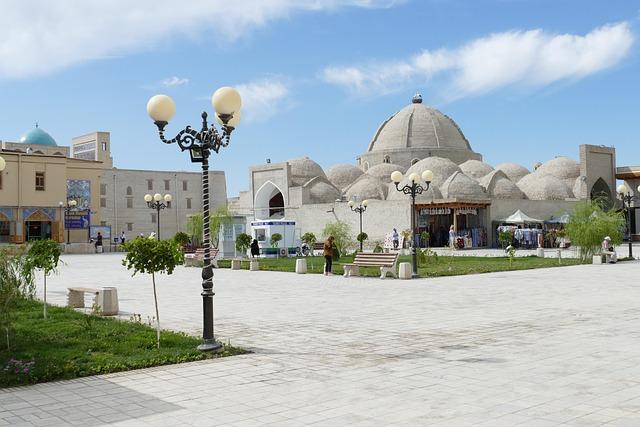
The Silk Road connected China to the Mediterranean for nearly two millennia. Today, the Central Asian section through Uzbekistan, Kazakhstan, Kyrgyzstan, Tajikistan, and Turkmenistan offers some of the most extraordinary architectural heritage in Asia: the blue-tiled madrasahs of Samarkand, the desert oases of Bukhara, the steppes of Kazakhstan. We have traveled the route twice since 2022. In this guide, you will find the complete Silk Road Central Asia travel guide: which countries to combine, the optimal 14-day route, visa logistics that recently changed, and 18 tested addresses.
The 5 Central Asian Silk Road countries
Uzbekistan: the heart of the Silk Road. Samarkand, Bukhara, Khiva form the iconic triangle. 80 percent of first-time visitors focus here. Most accessible, with great recent visa improvements (30 days visa-free for most Western passports).
Kazakhstan: the largest country, mostly steppe and mountains. Almaty for the cosmopolitan city + mountain access (Charyn Canyon, Big Almaty Lake). Astana (now Nur-Sultan rebranded back to Astana 2022) for the futuristic capital architecture. 30 days visa-free.
Kyrgyzstan: the mountain country. Issyk-Kul lake, Song Kul highland yurt camps, the Tian Shan trekking. 60 days visa-free. Best combined with Uzbekistan.
Tajikistan: the Pamir Highway, one of the world’s great road trips. Dushanbe capital is the base. The 1,200 km Pamir Highway requires 7-10 days minimum. E-visa available online.
Turkmenistan: most restricted. The Darvaza gas crater (Door to Hell, burning since 1971), Ashgabat’s white marble city. Requires Letter of Invitation and guide (around 150 EUR/day). The challenging country to visit.
Suggested 14-day Silk Road itinerary (Uzbekistan focus)
Days 1-3: Tashkent (capital)
Modern Soviet-era capital with the iconic metro stations (each a different theme). Visit Khast Imam complex (one of the oldest Korans in the world), Chorsu Bazaar, and Independence Square.
Days 4-6: Samarkand
Take the high-speed Afrosiyob train (2 hours from Tashkent, 25 EUR). Visit the Registan (3 madrasahs around a vast plaza, the iconic Silk Road photo), Shah-i-Zinda necropolis, Bibi-Khanym Mosque, and Gur-e-Amir (Tamerlane tomb).
Days 7-9: Bukhara
4-hour train from Samarkand (15 EUR). Bukhara is a living museum of Islamic architecture. Visit Ark Citadel, Kalon Minaret, Lyabi-Hauz square, Po-i-Kalyan complex. 2,500 years of continuous habitation.
Days 10-11: Khiva
The walled desert city. 7-hour train from Bukhara or 1-hour flight to Urgench. Itchan Kala (inner walled city, UNESCO) preserved exactly as 19th-century. Walk the entire walled city on foot in 2 days.
Days 12-14: Almaty Kazakhstan or return
Optional 1-hour flight Tashkent to Almaty for the cosmopolitan city plus mountain access. Charyn Canyon (180 km drive), Big Almaty Lake (1 hour from city), Medeo ice skating rink.
Where to stay
- Samarkand: Bibi Khanum Hotel (95 EUR), Asia Samarkand (75 EUR), Registan Plaza Hotel (135 EUR luxury)
- Bukhara: Komil Boutique Hotel (85 EUR), Hotel Sultan Boutique (65 EUR), Hovli Poyon Hotel (140 EUR converted mansion)
- Khiva: Hotel Orient Star (95 EUR inside the walls), Madrasah Hotel (110 EUR inside actual madrasah)
- Tashkent: Hyatt Regency Tashkent (165 EUR), Inspira-S Tashkent (95 EUR), Hotel Uzbekistan (75 EUR Soviet-era classic)
- Almaty: Ritz-Carlton Almaty (320 EUR), Renion Park Hotel (95 EUR)
Top experiences to book
- Samarkand Registan sound and light show: 15 EUR, summer evenings 9 PM
- Private guide Samarkand-Bukhara-Khiva: 250 to 350 USD per day with English-speaking guide and driver
- Yurt camp overnight in Nuratau or Aydarkul: 60 to 90 EUR per person all-inclusive
- Almaty mountain day tour: 95 EUR with driver and lunch
- Bukhara silk and spice tour: 45 EUR for half-day market walking tour
Insider tips
✅ What to do
- Take the Afrosiyob high-speed train: Tashkent to Samarkand 2h, Samarkand to Bukhara 1h45. Book online ahead via uzrailpass.uz.
- Carry US dollars cash: ATM availability improving but limited outside Tashkent. Bring crisp USD bills, exchange to UZS at official banks or hotels.
- Try plov: the national rice dish. Best at Besh Qozon plov center in Tashkent.
- Learn Cyrillic alphabet basics: many signs in Russian Cyrillic, particularly in Kazakhstan and Kyrgyzstan.
- Pre-book Registan sound-and-light show: spectacular, but limited slots in summer.
❌ What to avoid
- July-August travel: 45°C heat in the Uzbekistan desert. Visit in April-June or September-October.
- Turkmenistan without preparation: requires Letter of Invitation (6-week process) and licensed guide.
- Photography near military or government buildings: enforced strictly in Turkmenistan and Tajikistan.
- Drinking tap water: stick to bottled or filtered.
Transport
International access: Tashkent (TAS) has direct flights from Istanbul, Moscow, Frankfurt, Dubai. Almaty (ALA) from Frankfurt, Istanbul, Seoul. Bishkek (FRU) and Dushanbe (DYU) via Istanbul.
Inter-Uzbekistan: Afrosiyob high-speed trains connect Tashkent-Samarkand-Bukhara. Domestic flights via Uzbekistan Airways.
What to eat
- Plov: rice with lamb, carrots, onions. The national dish.
- Lagman: hand-pulled noodle soup with mutton and vegetables.
- Manti: large steamed dumplings, lamb and onion filling.
- Shashlik: skewered grilled meat (lamb, beef, or chicken).
- Non bread: round flatbread baked in tandoor ovens. The Samarkand version is particularly prized.
- Green tea: served constantly. Refusal is considered rude.
FAQ
How many days for Central Asia Silk Road?
14 days minimum to do Uzbekistan justice (Samarkand, Bukhara, Khiva, Tashkent). 21 days adds Kazakhstan or Kyrgyzstan. 30 days for the comprehensive 5-country tour.
Is Uzbekistan safe?
Yes, very safe. Standard urban awareness. The country has invested heavily in tourism infrastructure since 2017.
Visa requirements?
Uzbekistan 30-day visa-free for most Western passports (since 2019). Kazakhstan 30 days visa-free. Kyrgyzstan 60 days visa-free. Tajikistan e-visa online. Turkmenistan requires Letter of Invitation.
Should I hire a guide?
For Samarkand and Bukhara, a guide transforms the experience (200 EUR/day). The historical context is essential. For Khiva and Tashkent, self-guided works.
Best time to visit?
April through June: spring flowers, comfortable 20-25°C. September-October: harvest season, similar temperatures. Avoid July-August (40-45°C heat).
For further exploration
- 7 Days in Vietnam: Hanoi, Halong, Hoi An, Saigon
- Asia Food Travel Guide: 8 Best Cities
- Discovering Shakuhachi Music in Japan
- 3 Days in Seoul: Perfect Itinerary
Conclusion
The Silk Road through Central Asia delivers some of the most architecturally extraordinary, culturally distinct travel experiences left in the world. With the dramatic recent visa liberalization in Uzbekistan and Kazakhstan, the route has never been more accessible. Pack patience, learn basic Russian phrases, and trust the green tea ritual.
Article last updated 20 May 2026. Written by Thomas, founder of Travel Reference.
💼 Affiliate disclosure: some links in this article are affiliate links.