

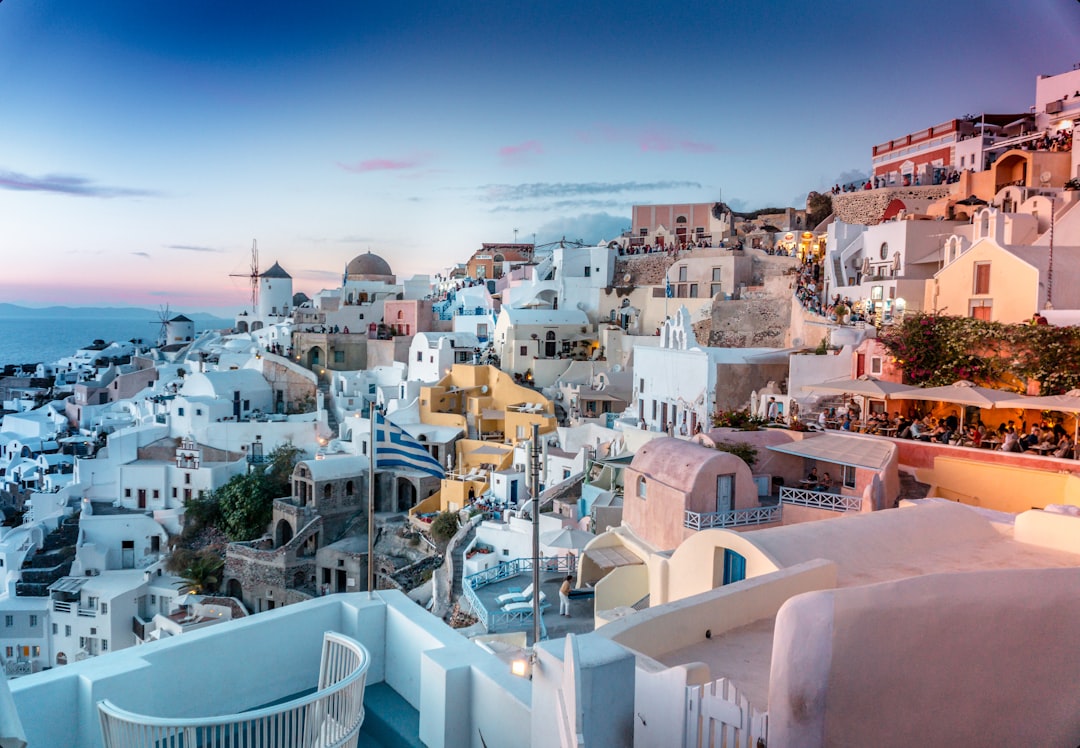
Greece has more than 6,000 islands and islets scattered across the Aegean and Ionian Seas. Only 227 are inhabited, and most travelers visit just a handful of the iconic names — Santorini, Mykonos, Crete, Rhodes. But the depth of the Greek island universe rewards those who venture beyond the famous five. Each archipelago has its own character: the volcanic Cyclades, the green Ionian, the lush eastern Sporades, the rugged Dodecanese.
This guide covers the 12 essential Greek islands for 2026 — the icons you should not miss, the alternatives that solve their overcrowding problems, and the niche options for travelers willing to take longer ferries for less-trafficked beaches. Each section includes the best months, how to get there, where to stay, what to eat, and the activities and beaches that justify the trip.
How to Choose Your Greek Islands
Three filters narrow the field:
Atmosphere: Cosmopolitan (Mykonos, Santorini), traditional Greek (Naxos, Paros), wild and quiet (Milos, Folegandros, Tinos), big and varied (Crete, Rhodes).
Scenery type: Volcanic caldera dramatic (Santorini, Milos), white-sand Caribbean-feel (Elafonissi in Crete, Sarakiniko in Milos), green lush (Corfu, Skopelos), rugged mountainous (Crete s Samaria gorge, Karpathos).
Logistical reality: Direct international flights (Crete, Rhodes, Corfu, Mykonos, Santorini, Kos) versus ferry-only (Milos, Naxos, Paros, Hydra). First-time visitors with limited time prioritize direct flight access; experienced visitors accept ferries for more authentic islands.
Santorini
The most photographed Greek island. The caldera — the flooded crater of the volcanic eruption that destroyed Minoan civilization around 1600 BCE — creates the dramatic cliff-edge scene with white villages perched 300 meters above the water.
Where to stay: Oia for the sunset views (and the crowds that come with them), Imerovigli for high-end quiet, Firostefani as a quieter Oia alternative, Fira for budget and central location. Pyrgos village inland for traditional Greek without the cliff drama. Canaves Oia Suites (500-1,200 EUR/night), Grace Santorini (700-1,800 EUR), and Kasimatis Suites (250-400 EUR) are top picks.
Must-do: Akrotiri Minoan archaeological site (Pompeii-style preserved Bronze Age city, 12 EUR), Atlantis Books in Oia, sunset from Oia castle (arrive 90 min early), red beach near Akrotiri, Santo Wines winery for sunset Assyrtiko tasting.
Avoid: The donkey rides up from Old Port (animal welfare issues), shoulder-to-shoulder cruise-ship-day Oia (check cruise schedules in port).
Mykonos
The party island reputation overshadows the underlying beauty of Mykonos Town’s Cycladic alleys, the iconic windmills, the beach club culture along the south coast. Best for travelers who want nightlife paired with their swimming.
Where to stay: Mykonos Town for nightlife and walking access; Ornos beach for family quiet; Platis Gialos for beach club access; Agios Stefanos for budget. Belvedere Hotel (450-900 EUR) and Bill & Coo Suites (700-1,800 EUR) are signature properties.
Beaches: Paradise and Super Paradise are the party beaches. Psarou is the celebrity-spotted glam beach. Agios Sostis on the north coast is the quietest of the famous beaches — minimal development, taverna only. Fokos beach (15-minute dirt road drive) for the wild option.
Avoid: Cruise ship day overflow in town (15,000+ extra visitors in summer), 50 EUR cocktails at the showcase beach clubs unless that is your scene.
Crete
The largest and most diverse Greek island — mountains rising to 2,453m, gorges, ancient Minoan ruins, Venetian harbors, and 1,000+ km of coastline. Crete deserves a week minimum.
Where to stay: Chania (western Crete) for the Venetian harbor charm; Heraklion for proximity to the Knossos archaeological site; Elounda on the northeast coast for luxury beach resorts; Sfakia and the south coast for wild empty beaches.
Highlights: Knossos palace (the Minoan civilization s primary site, 15 EUR), Samaria Gorge hike (16 km, 6-8 hours, May-October), Elafonissi Beach (pink-tinged sand on a remote southwest peninsula), Balos lagoon, the mountain villages of the Lasithi plateau.
Cretan food: The island has its own distinct cuisine — dakos rusks, antikristo lamb, gamopilafo rice, raki distillation, and the famous Cretan diet emphasizing olive oil, wild greens, and mountain herbs. Tamam in Chania for traditional, Peskesi in Heraklion for upgraded Cretan.
Naxos & the Small Cyclades
Naxos is the largest Cycladic island and the increasingly popular alternative to overcrowded Santorini and Mykonos. Long sandy beaches on the west coast, mountain villages inland, and a more relaxed atmosphere.
Where to stay: Naxos Town (Chora) for sightseeing access; Agios Prokopios and Agia Anna for beach hotels; Apollonas on the north coast for the quietest option.
Beaches: Plaka, Mikri Vigla, and Agios Prokopios are the famous long-sand options. The wilder beaches at Alyko and the south coast Liona require a car but reward with solitude.
Don’t miss: The Portara, a marble doorway from a 6th-century BC unfinished temple visible at sunset from Chora; Apeiranthos mountain village; the kouros (incomplete giant marble statues abandoned at Flerio and Apollonas quarries).
The Small Cyclades: Koufonisia, Schinoussa, Iraklia, and Donousa are tiny islands off Naxos’s south coast — reachable by daily ferry. The smallest, Donousa, has 100 inhabitants in winter. The clearest water in the Aegean and almost no tourists.
Milos
Milos is the rising star of the Cyclades — dramatic white volcanic landscapes (the iconic Sarakiniko lunar coastline), hidden coves accessible only by boat, and the original “discovery site” of the Venus de Milo (now in the Louvre).
Where to stay: Adamantas (the main port) for ferry access; Plaka (the hilltop capital) for atmospheric sunset views; Pollonia on the northeast for beach access and quieter pace.
Must-do: Boat tour to Kleftiko (white volcanic cliffs accessible only by sea), Sarakiniko at sunrise or sunset, Sykia sea cave, Plaka kastro for sunset.
The catch: Milos has gotten significantly busier since 2020 — some say it is the new Santorini. Book accommodation 4-6 months ahead for July-August.
Paros & Antiparos
Paros sits at the Cycladic ferry crossroads — increasingly the Mykonos-alternative for travelers who want sophistication without the price markup.
Where to stay: Naoussa (the picturesque fishing village turned upscale) for photogenic charm; Parikia (main port) for ferry access and the spectacular Panagia Ekatontapyliani church; Lefkes mountain village inland for traditional Greek.
Antiparos across the channel is the lower-key extension — a single small village, dramatic Soros beach, the Antiparos Cave. Tom Hanks owns a house here, indicating the discrete-celebrity appeal.
Rhodes & the Dodecanese
The Dodecanese is the eastern archipelago closest to Turkey — a distinct character from the Cyclades, with strong Italian architectural influence from 1912-1943 Italian rule.
Rhodes Old Town is a UNESCO-listed medieval walled city built by the Knights Hospitaller. Lindos village 50 km south is the iconic whitewashed cliff-top village with ancient acropolis.
Symi is the showpiece small island — 90-minute ferry from Rhodes, with neoclassical pastel houses rising in tiers around a horseshoe harbor.
Corfu & the Ionian Islands
The Ionian Sea archipelago west of mainland Greece is greener, lusher, and more European-influenced (Venetian, French, British) than the Aegean. The water is famously turquoise; the landscapes are mountainous and forested.
Corfu (Kerkyra) is the main island and a UNESCO Heritage Old Town. Its Venetian fortresses, French Liston arcade, and British cricket ground tell its layered history. Stay in Corfu Town for culture or in Paleokastritsa or Agios Gordios for beach access.
Kefalonia is the largest Ionian island, with the iconic Myrtos beach (often topping Greece s most beautiful beach lists) and the underground Melissani lake. Made famous by Captain Corelli s Mandolin.
Zakynthos (Zante) hosts the postcard-iconic Shipwreck Beach (Navagio) — the cliff-walled cove with a rusting shipwreck on white sand, accessible only by boat. Highly Instagrammed and crowded; visit early morning by boat.
Lefkada is connected to the mainland by causeway — the only Greek island reachable by car. Famous for west-coast beaches (Egremni, Porto Katsiki) with white cliffs and electric-blue water.
Hydra & the Saronic Gulf
The Saronic Gulf islands are the easiest island access from Athens — ferry from Piraeus port in 1-2 hours. Perfect for short trips and weekend escapes.
Hydra is the standout — cars and motorbikes are banned (only donkeys, water taxis, and walking). The crescent harbor with sea captain mansions rising up the hillside is one of the great Greek scenes. Leonard Cohen lived here intermittently from 1960.
Aegina is the closest island to Athens (40 minutes by ferry) — a manageable day trip with the Temple of Aphaia archaeological site, fresh pistachios (the island’s specialty), and excellent seafood.
Spetses is the third major Saronic option — elegant horse-drawn carriage transport, Old Harbor with traditional shipyards, and the Bouboulina museum (the female naval commander of the Greek War of Independence).
Greek Ferry Strategy
The Greek ferry network is operated by multiple competing companies (Blue Star Ferries, Hellenic Seaways, Sea Jets, Anek Lines, Minoan Lines, Aegean Speed Lines). Two booking platforms simplify everything:
Ferryhopper (ferryhopper.com): The most comprehensive aggregator, with the cleanest mobile interface and reliable real-time schedule updates.
Direct Ferries (directferries.co.uk): Similar functionality, sometimes finds connections Ferryhopper misses.
Book at least 30 days ahead for July-August departures — popular routes (Athens-Santorini-Mykonos-Naxos) sell out weeks in advance. Outside peak season (April-June, September-October), 7-14 days ahead is usually safe.
Ferry types matter for sea legs: Conventional ferries (Blue Star, Anek) are large, stable, slower (Athens-Santorini 8 hours), and inexpensive (40-80 EUR). High-speed ferries (Sea Jets) cover the same route in 4-5 hours for 70-120 EUR but bounce in rough seas. The Meltemi summer wind can disrupt high-speed service.
Suggested 10-Day Island Hopping Itinerary
Athens (1 night)
Acropolis, Plaka neighborhood dinner, ferry pre-departure overnight at Piraeus area hotel.
Santorini (2 nights)
High-speed ferry Athens to Santorini (4 hours). Oia sunset, Akrotiri site, Pyrgos village.
Naxos (2 nights)
Ferry Santorini to Naxos (2 hours). Plaka beach, Apeiranthos mountain village, Portara sunset.
Paros (1 night)
Ferry Naxos to Paros (30 minutes). Naoussa dinner, Lefkes hike.
Milos (2 nights)
Ferry Paros to Milos (2 hours). Kleftiko boat day, Sarakiniko sunset, Plaka.
Athens (1 night)
Ferry Milos to Athens (4-7 hours depending on type). Final Acropolis Museum visit, last dinner in Plaka or Anafiotika before international departure.
Add 4 nights for Crete or 5 for Rhodes + Symi if extending to two weeks.
Best Time to Visit the Greek Islands
May: The sweet spot. Pleasant temperatures (22-27°C), water warming up, wildflowers, hotel prices 30-50% below peak.
June: Excellent. Long days, warm water, full beach service open. Most-recommended pre-peak month.
July-August: Peak. Hot (30-35°C), Meltemi wind in the Cyclades, maximum crowds and prices.
September: Many travelers favorite. Sea at peak warmth, Meltemi calms, crowds reduce, prices drop 20-30%. Wine harvest on Santorini.
October: Shoulder season ending. Some businesses begin closing mid-October.
November-March: Most island businesses close. Crete remains open year-round.
Frequently Asked Questions
How many islands can I visit in one trip?
3-4 islands in 10 days, 5-6 in 14 days. Quality drops sharply beyond 5 islands in 2 weeks.
Are the islands expensive?
Santorini and Mykonos are the most expensive (250-1,500+ EUR/night peak). Naxos, Paros, Milos, Rhodes offer the same atmosphere at 30-50% lower prices.
Do I need a car?
Larger islands (Crete, Rhodes, Naxos, Corfu): yes. Smaller (Hydra, Antiparos): no.
Are the beaches free?
Yes — all Greek beaches are public by law. Beach clubs charge for loungers (10-100+ EUR depending on location).
Cost Estimate for 10-Day Greek Islands Trip
Budget: $90-150/day. Budget hotels and family-run guesthouses (60-100 EUR/night), ferry deck-class tickets, tavernas, public buses. 10 days: $900-1,500 plus flights.
Mid-Range: $200-350/day. 4-star boutique hotels (180-300 EUR/night), high-speed ferry classes, table-service dinners, scooter rentals. 10 days: $2,000-3,500.
Luxury: $600-1,500+/day. Cave hotels in Santorini and 5-star resorts (700-2,000+ EUR/night), private boat charters (1,500-3,500 EUR/day), Michelin dinners. 10 days: $6,000-15,000+.
Final Thoughts
The Greek islands reward repeat visits more than a single sweep. Pick three or four islands that fit your style, give them four days each, and walk every village. The hidden corners, the morning ferry routes, the off-season conversations — these are what make Greek island travel one of the great experiences in Europe. Yia mas — to our health, and to coming back.
Common Mistakes to Avoid
Booking only Santorini and Mykonos. Two iconic islands does not equal a Greek islands trip. Add Naxos or Milos for context and contrast.
Trying to do too many islands. Each ferry day costs you 4-6 hours of vacation. 5 islands in 10 days means half your trip is in transit.
Missing the sunset. Cycladic sunsets are the cultural experience — plan for them every evening. Oia gets the credit but Imerovigli, Plaka in Milos, and the Naxos Portara are all spectacular alternatives.
Overbooking accommodation. Locking yourself into a full 10-day itinerary leaves no flexibility if you discover an island you want to extend at. Book the first 2-3 nights, then book onward as you go.
Eating dinner at 6 PM. Greeks eat dinner at 9-10 PM. Restaurants in tourist areas serve all day, but you miss the local atmosphere if you eat before 8 PM.
Packing Essentials
Light layers, swimwear, water shoes (many beaches are rocky), sun hat, SPF 50, reef-safe sunscreen, light scarf for archaeological site shadows, comfortable walking sandals plus closed-toe for cobbled village walks, refillable water bottle. Universal European plug adapter (Greece uses Type C/F). Cash in 5-50 EUR notes for small island businesses.
Getting to the Greek Islands
By air: Direct international flights serve Athens (ATH), Heraklion (HER, Crete), Chania (CHQ, Crete), Rhodes (RHO), Santorini (JTR), Mykonos (JMK), Corfu (CFU), Kos (KGS), Kefalonia (EFL), Zakynthos (ZTH). May-October sees the most direct seasonal routes from Europe; off-season requires connection through Athens.
By ferry from Athens: All major ferries depart from Piraeus port (the closest port to central Athens). The X80 bus from Syntagma Square reaches Piraeus in 30 minutes for 4.10 EUR; Metro Line 1 takes 25 minutes for 1.40 EUR. The smaller Rafina port (45 min northeast of Athens) handles ferries to Mykonos, Tinos, and Andros faster than Piraeus.
Inter-island flights: Aegean Airlines and Sky Express connect major islands during peak season (Athens-Mykonos, Athens-Santorini, Crete-Rhodes). Cheaper than fast ferries but with airport transfer time included, the time advantage is smaller than it appears.
Sustainable Greek Islands Travel
Over-tourism is a real concern in Santorini, Mykonos, and parts of Rhodes. To travel responsibly:
Visit during shoulder season (May, September, October). Spreads tourism load and provides a better experience.
Pick alternative islands. The 100+ less-touristed islands relieve pressure on the overcrowded few.
Cruise-day awareness. Check cruise schedules and avoid the day-visit hours in port towns. Santorini cruise days can bring 15,000+ extra visitors.
Choose locally-owned hotels and restaurants. Money stays in the local economy rather than international hotel groups and airlines.
Reusable water bottle. Greek tap water is potable on most islands (check locally) and refills at hotels and public fountains eliminate disposable plastic.
What to Eat on Each Island Group
Cyclades: Santorini Assyrtiko white wine, grilled octopus, fava (yellow split pea puree), tomato fritters, capers, sun-dried tomatoes. Volcanic soil produces intensely flavored vegetables.
Crete: Olive oil-heavy cuisine, dakos rusks with tomato and mizithra, antikristo slow-roasted lamb, wild greens (horta), raki spirit. Vidiano and Liatiko wines.
Dodecanese: Italian-Greek fusion — pitaroudia chickpea fritters, makarounes pasta on Karpathos, Symi sweet shrimp eaten whole.
Ionian: Italian influence — pastitsada beef stew, sofrito, bourdetto fish stew.
Saronic: Aegina pistachios, Spetsiota baked fish, fresh Piraeus seafood.
Practical Travel Information
Currency: Euro (EUR). ATMs widespread on major islands, sparse on smaller ones — carry cash if heading to Folegandros, Donousa, Kasos. Cards accepted at most hotels and mid-tier restaurants; small tavernas and beach kiosks often cash-only.
Language: Greek; English universally functional in tourist areas. A few learnable phrases go far: kalimera (good morning), efharisto (thank you), parakalo (please/you re welcome), yia mas (cheers).
Tipping: 5-10% at restaurants if service is not included. Round up taxis. 1-2 EUR per hotel housekeeping day.
Internet: 4G covers all populated islands; 5G in Athens and major Crete cities. Greek SIM (Cosmote, Vodafone, Wind) 15-30 EUR for 30-day visitor packages with substantial data.
Visa: EU and most Western passports (US, UK, Canada, Australia, NZ) get Schengen visa-free entry for 90 days. From 2026 ETIAS pre-authorization is required for non-EU visitors — apply online at etias.com 96 hours before departure (7 EUR fee, valid 3 years).
Power: European Type C/F plugs, 220V.
Romantic & Honeymoon Picks
For honeymoons and proposals, the standout combinations:
Santorini + Milos: Two volcanic islands with dramatic landscapes. Santorini for the iconic dinner and sunset, Milos for the secret-cove and boat-day experience.
Folegandros + Sifnos: The under-the-radar romantic option. Folegandros is one of the smallest Cycladic islands with a single hilltop village (Chora) suspended above the sea. Sifnos has the best food of any small Cycladic island.
Hydra + Spetses: Easy day trip from Athens, car-free atmosphere, low-key sophistication. Combines well with Athens cultural pre-trip.
The most exclusive honeymoon hotels: Canaves Oia Sunday Suites (Santorini), Amanzo e (Patmos), Cape Sounio Grecotel (mainland near Athens), Blue Palace Resort (Elounda, Crete).
Family-Friendly Greek Islands
For families with children, the practical picks: Crete (largest, most varied, plenty of family hotels, archaeological adventure for older kids), Rhodes (medieval Old Town storybook setting, Lindos donkey rides, large family resorts), Kos (cycling-friendly flat terrain, shallow bay swimming, easy navigation), Naxos (long sandy shallow beaches at Plaka and Agios Prokopios, family-run guesthouses, mountain village day trips).
Skip with young kids: Santorini (cliff staircases, no swimmable beaches in the caldera, stroller-unfriendly Oia), Mykonos (party noise, expensive everything), Hydra (cobbled donkey-traffic streets).
One final tip: the Greek islands at sunrise are a different planet from the islands at noon. The same Oia caldera, the same Mykonos Town alleys, the same Plaka beach — totally transformed by being there at 6:30 AM with a coffee. Even one early morning per island repays the alarm clock.
For further exploration
Here are the complementary guides on travel-reference.com: