


Dubai is the gulf metropolis that turned a fishing village into the worlds most ambitious vertical city in 50 years. The skyline rises to 828 meters at the Burj Khalifa, the worlds tallest building since 2010. The city now hosts 16.7 million annual visitors, three different artificial islands shaped like palms, the worlds largest shopping mall (5.4 million square feet), and the worlds only seven-star hotel.
This itinerary takes you through the three Dubais that overlap inside the city: modern Dubai (Burj Khalifa, Dubai Mall, the Marina skyscrapers, Palm Jumeirah), old Dubai (Al Fahidi historical neighborhood, the souks of Deira across Dubai Creek, the traditional abra water taxis), and desert Dubai (the Arabian Desert dunes 30 minutes from the city, where you can ride camels at sunset and dine under the stars). Three days is genuinely enough.
Why 3 Days Works in Dubai
Dubai is a long, linear city stretched along the Persian Gulf coast for 70+ kilometers, but the tourist core is concentrated in three districts: Downtown (Burj Khalifa, Dubai Mall, financial district), Marina/JBR (modern beach district 15 km southwest), and Old Dubai (Bur Dubai and Deira across Dubai Creek, 6 km northeast of Downtown). The Dubai Metro Red Line connects all three.
Three days gives you the essential mix: the iconic monuments (Burj Khalifa, Palm Jumeirah, Burj Al Arab), a contrast with old Dubai (souks, abra water taxis on the creek, Al Fahidi heritage), and the unmissable desert experience. You will not have time for Abu Dhabi day trip (Sheikh Zayed Mosque, Louvre Abu Dhabi — needs full day), Global Village (October-April only), IMG Worlds, the Coffee Museum, or proper Dubai Frame visit. With four days you add Abu Dhabi; with five you can add Hatta mountains or Sharjah.
Day 1: Downtown Dubai and Burj Khalifa

Morning: Burj Khalifa and Dubai Mall (7 AM – 12 PM)
Stand at the base of the Burj Khalifa at 7 AM before the heat builds. The 828-meter tower (162 occupied floors) was designed by Adrian Smith of SOM Chicago and built between 2004 and 2010 — 6 years of construction, 22 million man-hours, 110,000 tons of concrete. The Y-shaped floor plan is inspired by the desert flower Hymenocallis.
Three ticket options for At the Top: Level 124-125 (general) 169 AED ($46), Level 124-125 + 148 (SKY) 399 AED ($109, outdoor terrace at 555m), VIP Lounge 569 AED ($155). The standard 124th floor is satisfying; SKY 148 is the splurge. Pre-book at burjkhalifa.ae 2 weeks ahead for sunset slot (the most photogenic, 90 minutes before sunset).
Below the tower, Dubai Mall opens at 10 AM — the worlds largest shopping mall by total area (5.4 million square feet, 1,200 stores). Even if you do not shop, walk to: the Dubai Aquarium and Underwater Zoo (one of the worlds largest indoor aquariums, 27,000-cubic-meter tank visible free from the mall walkway, full ticket 199 AED), the VR Park (Level 2), the Dubai Ice Rink (full Olympic size), and the indoor waterfall sculpture with diving men.
For lunch, the mall has 200+ restaurants. Logma (Level LG) for Emirati cuisine with views of the Burj (lentil saloona, biryani, balaleet, 80-150 AED). Eataly for Italian (mall level 2). Or step outside to the Dubai Fountain Boardwalk for waterside dining at Time Out Market Dubai (multiple food stalls 35-90 AED).
Afternoon: Dubai Fountain and Souk Al Bahar (1 PM – 5 PM)
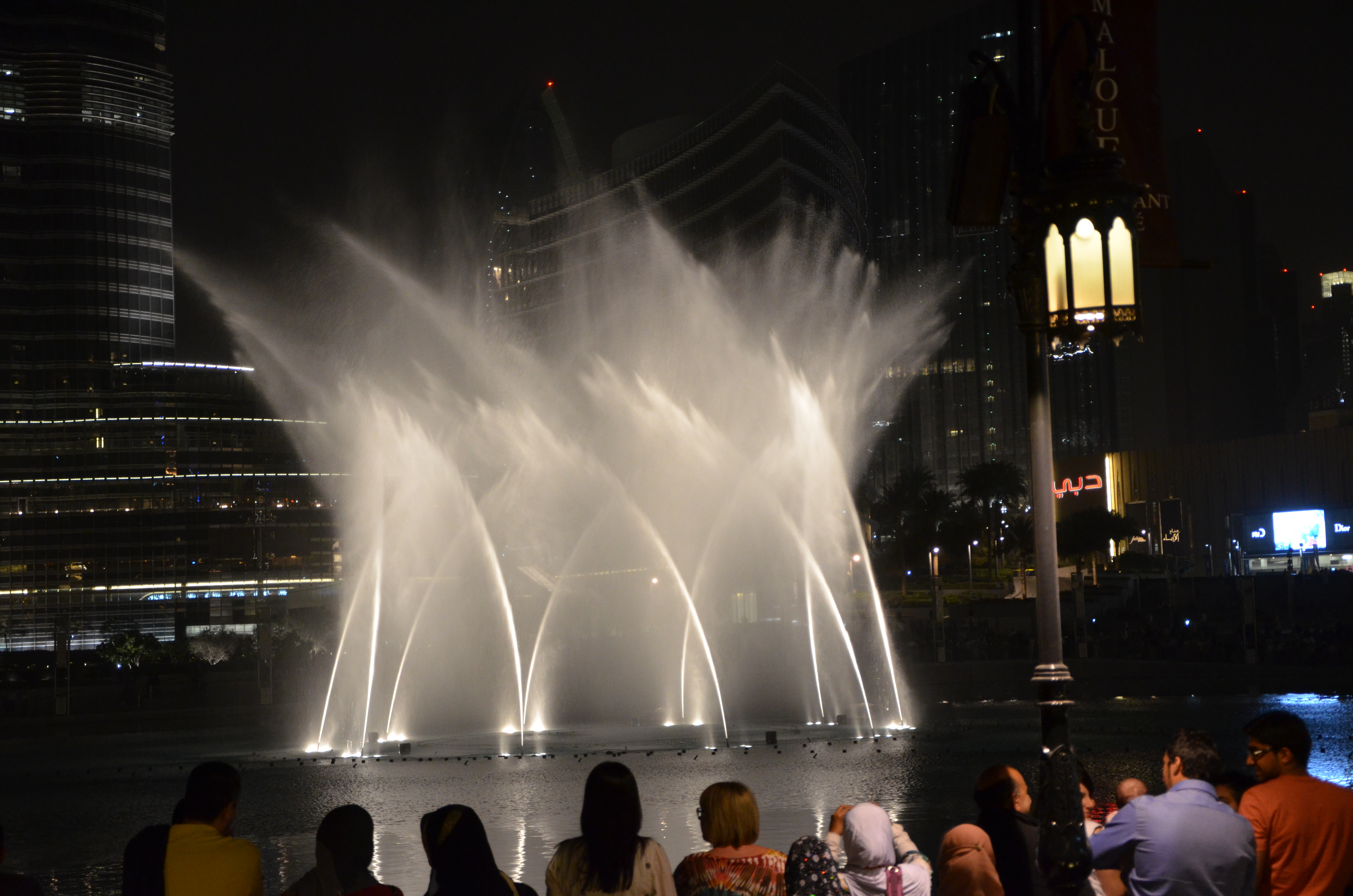
The Dubai Fountain performs in the 30-acre Burj Lake at the base of the tower. Choreographed shows every 30 minutes from 6 PM to 11 PM (afternoon shows 1 PM and 1:30 PM). Free. Five-minute shows synced to music — from Whitney Houston to Arabic classics. Watch from the elevated boardwalk or take an Abra boat ride on the lake (75 AED) for water-level perspective.
Souk Al Bahar across the bridge is a stylized Arabian souk with Western brands and high-end restaurants — not authentic but pleasant for the architecture. Karma Kafe for Asian fusion (200-300 AED/person), Toko for Japanese with fountain views, or Asado for Argentinian grill at The Palace Downtown.
Evening: Burj Khalifa Sunset and Mall of the Emirates (5 PM – 10 PM)
If you booked the sunset Burj slot, head up 60 minutes before sunset. Otherwise, take the Dubai Metro Red Line (Burj Khalifa/Dubai Mall station) west to Mall of the Emirates — home to the worlds first indoor ski slope, Ski Dubai (250 AED for 2 hours). Even if you do not ski, the viewing platform inside Aprs Lounge serves drinks while you watch penguins and snowboarders through glass.
Dinner at Zheng He at Madinat Jumeirah (Cantonese, 250-400 AED) or simpler at Ravi Restaurant in Al Satwa (Pakistani legend, 30-50 AED for full meal, no alcohol, cash preferred).
Day 2: Old Dubai and Desert Safari

Morning: Al Fahidi Historical Neighborhood (8 AM – 11 AM)
Take the Metro to Al Ghubaiba or taxi to the Bur Dubai side of Dubai Creek. The Al Fahidi Historical Neighborhood (also called Bastakiya) is the surviving heart of pre-oil Dubai — 50 restored coral-stone houses with wind-tower (barjeel) cooling systems dating to 1890s, when the area was settled by Persian merchants from Bastak in Iran (hence the name).
Dubai Museum in the 1787 Al Fahidi Fort (3 AED, currently under renovation until late 2026 — may be partially closed). The Coffee Museum (free, 1-hour visit), the Coin Museum, and the Sheikh Mohammed Centre for Cultural Understanding offer cultural breakfasts (115 AED) with explanations of Emirati customs.
Walk to Dubai Creek and take a traditional abra (water taxi) across to the Deira side. 1 AED each way, runs continuously, journey takes 5 minutes. The 100-year-old wooden boats are the same design used by pearl divers in the 1900s. From the Deira abra station, walk 5 minutes to the Spice Souk (saffron 30-50 AED per gram, frankincense, dried lime, baharat blends, rose petals — bargain to 60% of asking price) and the adjacent Gold Souk, the worlds largest gold market by trade volume (10 tons of gold on display at any given time).
Lunch: Local Eats in Bur Dubai (11:30 AM – 1 PM)
Ravi Restaurant (Al Satwa neighborhood, 5-minute taxi from Al Fahidi) for legendary Pakistani food since 1978. Mutton karahi 45 AED, chicken biryani 35 AED, fresh roti 3 AED each. Or Al Mallah for Lebanese (Diyafah Road, manakish 20-35 AED, shawarma 18 AED).
Afternoon and Evening: Desert Safari (3 PM – 11 PM)
The desert safari is the unmissable Dubai experience and runs in the afternoon (pickup 3-3:30 PM, return 10:30-11 PM). Book through ethical operators: Platinum Heritage (heritage Land Rover Series IIIs in conservation area, 600-1,200 AED) or Arabian Adventures (standard 4×4 dune bashing, 350-450 AED) avoid uncertified operators in Al Quoz with the cheapest prices — they often abuse animals and damage protected dunes.
The standard package: pickup in air-conditioned 4×4 from your hotel, drive 45 minutes to the Dubai Desert Conservation Reserve, dune bashing (40-minute roller-coaster ride over the dunes — inform driver if motion-sick), sunset photo stop on a high dune, camel ride at Bedouin-style camp (5-10 minutes), henna painting, falcon photography, traditional buffet dinner under the stars (lamb, chicken, hummus, salads), Tanoura whirling-dervish dance show, belly dance, fire show, shisha optional.
For the more refined experience: Platinum Heritage Royal Desert Retreat (1,200 AED) includes traditional Arabic falconry demonstrations, vintage Land Rover drive, multi-course dinner with Emirati specialties (slow-cooked goat, harees, luqaimat dessert), live oud music, and the option to camp overnight in a Bedouin tent (separate package 2,500+ AED). The same conservation reserve houses 9 endemic species including the Arabian oryx and the threatened gordon wild cat.
Day 3: Palm Jumeirah and Dubai Marina

Morning: Palm Jumeirah (8 AM – 12 PM)
The Palm Jumeirah is the smaller of two completed artificial palm islands (a third, Palm Deira, is on permanent hold). Construction 2001-2007 used 94 million cubic meters of sand and 7 million tons of rock, all visible from space. The 16 fronds extend from the trunk to the encircling 11-km crescent breakwater.
Take the Palm Monorail (Gateway Station near Atlantis) for the 5.4 km elevated ride along the trunk to the crescent (25 AED one-way). Get off at Atlantis to visit Atlantis Aquaventure Waterpark (380 AED day pass, the worlds largest waterpark with the 1.6 km Lazy River), The Lost Chambers Aquarium (130 AED, 65,000 marine animals in Atlantean-themed tanks), or just walk the resort.
The View at the Palm on Palm Tower (200 AED) gives the panoramic photo of the palm-shaped island from 240m altitude. Best at sunset. For lunch, Nobu Atlantis (Japanese-Peruvian, 400-600 AED), Bread Street Kitchen (Gordon Ramsay, 250-400 AED), or budget Pier Chic (seafood on stilts over the sea at Madinat Jumeirah, 350+ AED).
Afternoon: Dubai Marina and JBR (12 PM – 5 PM)
Take the Metro Red Line to DMCC or Jumeirah Lakes Towers for Dubai Marina, the man-made canal city with 200+ skyscrapers along a 3-km canal. Marina Walk 7-km promenade for restaurants and waterfront strolling. The Cayan Tower (twisting 75-floor residential tower that rotates 90 degrees over its height) and the JW Marriott Marquis (alex 355m, was tallest hotel in the world 2012-2018).
Adjacent JBR (Jumeirah Beach Residence) has the 1.7-km public beach and The Walk JBR pedestrian boulevard. Bluewaters Island connected by bridge contains Ain Dubai, the worlds tallest observation wheel at 250 meters in diameter (160 AED, 38-minute rotation). Skip if you did Burj Khalifa.
Evening: Dhow Cruise or Rooftop Sunset (6 PM – 11 PM)
For the final evening, two excellent options. Marina dhow cruise: traditional wooden boats reimagined as floating restaurants. 2-hour dinner cruise 180-350 AED depending on operator (Royal Yacht, Lotus, Bateaux Dubai). Departures from Marina Walk at 8 PM. Buffet of international and Arabic, live music, dance performances. Or creek dhow cruise through old Dubai with historical narration (150-250 AED).
Rooftop alternative: Burj Al Arab Skyview Bar (the iconic 7-star sail hotel, 600 AED minimum spend per person, reservation only). Cloud 22 at Sls Dubai (75th floor infinity pool with bar, 300+ AED). Cescas Lounge at Address Beach Resort (294 meters up, 250 AED).
Where to Stay in Dubai
Downtown Dubai – Best for First-Timers
Walking distance to Burj Khalifa, Dubai Mall, and Dubai Opera. Easy Metro access. The Address Downtown from $400/night (rooms overlook Burj Khalifa, infinity pool). Armani Hotel inside Burj Khalifa itself from $700/night (designed by Giorgio Armani personally). Vida Downtown from $250/night (modern boutique, walking distance to mall).
Palm Jumeirah – Resort Experience
Beach resort vibe, requires taxi/Metro+monorail to reach Downtown (40 minutes). Atlantis The Palm from $400 (with Aquaventure access). One&Only The Palm from $850 (adults-oriented, beachfront). Atlantis The Royal from $1,800 (Beyonce performed at the opening party in 2023, ultra-luxury).
Marina/JBR – Beach and Nightlife
Modern beach district. Address Beach Resort JBR from $450 (the 294m sky pool). Movenpick Hotel JBR from $200. Hilton Garden Inn Mall of the Emirates from $90 (budget mall access).
Budget
Premier Inn Dubai International Airport from $50. Rove Downtown from $120 (excellent value, modern). Citymax Bur Dubai from $70 (old town access).
Where to Eat in Dubai
Dubai is a global food city without a strong native cuisine — the population is 90% foreign-born and the food scene reflects this. The local Emirati specialties to try: luqaimat (sweet fried dough balls with date syrup), balaleet (sweet saffron vermicelli with eggs), machboos (spiced rice with chicken or lamb), harees (slow-cooked wheat and meat porridge), shawarma (ubiquitous, best at Al Mallah), karak chai (sweet milky tea at 1 AED per cup).
Fine Dining
Pierchic (Al Qasr Madinat Jumeirah, on stilts over the Persian Gulf, seafood, 500-800 AED/person). Zuma (DIFC, Japanese contemporary, 400-700 AED). Nobu (Atlantis). Trsind Studio (1 Michelin Indian, 1,500 AED tasting). Hakkasan (Cantonese in Jumeirah). Stay by Yannick Alleno (1 Michelin French at One&Only).
Mid-Range and Casual
Logma (Dubai Mall, modern Emirati, 80-150 AED). Bait Al Mandi (Yemeni mandi rice). Al Ustad Special Kabab (Bur Dubai, since 1978, Iranian kebabs 30-60 AED). Operation Falafel (multiple locations, Levantine fast-casual). Bombay Bungalow (Indian, JBR Beach Walk).
Street Food and Cheap Eats
Ravi Restaurant (Al Satwa, Pakistani, 30-60 AED). Al Mallah (Lebanese shawarma 18 AED). SikkaCafe (Al Fahidi, Emirati cafe). Iranian Sandwich (Bur Dubai, 10 AED sandwiches). Sind Punjab (Al Rigga, Pakistani biryani 20 AED). Visit the Last Exit Food Truck Parks (E11 highway exits 79 and 84) for 30+ food trucks.
Getting Around Dubai
Dubai Metro
Two lines (Red and Green) covering 90% of tourist destinations. Single rides 3-8.50 AED depending on zones. Buy a Nol Silver Card at any station (6 AED card + credit) for tap-and-go on Metro, Tram, buses, water taxis. Day pass 22 AED unlimited. Trains run 5 AM-midnight (Friday from 10 AM, Sunday from 8 AM). The driverless Red Line is the worlds longest fully automated metro at 53 km.
Taxis, Careem, Uber
Dubai Taxi metered, abundant, very affordable: starting 12 AED day / 12.50 night + 2 AED per km. Careem app (UAE-based) and Uber both operate. Cross-city ride 50-80 AED. For ladies-only, request a Pink taxi (women drivers, surcharge applies).
Dubai Airport Connections
Dubai International Airport (DXB): 5 km east of Downtown. Metro Red Line directly from Terminals 1 and 3 to Burj Khalifa station in 25 minutes (8 AED). Taxi 60-80 AED, 25-40 minutes depending on traffic. Uber/Careem 55-95 AED.
Al Maktoum International (DWC): 50 km south, mostly Emirates Air and budget carriers. Taxi to Downtown 150-200 AED, 45-60 minutes.
What to Know Before You Go
Best Time to Visit
November to March is the optimal window (25-30C, low humidity, perfect for outdoor activities). December peak season (high prices, Dubai Shopping Festival). Avoid June-September (40-48C, indoor-only). Ramadan dates shift annually (March-April 2026) — restaurants close during daylight, slower pace, but evenings spectacular with Iftar buffets.
Language and Money
Arabic is official but English is universally spoken in tourist areas, hotels, and restaurants. UAE Dirham (AED) is the currency, pegged to USD at 3.67. ATMs everywhere, cards accepted universally. Tipping: 10-15% at restaurants (often added as service charge already), 10-20 AED for hotel housekeeping, taxi rounding up.
Dress Code
Dubai is the most liberal Gulf city but cultural respect required. Cover shoulders and knees in malls, government offices, religious sites. Beachwear at hotel beaches and pools fine. At public beaches: cover up walking to/from. For mosques: women must cover hair, arms, ankles (abayas typically provided at major mosques).
Alcohol and Laws
Alcohol legal in licensed hotels, bars, and restaurants. Drink-driving zero tolerance — do not drink and drive, period. Public drunkenness illegal. Public displays of affection beyond hand-holding can result in warnings or fines. Photography of locals (especially women) without permission can lead to fines.
Safety
One of the safest cities globally — crime rates near zero. You can walk anywhere at any hour. The 2023-2024 Numbeo Safety Index ranks Dubai #11 worldwide for safety. Police helpful, English-speaking. The risks are: traffic accidents (heavy fines for jaywalking 200 AED), heat-related illness in summer (drink 3+ liters water/day), and the rare souvenir or rental car scam.
Common Mistakes First-Time Visitors Make
1. Visiting Burj Khalifa Without Pre-Booking
Walk-up tickets sell out 80% of days, especially sunset slots. Pre-book at burjkhalifa.ae at least 1-2 weeks ahead for the optimal sunset window.
2. Cheap Desert Safari Operators
The 150-200 AED safaris that aggressive touts sell in Al Quoz are usually unsafe (rolled vehicles in Mai 2024 made international news). Pay 350+ AED with reputable operators (Platinum Heritage, Arabian Adventures, Desert Adventures) in licensed conservation zones.
3. Underestimating Distances
Downtown to Marina is 25 km. Old Dubai to Palm is 30 km. Plan one major district per half-day; do not try to bounce between distant areas.
4. Ignoring Friday Brunch
Friday brunch is the Dubai social institution. Unlimited food and drinks at hotel restaurants from 1-4 PM, prices 350-1,200 AED. Reservation essential.
Cost Estimate: 3 Days in Dubai
Budget (2 people, 3 nights: 800-1,400 USD)
Accommodation: $80-130/night (Premier Inn, Citymax). Meals: $30-50/day pp (Pakistani, Lebanese, food courts). Transport: 30 AED for 3-day metro pass each. Attractions: $80 (Burj 124, Aquarium, abra). Desert safari: $95 budget operator.
Mid-Range (2,200-3,800 USD)
4-star Downtown hotel $200-300/night. Meals $80-120/day pp (mall restaurants, mid-range dining). Safari $130/person with reputable operator. Attractions $200/person (Burj SKY, Atlantis Aquarium, water park).
Luxury (5,500-12,000+ USD)
5-star Palm/Downtown $600-1,500/night. Meals $200-400/day pp (Nobu, Pierchic). Helicopter tour $200. Private desert safari with butler $1,200. Burj VIP $155. Yacht charter $1,500.
Frequently Asked Questions
Is 3 days enough in Dubai?
Yes for first-timers. Three days covers the essential icons (Burj Khalifa, Palm, Old Dubai), one desert safari, plus a sunset rooftop or dhow cruise. Add a fourth day for Abu Dhabi (Sheikh Zayed Mosque, Louvre Abu Dhabi) and a fifth for Hatta or Sharjah.
When is the best time to visit Dubai?
November to March (25-30C, low humidity). December peak season with highest prices. Avoid June-September (40-48C, indoor only). October and April are shoulder months with better prices and tolerable heat.
How much does a 3-day Dubai trip cost?
For 2 people: 800-1,400 USD budget, 2,200-3,800 mid-range, 5,500+ luxury, including hotels, food, transport, and major attractions. International flights extra.
Is alcohol allowed in Dubai?
Yes in licensed hotels, bars, and restaurants. Tourists can drink legally but not in public spaces or buy from supermarkets. Public drunkenness is illegal. Ramadan: daytime restrictions apply.
Do I need a visa for Dubai?
UK, EU, US, Canada, Australia, Japan citizens get 30-day visa on arrival free. Other nationalities should check UAE visa requirements 4-6 weeks before travel.
Is Dubai safe?
One of the worlds safest cities. Violent crime essentially nonexistent. The main risks are heat in summer, heavy traffic, and a few tourist-targeted scams in souks.
Can women travel solo to Dubai?
Yes, and it is one of the most solo-female-friendly destinations in the region. Women-only metro carriages, pink taxis with women drivers, strict laws against harassment.
What should I wear in Dubai?
Smart casual in malls and restaurants. Beachwear at hotel pools/beaches only. Cover shoulders and knees in religious sites and government buildings. Local women dress modestly; visitors expected to respect this.
Final Thoughts
Three days in Dubai is enough to experience the city at its most theatrical. The combination of vertical ambition (Burj Khalifa), engineered geography (Palm Jumeirah), preserved heritage (Al Fahidi), and the contrast with the ancient desert 30 minutes away is unique on the planet. The city is criticized for being soulless; the reality is that its identity is being deliberately and successfully constructed in real time.
Skip the package shopping malls in favor of one or two iconic experiences. Take the cheap abra across the creek to remind yourself a working harbor still exists beneath the skyscrapers. Eat at Ravi rather than at the brand restaurants. Dubai rewards visitors who let the contrasts work on them rather than trying to fit it into a familiar box.