


Amsterdam is one of those cities where three days is exactly the right amount of time. It is small enough to walk across in 45 minutes, but dense enough that you can spend a week and still find streets you have not seen. The historic center inside the Singelgracht canal ring is barely 8 square kilometers — smaller than Central Park — yet contains 17th-century merchant houses, 100 kilometers of canals, three world-class museums, and 165 nationalities living together in a way that feels neither touristy nor sanitized.
This itinerary takes you through the three core experiences of the city: the art and architecture of the Golden Age at the Rijksmuseum and Van Gogh, the canal-side neighborhoods where life actually happens (Jordaan, De Pijp, the Nine Streets), and the contemporary creative side of NDSM and east Amsterdam. You will eat pancakes in a 17th-century church, drink Belgian beer in a bar that has not redecorated since 1880, and watch the sun set from a houseboat. Three days, around 22 kilometers of walking, and almost no tourist trap traps.
Quick Amsterdam Hotel Search
- Why 3 Days Works (and What You Will Miss)
- Day 1: The Canal Ring, Anne Frank House, the Jordaan
- Day 2: Museum Quarter, Vondelpark, De Pijp
- Day 3: Eastern Docklands, NDSM, or a Day Trip
- Where to Stay in Amsterdam: Best Neighborhoods
- Where to Eat in Amsterdam
- Getting Around Amsterdam
- What to Know Before You Go
- Common Mistakes First-Time Visitors Make
- Estimated Costs: 3 Days in Amsterdam
- Frequently Asked Questions
- Final Thoughts
Why 3 Days Works (and What You Will Miss)
Amsterdam’s appeal is geographic. The city was built outward in concentric rings starting in the 12th century around a dam on the Amstel river. The medieval core (where Dam Square sits) is surrounded by the 17th-century Canal Belt — the Singel, Herengracht, Keizersgracht, and Prinsengracht canals, dug between 1613 and 1665 to expand the city when Amsterdam was the richest city in the world. Beyond the Prinsengracht sits the working-class Jordaan (now gentrified), and further out the 19th and 20th-century rings. UNESCO recognized the Canal Belt as a World Heritage Site in 2010 — it is the largest entirely man-made urban landscape on the planet.
Three days gives you the canal ring, the major museums (Rijksmuseum, Van Gogh, Anne Frank House), the Jordaan, De Pijp food scene, and time to walk and sit and exist in Amsterdam rather than rush from sight to sight. You will not have time for day trips to Zaanse Schans windmills, Keukenhof tulip gardens (if you happen to visit in tulip season, March-May), Haarlem, the Hague, or Rotterdam. You will not see the Stedelijk Museum properly. You will not get to NDSM Wharf for the artist studios and street art unless you sacrifice a half-day elsewhere.
What three days gives you is the feeling of Amsterdam: the click of bike tires on cobblestones at 7:30 AM, the smell of fresh-baked bread and old church wood, the way light bounces off canal water onto the underside of bridges, the relaxed Dutch directness that takes 24 hours to get used to and then feels like the most efficient communication style you have ever encountered.
If you have four or five days, add a half-day in Haarlem (the medieval town 15 minutes by train, the model that 17th-century Amsterdam was modeled after), Keukenhof if it is the season, or a serious afternoon at NDSM and the eastern docklands.
Day 1: The Canal Ring, Anne Frank House, the Jordaan
Start at the Centraal Station and walk south. Amsterdam orients itself around the station — the medieval city begins immediately south of it, and the canal rings spread out from there in concentric semicircles. The walk from Centraal to Dam Square takes 10 minutes through Damrak, the main commercial drag (skip the souvenir shops and chain restaurants — walk fast). At Dam Square you stand at the literal origin point of the city, where in 1270 the river Amstel was dammed (Amstel-dam) and a fishing village grew up around the dam.
Morning: Anne Frank House (8:30 AM – 10:30 AM)
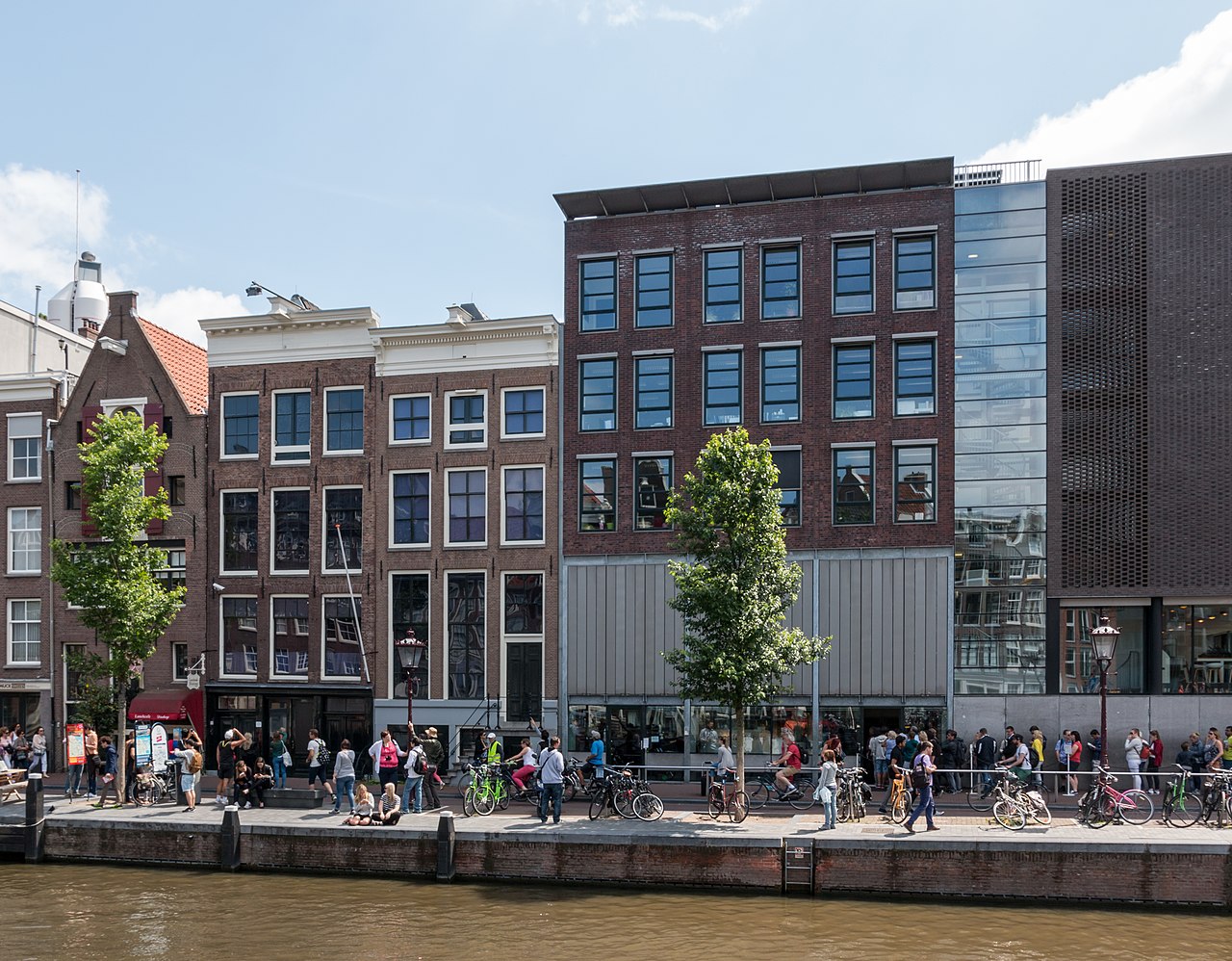
Walk west from Dam Square along Raadhuisstraat, cross the Singel canal, and 12 minutes later arrive at Prinsengracht 263 — the Anne Frank House. This is the building where Anne, her parents Otto and Edith, her sister Margot, and four other people hid from the Nazis between July 6, 1942, and August 4, 1944. They were betrayed (the source has never been definitively identified) and arrested. Anne died in Bergen-Belsen in February 1945, at age 15, two months before liberation. Otto was the only survivor of the eight people in hiding.
The museum is built around the actual rooms of the Secret Annex, hidden behind a movable bookcase on the upper floors of Otto Frank’s pectin and spice business. You walk through these rooms. Anne’s wallpaper, still on the walls. Her movie star magazine cuttings, pasted to the wall, that she put up to make her bedroom feel less like a hiding place. The 1944 calendar marked through August 4. The diary itself is on display elsewhere in the museum — the original red-and-white checkered notebook is in a case behind glass.
Tickets are 16 euros, sold exclusively online through the Anne Frank House website at annefrank.org. They are released in batches at 10 AM Amsterdam time, six weeks before the visit date. They sell out in 30 minutes. Book six weeks ahead, no exceptions — there is no walk-up option, no scalping, no way around it. If you cannot get a slot, check the website daily for last-minute releases at 9 PM the night before. The audio guide is included and excellent. Allow 75-90 minutes for the full visit. The museum opens at 9 AM and you want the earliest slot you can get.
After the visit, sit on the bench by the Prinsengracht for 20 minutes. The museum is emotionally heavy and a transition matters. There is a small café attached to the museum for coffee and a moment of pause.
Mid-Morning: Westerkerk and the Nine Streets (11 AM – 1 PM)
Directly next to the Anne Frank House stands the Westerkerk — the largest Protestant church in the Netherlands, built between 1620 and 1631. Rembrandt is buried somewhere inside (in an unmarked pauper’s grave — he died bankrupt in 1669 and the exact location of his bones is lost). The tower, 85 meters tall and topped with the imperial crown of Maximilian I, was Anne Frank’s only view of the outside world from the Annex. She wrote about hearing the bells — they ring every 15 minutes and the 6 PM full carillon plays the Dutch national anthem. The tower climb is 9.50 euros, by guided tour only, every half hour. 186 steps. Best view in the canal ring.
Walk south into the Nine Streets (De Negen Straatjes) — a three-by-three grid of small streets between the Prinsengracht, Keizersgracht, Herengracht, and Singel canals. The area was built in the 17th century as the warehousing district for the canal merchants’ homes. The big merchant houses faced the canals, and behind them on these small streets were the kitchens, servants’ quarters, and storage. Today the Nine Streets is the most concentrated shopping area in central Amsterdam — vintage shops, Dutch independent designers, specialty bookstores, cheese shops, and small cafes. Walk slowly, duck into shops that look interesting.
For coffee or a snack: Pluk (Reestraat 19) for excellent flat whites and avocado toast in a bright space, around 5-8 euros. Or Café Winkel 43 (Noordermarkt 43, edge of the Jordaan) for the famous Dutch apple pie, 5 euros a slice with whipped cream. Winkel 43 has been making the same apple pie since 1981, and the locals say it is the best in Amsterdam. Mondays and Saturdays it overlaps with the farmers’ market on the square outside.
Lunch: The Jordaan (1 PM – 2:30 PM)
Cross the Prinsengracht west into the Jordaan, the former working-class neighborhood of artisans, Huguenot refugees, and Jewish immigrants that has become one of the most desirable residential districts in Amsterdam. The streets are narrow, the buildings tilt forward (intentional 17th-century design to prevent moving furniture from scraping the facade as it was hoisted up by the rooftop hook), and the canals here are quieter than the main rings.
For lunch: Café ‘t Smalle (Egelantiersgracht 12) — a brown café (Amsterdam’s traditional bar) inside an 18th-century jenever distillery building. The interior has not been redecorated meaningfully since the 19th century. Order a kroket (Dutch deep-fried croquette) with mustard, a Dutch cheese sandwich (broodje kaas), and a glass of jenever (Dutch gin, the ancestor of all gin), 15-20 euros total. The waterside terrace overlooks the Egelantiersgracht canal — one of the quietest and prettiest in the city.
Alternative: Café Papeneiland (Prinsengracht 2) at the very edge of the Jordaan — a 17th-century building, Bill Clinton stopped here for apple pie during a state visit (the photo is on the wall), and the dark wooden interior is exactly what people imagine when they think “old Amsterdam café.”
Afternoon: Jordaan Wandering and Hidden Hofjes (2:30 PM – 5 PM)
Spend the afternoon walking the Jordaan with no fixed destination. The neighborhood is small enough that you cannot get truly lost — hit the Prinsengracht on one side, the Lijnbaansgracht on the other. The hofjes are the secret weapon. A hofje is a courtyard of almshouses, originally built as charitable housing for the elderly and women in the 16th-18th centuries. There are over 20 of them in central Amsterdam, mostly hidden behind unmarked doors. Push the door and walk in.
Karthuizerhof (Karthuizersstraat 21-131) is one of the largest, built in 1650, a long peaceful courtyard with two rows of small houses facing each other across a lawn with two old water pumps. Claes Claeszhofje (entrance through 1e Egelantiersdwarsstraat 1-5) is one of the most beautiful, a tiny garden courtyard with red shutters. Suykerhofje (Prinsengracht 385-393) and De Star Hofje (Prinsengracht 89-133) are accessible during daytime hours. Be quiet — people still live in these houses.
End the afternoon at the Noordermarkt on Monday or Saturday morning if your day aligns — the antique and farmer’s market that has been running on this square since 1620. Otherwise, walk to Brouwersgracht (“Brewers’ Canal”) for what is widely considered the prettiest canal in Amsterdam — brick warehouses converted to apartments, narrow stone bridges, and almost no tourist traffic.
Evening: Canal Cruise and Dinner (5:30 PM – 10 PM)
Amsterdam has 100 kilometers of canals. Seeing the city from the water is essential — it is not a tourist cliché, it is the perspective the city was designed to be seen from. The 17th-century merchants who built the canal houses oriented them to the water, with their grandest facades, their lifting hooks at the rooftop, their stone front stoops.
Skip the big tour boats that hold 100 passengers. Book a small electric boat (8-12 people max) with companies like Those Dam Boat Guys (35 euros, 90 minutes, BYOB), Mr. Bike Boat, or the Pure Boats classic salon boats. Sunset cruises (boarding around 7:30 PM in summer, 4:30 PM in winter) give you the best light, when the canal-house facades go from amber to deep gold to blue. The boats glide under the low arched bridges — some are so low passengers have to duck.
For dinner after the cruise: Restaurant De Reiger (Nieuwe Leliestraat 34, Jordaan) for classic Dutch-bistro cooking — grilled fish, mushroom soup, apple tart, 35-45 euros per person. Bistro Bij Ons (Prinsengracht 287) for genuine Dutch traditional food — stamppot (mashed potatoes with kale and sausage), hutspot, snert (pea soup), 25-35 euros per person. Booking essential a week ahead.
After dinner, walk the Prinsengracht or the Brouwersgracht. Amsterdam at night, especially after the day-trippers have gone home, is one of the great urban experiences — quiet, lit by the warm glow of canal-house windows, the occasional bicycle still passing along the cobbles.
Day 2: Museum Quarter, Vondelpark, De Pijp
Day 2 is the cultural day. Three museums in the morning and early afternoon (one optional), a long lunch, then the De Pijp neighborhood and Albert Cuypmarkt in the late afternoon. This is a lot of walking and a lot of art — pace yourself.
Morning: Rijksmuseum (8:30 AM – 12 PM)
The Rijksmuseum (Museumstraat 1) is the Dutch national museum and one of the best art museums in Europe. The building, designed by Pierre Cuypers and opened in 1885, was massively renovated between 2003 and 2013 — the result is one of the most beautifully presented museum experiences anywhere. The collection holds 8,000 objects on display from 800,000 in storage, spanning Dutch history from 1200 to the present.
Tickets are 25 euros, pre-book online to skip the line. Open 9 AM, arrive at 8:50 AM. Allow three hours minimum. The museum is honestly endless — you could spend two days here — but three hours lets you see the essentials.
The Gallery of Honour on the second floor is the unavoidable spine of the visit. The full length of the gallery leads to Rembrandt’s Night Watch (1642), the 363 × 437 cm group portrait of Captain Frans Banning Cocq’s militia company. The painting is in active restoration as of 2026 — a glass wall lets you watch conservators working in real time. Along the gallery: Vermeer’s Milkmaid (1658), Woman Reading a Letter, and View of Delft (technically the Mauritshuis has View of Delft — but other Vermeers are here). Frans Hals’ Merry Drinker. Pieter de Hooch’s domestic interiors.
Beyond the Gallery of Honour: the doll houses (incredible miniature reproductions of 17th-century interiors, used as adult status objects rather than children’s toys, the largest containing 700+ individual pieces), the special collections (ship models, weapons, scientific instruments), the Asian Pavilion (separate building, often skipped, has the only Buddha statue in the Netherlands designated a national monument), and the 19th-century gallery with Van Gogh’s Self-Portrait as the standout.
The Rijksmuseum café (ground floor) is genuinely good and not overpriced — 12-euro sandwiches and salads. The museum garden is open free to the public if you want to take a coffee outside the entrance.
Late Morning: Van Gogh Museum (12 PM – 2 PM)
Cross Museumplein (the broad open square between the museums, with the famous “I Amsterdam” sign that was removed in 2018 — if you want a photo, the lettering is now at NDSM Wharf and Schiphol airport, not here anymore) to the Van Gogh Museum. This is the largest collection of Van Gogh’s work in the world: 200 paintings, 500 drawings, 750 letters, plus works by his contemporaries (Gauguin, Toulouse-Lautrec, Monet). The collection was built around the works that remained with Vincent’s brother Theo’s family after Vincent’s death in 1890.
Tickets are 22 euros, timed entry, book online weeks ahead. Allow 90 minutes to 2 hours. The collection is organized chronologically, taking you through Van Gogh’s evolution: the dark Dutch period (Potato Eaters), the move to Paris and the discovery of Impressionism (lighter palette, urban scenes), the move to Arles in 1888 (the famous Sunflowers, the Yellow House, the Bedroom), the breakdown and the asylum at Saint-Rémy (Almond Blossom, Starry Night Over the Rhône — which is here, not the more famous Starry Night which is at MoMA), and the final months in Auvers-sur-Oise leading to his suicide in July 1890 at age 37.
The audio guide (5 euros, often included with ticket promotions) is exceptional. The museum is busy — crowds peak between 11 AM and 2 PM — but the spaces are wide enough that it does not feel crushed.
Optional: Stedelijk Museum (2 PM – 3:30 PM)
Directly adjacent is the Stedelijk Museum, the Dutch modern and contemporary art museum. 22 euros entry. Strong collection of De Stijl (Mondrian), CoBrA (the post-war Northern European art movement, Karel Appel), and contemporary Dutch and international work. Skip if you have art fatigue from the first two museums. The Rijksmuseum and Van Gogh together are 5 hours of intense looking; adding the Stedelijk is a stretch unless you are specifically into modern art.
Lunch: Vondelpark (2:30 PM or 3:30 PM – 4:30 PM)
Walk one block west to Vondelpark, Amsterdam’s largest central park, 47 hectares of meadows, ponds, paths, and small cafés. The park opened in 1865 and is named after the 17th-century playwright Joost van den Vondel. 15 million visitors a year, locals run, picnic, sunbathe, walk dogs, bike through it.
For a late lunch in the park: The Vondelpark3 café (Vondelpark 3) in a 19th-century pavilion overlooking the pond, 15-20 euros for a sandwich and salad. Or grab supplies (cheese, bread, fruit) from a supermarket and picnic on the grass — this is what most Amsterdammers do on a sunny afternoon.
Late Afternoon: De Pijp and the Albert Cuypmarkt (4:30 PM – 7 PM)
Walk south through Museumplein and east toward De Pijp (“the Pipe”), the 19th-century working-class neighborhood that became Amsterdam’s most diverse and food-forward district. The neighborhood was built between 1860 and 1900 to house labor migrants flooding into the booming port city. Today it is multi-ethnic (Turkish, Moroccan, Surinamese, Dutch, plus expats and students), and it has the densest concentration of good restaurants and bars per square meter in Amsterdam.
The spine of De Pijp is the Albert Cuypmarkt — the largest open-air daily market in Europe, running Monday through Saturday (9:30 AM to 5 PM), 260 stalls strung along Albert Cuypstraat for nearly one kilometer. Walk the full length. Cheese (try Dutch oude kaas, aged 18-24 months, 3 euros for a wedge), stroopwafels (the famous syrup-filled waffle cookies, freshly pressed at stalls like Original Stroopwafels, 2.50 euros each), Surinamese broodjes (stuffed bread rolls with chicken and vegetables, 7 euros), fresh herring (a Dutch specialty — raw herring eaten with onions, hold by the tail, dip in onions, eat in two bites, 4 euros), Turkish lahmacun (thin meat-topped flatbread), and 200 other things.
Side streets off Albert Cuyp are where the locals eat. Bar Bukowski (1e Sweelinckstraat 10) for excellent burgers and brunch. Brouwerij Troost (Cornelis Troostplein 23) for craft beer made on site. Volt (Ferdinand Bolstraat 178) for serious modern European cooking, 60 euros for three courses, reservation needed.
Evening: Heineken Experience (Optional) and Dinner (7 PM – 11 PM)
The Heineken Experience at Stadhouderskade 78 is the original Heineken brewery (closed for actual production in 1988, converted to a guided museum experience). 23 euros, includes two beers and an interactive tour of brewing, history, and the company. It is genuinely fun rather than a tourist trap — the historical material is solid, the brewery building is beautiful, and the beer tasting is generous. 90 minutes. Skip if you do not drink beer; book ahead online.
For dinner, stay in De Pijp or walk toward the canal ring: Buffet van Odette (Prinsengracht 598) for high-quality casual Dutch-Mediterranean, 35 euros per person. Restaurant De Kas (in the eastern Park Frankendael, 10 minutes by tram) for vegetable-forward fine dining inside a 1926 greenhouse, 55-euro fixed-menu lunch or 75-euro dinner, must reserve weeks ahead, considered one of the best dining experiences in Amsterdam.

Day 3: Eastern Docklands, NDSM, or a Day Trip
Day 3 is your choice between three different Amsterdams. Option A: the eastern docklands and NEMO Science Museum — a deeper dive into modern Amsterdam, architecture, design, contemporary life. Option B: NDSM Wharf and Amsterdam Noord — the post-industrial creative neighborhood across the IJ harbor, accessible by free ferry from Centraal Station. Option C: a day trip to Haarlem, Zaanse Schans, or Keukenhof (if in season).
Option A: Eastern Docklands, NEMO, and Jewish Quarter
Start at NEMO Science Museum (Oosterdok 2) — the bright green ship-shaped building designed by Renzo Piano in 1997, sitting on the water just east of Centraal Station. NEMO is a children’s science museum, primarily — adults without kids should still go up to the free public roof terrace for one of the best panoramic views of central Amsterdam (the canal ring spread out west, the IJ harbor north). If you have kids, the museum itself is excellent: 5 floors of interactive science exhibits, 19.50-euro adult entry.
Walk south to Plantage, the 19th-century green district built when Amsterdam expanded east in the mid-1800s. The neighborhood contains the Hortus Botanicus (Plantage Middenlaan 2A) — one of the oldest botanical gardens in the world, founded in 1638 as a medicinal garden, 12 euros entry, 4,000 plant species. Also the Wertheimpark (small leafy park with the Auschwitz Memorial — “Never Again Auschwitz”) and Artis (the city zoo, 24 euros if you go).
Just west of Plantage is the historic Jewish Cultural Quarter — the area where the Dutch Jewish community was concentrated from the 17th century until the Nazi occupation. Key sites: the Portuguese Synagogue (1675), one of the largest synagogues in Europe, still lit only by candles, no electricity, services using a 17th-century Sephardic ritual. The Jewish Historical Museum (Nieuwe Amstelstraat 1). The National Holocaust Museum (opened March 2024, the first permanent museum specifically dedicated to the Holocaust in the Netherlands, where 75% of the Dutch Jewish population was murdered).
Lunch in the area: Hesp (Weesperzijde 130) on the Amstel river, a 1900 café with a perfect waterside terrace, 15-25 euros for sandwiches and salads.
Option B: NDSM Wharf and Amsterdam Noord
Take the free ferry from Centraal Station to NDSM — the ferry leaves every 15 minutes, takes 15 minutes to cross, includes bikes, and the views back to the city skyline from the water are excellent. NDSM was a shipyard until 1984, when the Dutch shipbuilding industry collapsed. The 90,000-square-meter site was abandoned for two decades, occupied by squatters and artists, and is now a managed creative zone with studios, restaurants, music venues, the IJ-Hallen monthly flea market (largest in Europe, 60 euros per stall, 600+ stalls on the first weekend of each month), and the famous “I amsterdam” sign (moved here from Museumplein in 2018).
Walk through the old shipbuilding sheds, now converted to artist studios open to the public on some weekends. Visit Pllek (T.T. Neveritaweg 59), a beach-shack restaurant built from shipping containers, with a literal sand beach facing the IJ harbor and city skyline. Burgers, salads, brunch, 12-22 euros, packed in summer when the beach fills with Amsterdammers in their 20s and 30s. Sunset here, with the skyline glittering across the water, is one of the better Amsterdam moments.
Other Noord stops: Eye Filmmuseum (IJpromenade 1) — the dramatic white asymmetric building visible from Centraal Station, dedicated to film, 12 euros entry plus screenings (Dutch and international cinema, often in original language with English subtitles). A’DAM Lookout in the A’DAM Tower has a 360-degree observation deck and a sky swing that dangles you over the edge of the building (15.50 euros general, 17 euros with swing).
Option C: Day Trip to Haarlem or Keukenhof
Haarlem is 15 minutes by train (5.40 euros each way, leaves every 10 minutes from Centraal Station). It is a medieval town of 165,000 people, with a perfectly preserved historic center smaller and quieter than Amsterdam’s. Highlights: the Grote Markt (one of the most beautiful market squares in the Netherlands), the Grote Kerk (Saint Bavo Church, 14th century, Mozart played its 5,000-pipe organ at age 10), and the Frans Hals Museum dedicated to the 17th-century portraitist who lived and worked in the city. 5-6 hours including travel is enough.
Keukenhof only operates 8 weeks per year, mid-March to mid-May (depending on tulip season). The 32-hectare flower garden has 7 million bulbs planted each season — tulips, daffodils, hyacinths, crocuses, lilies. 21.50 euros entry, 32 km from Amsterdam, 90 minutes by bus and train combination, or 60 minutes by car. Allow a full day. Goes out in flower-season; not relevant outside those weeks.
Evening: Final Dinner and Brown Café Drinks
For the final night, sample two essential Amsterdam evening institutions. The brown café (bruin café) is the traditional Dutch pub — dark wood interior stained by centuries of tobacco smoke (the brown color), candles on the tables, regulars at the bar, jenever and beer, simple bar food. The institution dates to the 17th century. Most central brown cafés: Café Hoppe (Spui 18) since 1670, Café Chris (Bloemstraat 42) since 1624 — the oldest brown café in Amsterdam, Café In ‘t Aepjen (Zeedijk 1) inside one of only two remaining wooden houses in central Amsterdam, dating to 1550.
For dinner: a final Dutch classic. Moeders (Rozengracht 251) — the entire concept is “like your mom’s cooking” — stamppot, hutspot, snert, all with mismatched plates and the walls covered in photos of customers’ mothers. 25-35 euros per person. Hokey but warm and entirely authentic.
Where to Stay in Amsterdam: Best Neighborhoods
Amsterdam has clear neighborhood characters and your choice will shape the trip significantly. Stay inside the Singelgracht canal ring or in the Jordaan for the most central experience. Avoid hotels in Schiphol Airport area (40 minutes from the city), and in the De Wallen / Red Light District (touristy, noisy, surrounded by tourist bars).
Find Your Amsterdam Hotel
Compare prices across Booking.com, Expedia, Agoda and more in one search.
Search Amsterdam Hotels →Canal Ring – Best for First-Timers
The canal ring is the postcard Amsterdam — you walk out your hotel door onto a cobbled canal-side street, with tilting 17th-century townhouses and bicycles chained to bridge railings.
The Hoxton, Herengracht (Herengracht 255) is the social-hotel option — five 17th-century canal houses combined, 111 rooms, big lobby that locals also use as a co-working space, excellent restaurant (Lotti’s). From 230 euros per night. The cheapest “Shoebox” rooms are tiny but the location is exceptional.
The Pulitzer Amsterdam (Prinsengracht 323) is the heritage luxury option — 25 connected canal houses (one of the few hotels that genuinely occupies historic Amsterdam buildings end-to-end), 225 rooms, courtyards and gardens between buildings, beautiful Pulitzer’s Bar overlooking the Prinsengracht. From 360 euros per night. Walking distance to Anne Frank House (3 minutes) and the Nine Streets.
Jordaan – Quieter and More Local
Just west of the canal ring, the Jordaan has the same architecture but quieter streets, more independent shops and cafes, and a residential feel.
Hotel Mr. Jordaan (Bloemgracht 102) is a 26-room boutique in two side-by-side 17th-century buildings on a Jordaan canal. From 180 euros per night. Small rooms, original wood beams, breakfast in a sunny canal-side room. Excellent value for the location.
De Pijp – Food Scene and Better Value
De Pijp is 10 minutes south of the canal ring by tram — not central but well-connected and significantly cheaper. The neighborhood is younger, more diverse, full of restaurants and bars.
Sir Albert Hotel (Albert Cuypstraat 2-6) in a former 19th-century diamond factory, 89 rooms, design-led, with a Japanese restaurant (Izakaya) and a tequila bar on site. From 200 euros per night.
Eastern Docklands – Modern and Newer
The eastern docklands area near NEMO and the Maritime Museum has newer hotels in repurposed warehouses or modern builds, often at better prices than the canal ring.
Hotel Jakarta Amsterdam (Javakade 766) is a striking newer hotel (opened 2018) on the IJ harbor, fully covered in tropical greenhouse plants in the atrium, with rooftop bar views of the city. From 180 euros per night. 15 minutes to Centraal Station by tram or ferry.

Where to Eat in Amsterdam
Dutch food has been historically underrated. The cuisine was shaped by long winters, the sea, dairy farms, and 400 years of trade routes bringing Indonesian, Surinamese, and Caribbean influences. Amsterdam restaurant scene in 2026 spans serious modern Dutch cooking, Indonesian rijsttafel (the colonial-era “rice table” feast), classic brown cafés, and an explosion of natural-wine bistros similar to what is happening in Paris and Copenhagen.
Dutch Classics
Moeders (Rozengracht 251) for stamppot, hutspot, and traditional comfort food. 25-35 euros per person. Café De Klepel (Prinsenstraat 22) for an excellent updated take on classic Dutch dishes. Greetje (Peperstraat 23-25) in the eastern Jewish quarter for high-quality contemporary Dutch with historical references — think pickled herring as amuse-bouche, smoked-eel dishes, salt-meadow lamb. 50-65 euros per person.
Indonesian Rijsttafel
The Indonesian rijsttafel was invented by the Dutch colonial administration in the East Indies (modern Indonesia) as a way to taste many small dishes at once — it does not exist this way in Indonesia itself. 15-30 small dishes arrive over a single seating: satay skewers, gado-gado (peanut-sauce vegetable salad), rendang (slow-cooked beef), various sambals, fried bananas. Tempo Doeloe (Utrechtsestraat 75) for the most-acclaimed traditional rijsttafel in Amsterdam, 39-50 euros per person, 18 to 25 small dishes, reservation needed. Sampurna (Singel 498) is cheaper and casual.
Modern Bistros and Natural Wine
Choux (De Ruyterkade 128) — vegetable-forward modern cooking inside a former gas factory, 65-euro tasting menu. Restaurant Breda (Singel 210) — surprising flavor combinations from the team trained at Noma, 7-course tasting menu 75 euros. Wilde Zwijnen (Javaplein 23, Eastern Docklands) — Dutch ingredients including game, 45-euro three-course menu.
Casual: Cheese, Herring, Pancakes, Stroopwafels
For a quick Dutch cheese experience, visit Kaaskamer (Runstraat 7) or Henri Willig (multiple locations) — sample 25+ varieties of Dutch cheeses (oude kaas, jong belegen, leiden cumin cheese, smoked gouda) at the counter. Pancake houses: Pancakes Amsterdam (multiple locations) for traditional Dutch pancakes (Dutch pancakes are crepe-thin and dinner-plate-sized, served with savory or sweet toppings), or Pancake Bakery (Prinsengracht 191) in a 17th-century canal warehouse — 75 different pancake options, 10-16 euros each.
Herring: try a fresh raw herring (haring) at a herring stand on a market or near a canal — Frens Haringhandel at the corner of Singel and Koningsplein is a famous classic stand. 4 euros for a fresh-prepared herring with onions and pickles. The proper Dutch technique is to hold it by the tail, dip the head in raw onions, and eat it in two bites.
Stroopwafels: get them fresh from the press, not in pre-packaged form. The pressed warm syrup-filled waffle cookie comes out of the iron at 2.50-3.50 euros from stalls at Albert Cuypmarkt, Spui market on Fridays, or specialist shops like Van Wonderen Stroopwafels (Damstraat 23A).
Getting Around Amsterdam
Walking and Biking
Central Amsterdam is small enough that walking gets you everywhere within the canal ring in 25 minutes maximum. The actual local transport is the bike. Amsterdam has 880,000 bicycles for 921,000 inhabitants, more bikes than people, and 515 kilometers of bike paths. The infrastructure is genuinely cyclable in a way New York and London are still struggling to achieve.
Flights to Amsterdam
Compare flight deals to Amsterdam (AMS) from 100+ airlines and 1,000 agencies.
Search Flights to Amsterdam →Rent a bike for your trip: MacBike (multiple locations, classic Dutch omafiets with backpedal brakes, 12 euros per day, deposit 50 euros), Black Bikes (similar pricing, all-black bikes that do not scream tourist), or A-Bike. Rules: ride on the right, signal turns with your arm, do not stop in the middle of bike paths, follow traffic lights, and accept that Amsterdam cyclists do not slow down for tourists who hesitate.
Trams and Metro
Amsterdam has 15 tram lines and 5 metro lines run by GVB. Buy a OV-chipkaart at any station (7.50 euros for the card plus credit) or a tourist 24/48/72/96-hour pass (8.50 / 13.50 / 19.00 / 24.00 euros respectively). The 72-hour pass is ideal for a 3-day trip. The tram is fastest within central Amsterdam, the metro is faster for longer distances (eg. to RAI conference center, Bijlmer, or Schiphol).
Schiphol Airport
Schiphol is 17 km southwest of central Amsterdam. The train from Schiphol to Centraal Station runs every 5-10 minutes, takes 17 minutes, costs 5.60 euros one-way. The metro line 52 also connects to central Amsterdam but is slower. Taxis are flat-rate 50 euros or use Uber for similar pricing. The Schiphol train station is in the airport basement, follow signs as you exit baggage claim.
Trains for Day Trips
Amsterdam Centraal connects via the NS national rail network to every Dutch city: Haarlem 15 min, Leiden 30 min, The Hague 45 min, Rotterdam 45 min, Utrecht 30 min. Buy tickets on the NS app or at machines (only Maestro/cash, foreign credit cards sometimes fail). Trains are punctual to the minute.
What to Know Before You Go
Language and Dutch Directness
Dutch people speak excellent English — the Netherlands consistently ranks first or second in the world in non-native English proficiency. You will not encounter any language barrier in Amsterdam. Learning a few Dutch words (Hallo / hi, Dank je / thanks, Tot ziens / goodbye) is appreciated but not necessary.
Dutch directness can feel rude to American or British visitors. It is not rude — it is informational efficiency. A Dutch server will not check on you four times during dinner because that is annoying. A Dutch shopkeeper will tell you directly that the dress does not fit rather than performing flattery. A Dutch friend will say “that is a stupid idea” rather than dance around it. You will adapt to this within 48 hours and find your home country’s communication style suddenly seems passive-aggressive.
Money and Tipping
Service is included in restaurant prices. Tipping is optional — leave the small change for good service (round up the bill, or 5-10% for a particularly good dinner). 20% American-style is incorrect and excessive. Bars: no tipping. Taxis: round up.
Credit cards work in most places but small cafes, market stalls, and some restaurants are cash-only or Maestro-only (the European debit-card system that does not include Visa or Mastercard). Carry 50 euros cash. ATMs are everywhere; use bank-branded machines (ING, Rabobank, ABN AMRO).
Safety
Amsterdam is very safe. Violent crime is rare. The actual risks: pickpocketing in tourist areas (Centraal Station, Damrak, Red Light District at night, crowded trams), getting hit by bikes if you walk in bike lanes (the painted red strip on the pavement is for bikes only), and scammers in the Red Light District (especially “hash for sale” approaches — these are usually low-quality or fake, sold by gangs).
Coffeeshops and Cannabis
Cannabis is decriminalized (not legalized) in the Netherlands. Coffeeshops are legally allowed to sell up to 5 grams of cannabis per person per day. You must be 18+. Tourist consumption is permitted in Amsterdam, though some Dutch cities ban tourists from coffeeshops. Boundaries: no alcohol is served in coffeeshops, no hard drugs (cocaine, MDMA, heroin) are legal, smoking is allowed inside the coffeeshop and outside in the street is technically illegal but not enforced. If you partake, start with a much smaller dose than you think — Dutch cannabis is significantly stronger than what most tourists are used to, and edibles in particular take 60-90 minutes to hit.
Best Time to Visit
April-May for tulip season, mild weather, long daylight. June-August is warm (often 20-25°C), longest days (sunset 10 PM in June), and busiest — expect crowds and high accommodation prices. September-October is the local favorite, with mild weather and reduced tourist density. November-March is cold and gray (3-7°C, often rainy), but atmospheric — fairy lights on the canals, cozy brown cafés, lower prices. The King’s Day on April 27 (the king’s birthday) is the wildest party day of the year — the entire city wears orange and drinks in the streets, accommodation books out 6 months ahead.

Common Mistakes First-Time Visitors Make
1. Walking in Bike Lanes
The painted red strips on the pavement are bike-only. Cyclists do not stop or slow down for pedestrians who wander into them, and they ring their bells repeatedly to warn you. Standing in a bike lane to take a photo is the single most common tourist mistake — you will get yelled at or, in the worst case, knocked down. Stay on the gray pavement, look both ways before crossing a bike lane (twice — bikes come from both directions).
2. Booking Anne Frank Tickets Last-Minute
Anne Frank House tickets are released six weeks in advance and sell out within hours. If you do not book the moment your trip is confirmed, you will probably not get in. There is no walk-up option. There are no exceptions. Set a calendar reminder for exactly six weeks before your planned visit date, and be on the website at 10 AM Amsterdam time.
3. Spending Too Much Time in the Red Light District
De Wallen (the Red Light District) is the oldest district of Amsterdam, with 14th-century streets, beautiful canals, and the historic Oude Kerk. It is also the most touristed and least authentic part of the city. Walk through it once, briefly, in daytime to see the medieval streets and the Oude Kerk. Do not eat there (every restaurant on the main streets is a tourist trap). Do not drink there past 9 PM unless you specifically want to be surrounded by stag parties.
4. Renting a Car
Driving in central Amsterdam is brutal — narrow streets, one-way systems, bicycles everywhere, no parking, hostile traffic enforcement. Parking is 7.50 euros per hour in the center, 40-60 euros per day at hotel garages, and you can pay 100 euros to clamp removal if you park wrong. Do not rent a car unless you are doing day trips outside the city — the Dutch train system is excellent and reaches everywhere worth visiting.
5. Underestimating Distances in the Canal Ring
Amsterdam looks small on a map, and it is, but the canal ring’s concentric semicircles mean what looks like a straight line is often a curved 25-minute walk. The walk from Anne Frank House to Rijksmuseum looks like 1 km on a map; it is 1.5 km of walking via the actual streets. Use the tram for any distance over 1.5 km if you are saving time.
6. Eating on Damrak or Leidseplein
The two highest-traffic tourist streets have the worst food in Amsterdam. Step one block off either of these and prices drop while quality rises. Damrak is the worst offender — the restaurants there charge 25 euros for a mediocre pancake or burger that costs 15 euros and is significantly better at a neighborhood spot in the Jordaan or De Pijp.
7. Visiting in July-August Without Booking Ahead
Peak summer (July and August) sees accommodation prices spike 50-80% and major restaurants fully booked. Book your hotel and your dinner reservations at least 4-6 weeks ahead if traveling in peak season. Anne Frank House is impossible without the 6-week booking window.
8. Smoking Cannabis Without Knowing the Strength
Dutch coffeeshop cannabis is significantly stronger than what most international visitors are used to. Edibles in particular hit hard 60-90 minutes after consumption, not immediately. Take a quarter of what you think you need, wait 90 minutes before having more, and do not mix with alcohol. The hospitals near coffeeshop areas treat dozens of overdosed tourists per week — not life-threatening but extremely unpleasant.
Estimated Costs: 3 Days in Amsterdam
Budget (around 700-1,000 euros for 2 people, 3 nights)
Accommodation: 120-160 euros per night for a basic 3-star hotel or hostel private room outside the canal ring (De Pijp or East). Meals: 25-35 euros per person per day (bakery breakfasts, cheap lunches at Albert Cuypmarkt, casual neighborhood dinners). Transport: 19 euros each for a 72-hour transport pass. Attractions: 60-80 euros per person for major museums.
Mid-Range (1,200-1,800 euros for 2 people, 3 nights)
Accommodation: 200-280 euros per night for a 3-4 star hotel in the canal ring or Jordaan. Meals: 60-80 euros per person per day including one nice dinner. Bike rental: 36 euros for 3 days. Attractions: 80-100 euros per person including a canal cruise.
Luxury (2,800-5,500 euros for 2 people, 3 nights)
Accommodation: 400-1,000 euros per night at The Pulitzer, Hotel TwentySeven, Waldorf Astoria Amsterdam, or Conservatorium. Meals: 120-200 euros per person per day including starred or hatted restaurants. Private canal boat with captain: 250 euros for two hours. Attractions and private guides: 150 euros per person.
Frequently Asked Questions
Is 3 days enough in Amsterdam?
Yes, three days is the sweet spot for Amsterdam. The historic center is small enough that you can cover the major sights and several neighborhoods without rushing, but dense enough that you will not run out of things to see. Four days lets you add a day trip to Haarlem or Zaanse Schans. Five+ days starts to feel slow unless you are using Amsterdam as a base for the Netherlands.
When is the best time to visit Amsterdam?
April-May for tulip season and mild weather, September-October for the local favorite “shoulder” season with lower prices and pleasant temperatures. Avoid July-August unless you accept the crowds and prices. November-March is cold but atmospheric — fairy lights, brown cafés, ice skating if it freezes.
How much does a 3-day Amsterdam trip cost?
For two people: 700-1,000 euros budget, 1,200-1,800 euros mid-range, or 2,800+ euros luxury, including accommodation, food, transport, and attractions, excluding international flights. Amsterdam is slightly cheaper than Paris or London but pricier than Berlin or Lisbon.
Is Amsterdam walkable?
The historic center inside the Singelgracht canal ring is extremely walkable — you can cross it in 25 minutes. For longer distances, rent a bike (12 euros per day) or use the tram. The metro is mostly used by Amsterdammers commuting from outer neighborhoods.
Do I need to rent a bike in Amsterdam?
Renting a bike is not necessary for a 3-day trip, but it is a great experience and gives you a more authentic feel of the city. If you have not biked in 20 years, do not rent one — Amsterdam cyclists move fast and do not slow down for tourists. If you are comfortable cycling, MacBike or Black Bikes offer 12-euro daily rentals and the bike infrastructure is exceptional.
Where should I stay in Amsterdam for the first time?
The canal ring (between Singel and Prinsengracht) or the Jordaan are the best neighborhoods for first-time visitors. Both have the postcard Amsterdam scenery, easy walking access to everything, and great food. Avoid hotels in De Wallen (Red Light District), Damrak, or in Schiphol airport area.
Are coffeeshops legal in Amsterdam?
Coffeeshops selling cannabis (up to 5 grams per person per day, age 18+) are decriminalized and tourists can legally consume in Amsterdam. Hard drugs remain illegal. Alcohol is not served in coffeeshops. Smoking outside in the street is technically illegal but rarely enforced. If you partake, start with a low dose — Dutch cannabis is potent.
Is the water in Amsterdam safe to drink?
Yes. Amsterdam tap water is among the cleanest in Europe. Ask for tap water in restaurants — it is free. Public drinking fountains are available in major parks.
How do I get from Schiphol Airport to central Amsterdam?
The train from Schiphol to Amsterdam Centraal Station runs every 5-10 minutes, takes 17 minutes, costs 5.60 euros. The train station is in the airport basement, follow signs after baggage claim. Taxis are flat-rate around 50 euros, Uber slightly less. Avoid the airport-area taxi touts.
Related Travel Guides
Final Thoughts
Three days in Amsterdam is enough to genuinely fall for the city. The combination of human-scale architecture, world-class museums, real food culture, and the simple pleasure of walking along a canal at 7 AM with a coffee is unique in Europe. Most visitors realize on the second day that this is a city they could see themselves living in for six months, learning Dutch, getting a bike, joining the rhythm.
Walk slowly. Sit in brown cafés for longer than feels productive. Skip one museum to spend an extra hour wandering the Jordaan instead. Eat from the markets. Watch the canal-house facades change color as the light changes. Amsterdam does not need to be conquered — it needs to be inhabited for a few days, the way 921,000 people inhabit it every day.