

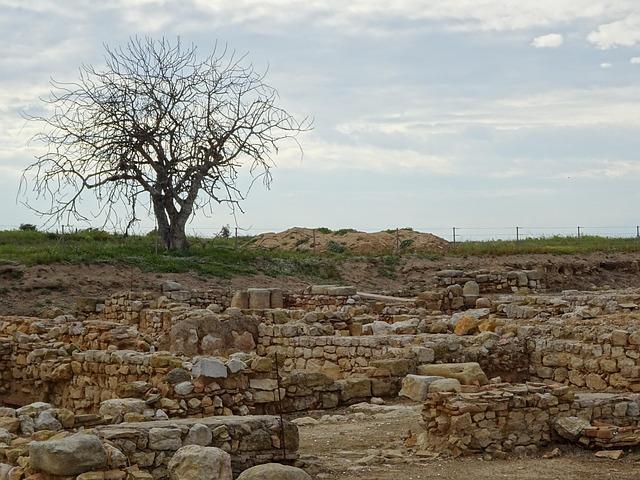
Rome is the most concentrated open-air museum in the world. Within a 3 km radius of the Roman Forum, you can stand inside structures built when Julius Caesar walked the same streets, climb the same staircase Cleopatra used to enter the imperial palace, and look up at a dome (the Pantheon) that held the record for the world’s largest unreinforced concrete dome for over 1,800 years — a record it only lost in 1881.
This guide covers the 12 essential ancient sites in Rome — the headline acts (Colosseum, Forum, Pantheon) plus the underrated places that change your understanding of the ancient city (San Clemente s buried stratigraphy, the Domus Aurea, the Centrale Montemartini). Each section gives address, opening hours, ticket price, what makes the site essential, and how to skip the queues.
The Colosseum
Inaugurated in 80 CE under Emperor Titus with 100 days of games — 9,000 wild animals killed in opening ceremonies. The Flavian Amphitheater (its proper name) held 50,000-80,000 spectators, with an awning system (the velarium) requiring 1,000 sailors to operate. The hypogeum (the underground network where gladiators and animals were kept) was added under Domitian — 32 holding cells, lifts, and traps that delivered surprises into the arena.
The 2026 visit includes new access to the arena floor (separate ticket) and partial access to the underground hypogeum chambers. The upper tiers were reopened in 2017 after restoration. The full “Full Experience” ticket includes arena floor + hypogeum + upper tier.
Address: Piazza del Colosseo, 1 (Metro Colosseo, Line B).
Hours: 8:30 AM-7:15 PM (summer), 8:30 AM-4:30 PM (winter). Last entry one hour before close.
Entry: Standard 18 EUR + 2 EUR booking fee. Full Experience (incl. arena + hypogeum) 24 EUR. Combo with Forum and Palatine (24 EUR, valid 24 hours — one-time entry per site).
Skip-the-line: Book online at coopculture.it weeks ahead — day-of tickets often sell out. Guided tours bypass the main queue. The least crowded entry is 8:30 AM opening or after 4 PM in summer.
Roman Forum & Palatine Hill
The Roman Forum was the political, religious, and commercial heart of the ancient city for 1,200 years. The Palatine Hill rising above it held the imperial palaces — the word “palace” itself derives from Palatine. Walking the Via Sacra past the Curia (Senate house, intact since 283 CE), the Temple of Saturn (the state treasury), the Arch of Septimius Severus, and the House of the Vestal Virgins is the essential Roman experience.
The Palatine reveals the Domus Augustana (Domitian s palace), the stadium of Domitian, and views over the Circus Maximus. Allow 3-4 hours combined; bring water, sun protection, and good shoes — the entire site is uneven Roman paving stones.
Address: Largo della Salara Vecchia, 5/6 (or Forum/Palatine entries at Via Sacra, Via di San Gregorio).
Hours: 9 AM-7:15 PM (summer), shorter in winter.
Entry: Included in Colosseum combo ticket (24 EUR, one-time entry within 24 hours). SUPER Pass for special sites (Domus Tiberiana, House of Augustus, House of Livia) is an additional 22 EUR.
Pantheon
Built by Hadrian around 126 CE on the foundations of an earlier temple by Agrippa (whose name is still inscribed on the portico: M·AGRIPPA·L·F·COS·TERTIUM·FECIT). The Pantheon’s concrete dome — 43.3 meters in diameter — was the largest unreinforced concrete dome in the world for 1,755 years, until 1881. The oculus, the 9-meter open hole at the top, is the only source of light and the means by which rain falls into the building (drainage holes in the marble floor remove water).
The dome’s coffered construction lightens the concrete as it rises — the rim is dense, the upper portions use lightweight pumice aggregate. The intact survival is owed to its conversion to a Christian church in 609 CE (Santa Maria ad Martyres), saving it from quarrying. Raphael is buried inside; so are the kings of unified Italy.
Address: Piazza della Rotonda (a short walk from Piazza Navona).
Hours: Mon-Sat 9 AM-7 PM, Sun 9 AM-6 PM, holidays 9 AM-1 PM.
Entry: 5 EUR (charging started July 2023). EU under-25 reduced.
Best timing: Arrive at 9 AM opening or during a thunderstorm — the rain pouring through the oculus is one of the great spectacles in Rome.
Domus Aurea (Nero s Golden House)
Nero’s vast palace complex, built after the Great Fire of 64 CE and stretching from the Palatine to the Esquiline. After his death in 68 CE his successors deliberately erased it — filled the rooms with earth, built the Colosseum where its artificial lake had been, built the Baths of Trajan on top. Today only the buried Esquiline wing is accessible, with original frescoes preserved in the dark for centuries.
The 90-minute guided tour includes VR headsets that reconstruct the painted ceilings and rooms in full color. Renaissance artists (Raphael, Michelangelo) descended into the ruins through holes and signed their names on the walls — you can still see Raphael s signature. This is hands-down one of the best experiences in Rome.
Address: Viale della Domus Aurea, 1 (next to the Colle Oppio Park).
Hours: Open weekends only (Fri-Sun) by reservation. 90-minute guided tours.
Entry: 18 EUR including VR experience. Reserve coopculture.it weeks ahead.
Baths of Caracalla & Diocletian
Baths of Caracalla (212-216 CE) could accommodate 1,600 bathers simultaneously across hot, warm, and cold rooms; libraries; gymnasia; and gardens. Standing walls reach 30+ meters. Used for Rome’s summer opera season (June-August Teatro dell Opera productions). Baths of Diocletian (298-306 CE) held 3,000 bathers; Michelangelo converted part into the church of Santa Maria degli Angeli; another portion is the National Roman Museum at Palazzo Massimo.
Caracalla address: Viale delle Terme di Caracalla, 52.
Hours: 9 AM-7:15 PM (summer).
Entry: 8 EUR. Combined with Villa dei Quintili and Mausoleum of Cecilia Metella 12 EUR.
Trajan s Markets & Column
The Markets of Trajan are the world’s first “shopping mall” — a multi-story commercial-administrative complex built into the Quirinal Hill around 100-110 CE. Six levels housed about 150 shops and offices. The Museum of the Imperial Fora occupies the structure today.
Trajan s Column (113 CE) records Trajan’s Dacian wars in a 200-meter spiral relief band wrapping the 30-meter shaft. Originally crowned by a statue of Trajan, replaced in 1587 by St Peter. The level of detail in clothing, weapons, fortifications is extraordinary.
Address: Via IV Novembre, 94.
Hours: 9:30 AM-7:30 PM.
Entry: 13 EUR.
Basilica of San Clemente — Time Travel Underground
San Clemente is the single most extraordinary stratigraphic site in Rome. Three buildings stacked vertically: the 12th-century basilica visible at street level; a 4th-century early Christian basilica beneath it; and beneath that, a 1st-century Roman house with a 2nd-century mithraeum (temple to Mithras). You descend 18 meters through 2,000 years of history.
The upper basilica’s mosaics and frescoes are extraordinary. The 4th-century church preserves traces of early Christian frescoes including the oldest known image of the Madonna in Rome. The lowest level has the iconic carving of Mithras slaying the bull.
Address: Via Labicana, 95 (5 minutes from the Colosseum).
Hours: Mon-Sat 10 AM-12:30 PM, 3 PM-6 PM. Sun afternoon only.
Entry: 10 EUR for lower levels (upper church free).
Appian Way & Catacombs
The Via Appia Antica, built in 312 BCE, was Rome’s first great road. The original paving stones (basalt blocks weighing 50+ kg each) survive in stretches, deeply rutted from millennia of cart wheels.
Walk or cycle the Appia from Porta San Sebastiano past the catacombs (San Callisto, San Sebastiano, Domitilla), the Tomb of Cecilia Metella, the Villa of the Quintili, and various ruined tombs. Rent a bicycle at the Appia Antica information center (Via Appia Antica 58/60, 4 EUR/hour). Sundays and public holidays the road is closed to traffic.
Catacombs of San Callisto: Via Appia Antica, 110/126. 10 EUR guided tour. The largest catacomb in Rome.
Ostia Antica
Rome’s ancient port city, now silted up and 4 km inland but extraordinarily preserved — the Pompeii of the Roman empire most travelers never see. Apartment blocks (insulae) of 4-5 stories, taverns with preserved counters, mosaic-floored guild offices, an amphitheater, public baths, and the Mithraeum of the Seven Spheres. Far less crowded than Pompeii.
Address: Viale dei Romagnoli, 717, Ostia Antica.
How to get there: 30-min train from Roma Porta San Paolo to Ostia Antica station (combined Metro+rail ticket).
Hours: 8:30 AM-7 PM (summer). Closed Mondays.
Entry: 18 EUR.
Time needed: Half day minimum.
Capitoline & National Roman Museums
The Capitoline Museums (Piazza del Campidoglio, Michelangelo-designed) are the world’s oldest public museums (founded 1471). The collection includes the original Marcus Aurelius equestrian bronze (the one outside is a replica), the She-Wolf of Rome, the Capitoline Brutus, the Dying Gaul, and the bronze fragments of Constantine’s colossal statue. The view from Tabularium across the Forum is one of the best in Rome.
Address: Piazza del Campidoglio, 1. Hours: 9:30 AM-7:30 PM. Entry: 13 EUR.
The National Roman Museum is split across four sites in Rome — Palazzo Massimo (the masterpieces collection including the Boxer at Rest bronze and the Augustus of Prima Porta), Palazzo Altemps (Ludovisi sculptures), Baths of Diocletian (epigraphy and proto-history), and Crypta Balbi (archaeology of medieval Rome). A combined 4-site ticket valid 7 days costs 12 EUR.
The Centrale Montemartini (Via Ostiense, 106) is an unusual venue — ancient Roman sculptures displayed in a converted early 20th-century power station. The juxtaposition of classical statuary against industrial turbines is extraordinary. 11 EUR entry, far less crowded than central Rome museums.
Suggested 3-Day Ancient Rome Itinerary
Day 1: The Big Three
Morning: Colosseum at 8:30 AM opening (book online weeks ahead). Full Experience ticket including arena floor and hypogeum.
Afternoon: Roman Forum and Palatine Hill (covered by same ticket, must use within 24 hours of Colosseum entry).
Evening: Aperitivo at one of the Monti or Forum-edge cafes. Dinner at La Taverna dei Fori Imperiali (Via Madonna dei Monti, 9, mains 16-24 EUR).
Day 2: Pantheon & Hidden Stratigraphy
Morning: Pantheon at 9 AM opening, then Piazza Navona, the Largo di Torre Argentina (the spot where Caesar was killed, now home to cat sanctuary), and Trajan’s Column on the way.
Afternoon: Trajan’s Markets and Imperial Fora museum. Then San Clemente for the underground stratigraphy.
Evening: Trastevere dinner (Da Enzo al 29, Da Augusto, or Pizzeria ai Marmi for Roman-style pizza).
Day 3: Domus Aurea or Ostia Antica
Option A (Friday, Sat, Sun only): Domus Aurea VR tour in the morning. Afternoon Baths of Caracalla, Aurelian walls, optional Appia Antica cycle.
Option B (any day, particularly recommended): Day trip to Ostia Antica. Train at 9 AM, picnic lunch on the ancient site, return mid-afternoon for one final central Rome site (Capitoline Museums or Centrale Montemartini).
Tickets & Skip-the-Line Strategy
Book online, always. For Colosseum, Forum, Palatine, Domus Aurea, Borghese Gallery: book through coopculture.it weeks ahead. Day-of tickets routinely sell out.
Roma Pass: 3-day pass (52 EUR) includes first 2 sites free + reduced entry to others + unlimited transit. Worth it for 5+ sites in 3 days. Vatican Museums NOT included.
Skip-the-line guided tours: Walks of Italy, Context Travel, Through Eternity. Small-group (max 12) run 70-110 EUR with priority entry.
Where to Stay
Monti is the ideal base. Hotel Forum (Via Tor de Conti, 25, 230-380 EUR), Hotel Capo d Africa (Via Capo d Africa, 54, 200-300 EUR). Centro Storico: Hotel Albergo Santa Chiara (Via Santa Chiara, 21, 220-300 EUR), Hotel Genio (180-250 EUR) near Piazza Navona.
Frequently Asked Questions
How many days do I need for ancient Rome?
Three days is the minimum for the headline sites (Colosseum, Forum, Palatine, Pantheon, Trastevere). Five to seven days lets you add Ostia Antica, San Clemente, Appia Antica, the major museums, and the special-access SUPER sites without rushing.
Can I see the Colosseum without a ticket?
The exterior is fully visible from outside (free) and best photographed from the Belvedere on the Via Sacra side or Colle Oppio Park above. The interior arena/hypogeum experience requires a ticket.
Should I do a night tour of the Colosseum?
Yes — the special evening tours (April-October, 2-3 nights per week) include underground access with dramatic lighting. Reservations open monthly at coopculture.it and sell out within hours.
Is the Domus Aurea worth the special tour?
Yes — it is the most extraordinary single visit in Rome, combining underground archaeology with VR reconstruction. Limited to Fridays-Sundays and you must reserve weeks ahead.
Is the Forum free?
No — you need a Colosseum/Forum/Palatine combined ticket (24 EUR). The combined ticket is valid for 24 hours and allows one entry per site.
What is the best month to visit?
April-May and September-October are ideal — mild weather, longer hours, manageable crowds. July-August is hot (35°C+/95°F+) and crowded. November-March is quieter with shorter daylight but reasonable for ancient sites; January-February particularly empty.
Common Mistakes to Avoid
Buying tickets at the gate. Day-of Colosseum tickets sell out by mid-morning in high season. Always book online ahead.
Trying to see everything in one day. Three days minimum. The Forum alone is a half-day site.
Skipping the audio guide. The Forum and Palatine are visually confusing without context. A 5 EUR audio guide or 70 EUR guided tour transforms the experience.
Wearing the wrong shoes. Roman paving stones are uneven, polished, and slippery in rain. No flip-flops, no high heels. Hiking shoes or sturdy sneakers only.
Missing San Clemente. Five-minute walk from the Colosseum, 10 EUR, requires only 60-90 minutes. The single most underrated site in Rome.
Ignoring Ostia Antica. A better-preserved, far-less-crowded Pompeii an hour from central Rome. The trip the day-trippers to Naples miss.
Final Thoughts
Rome rewards patience and a slower clock. Read the inscriptions. Ask the custodians questions. Climb the same staircases the emperors climbed. The city has been answering tourists’ questions for 2,000 years and still has more to say than any single trip can absorb. Plan one trip, then plan the next. Roma non basta una vita — Rome, you do not have enough life for it.
Cost Estimate for 3 Days of Ancient Rome
Budget: $90-140/day. Hostel or budget hotel (60-100 EUR), Roma Pass (52 EUR for 3 days), trattoria lunches (15-22 EUR), pizza al taglio dinners (8-12 EUR). 3 days: $270-420.
Mid-Range: $200-320/day. 3-star Monti hotel (180-260 EUR), 2 guided tours (180 EUR for both), table-service dinners (35-50 EUR), all major site entries. 3 days: $600-960.
Luxury: $500-1,000+/day. Hotel Eden, Hotel de Russie, Hassler Roma (700-1,500+ EUR), private guides (400-600 EUR per day), Michelin dining (200+ EUR), private night access tours. 3 days: $1,500-3,000+.
Tips From Repeat Visitors
Drink from the nasoni. Rome has 2,500+ free public drinking fountains — the cast-iron “big noses” that flow constantly. The water is excellent (better than bottled). Block the spout with your thumb to redirect water upward to drink directly.
The Vittoriano elevator (panoramic terrace). 16 EUR for the rooftop elevator at the Altar of the Fatherland gives you a 360-degree view of the Forum, Capitoline, and central Rome — the best photographic vantage in the city.
Visit churches mid-day. Many churches close 12:30 PM-3:30 PM for the riposo. Plan church visits before noon or after 4 PM. Most have free entry, no reservations required.
Cat sanctuary at Torre Argentina. The square where Julius Caesar was assassinated is now home to a free-roaming cat colony cared for by volunteers. Free observation level above the ruins; donate at the cat shelter.
Eating Near the Ancient Sites
Near the Colosseum/Forum (Monti): La Taverna dei Fori Imperiali (Via Madonna dei Monti, 9, mains 16-24 EUR) is the classic local trattoria. La Carbonara (Via Panisperna, 214, 18-26 EUR) for the eponymous Roman pasta. Trattoria Vecchia Roma (Via Leonina, 10, 15-22 EUR) for tonnarelli cacio e pepe and saltimbocca.
Near the Pantheon: Armando al Pantheon (Salita de’ Crescenzi, 31, 25-40 EUR) for elevated Roman cooking, book ahead. Osteria del Sostegno (Via delle Colonnelle, 5, 18-25 EUR) in a quiet alley. Tazza d Oro for coffee, Sant Eustachio Il Caffè two minutes away.
Near Trastevere (for evening dinner): Da Enzo al 29 (Via dei Vascellari, 29, 20-30 EUR, no reservations — queue early). Pizzeria ai Marmi (Viale Trastevere, 53, pizza 9-14 EUR) for Roman-style thin crust. Roma Sparita (Piazza di Santa Cecilia, 24, 22-32 EUR) for the famous cacio e pepe served in a Parmesan bowl.
Aperitivo: Salotto 42 (Piazza di Pietra, 42) overlooking the Temple of Hadrian — cocktails 14-18 EUR. Court of Hotel Forum rooftop for sunset with Forum views. Bar del Fico (Piazza del Fico) for a younger crowd.
Packing for Ancient Rome
Closed-toe comfortable shoes are non-negotiable. Forum stones are uneven and slippery in wet weather. Sun protection (hat, sunglasses, SPF 30+). Light layers for cool mornings/evenings. Shoulders and knees covered for churches — a light scarf in your bag handles unexpected visits. Refillable water bottle for the public nasoni fountains (the water is excellent). 50-100 EUR cash per day for small trattorias.
Plan three days minimum, book the headline sites online weeks ahead, walk slowly, and let the city teach you. After two thousand years it has gotten very good at it.
One last suggestion: spend at least one hour somewhere quiet within an ancient site — the upper Palatine gardens, the Aurelian wall walk at San Sebastiano, the lowest level of San Clemente — doing nothing but sitting and looking. Travel-poster Rome is loud and exhausting. The Rome that has rewarded visitors for centuries reveals itself in those still moments.
Look for the SPQR carved on every Roman manhole cover and storm drain. Senatus Populusque Romanus — the Senate and People of Rome. Two thousand years later, the city still signs its own infrastructure with the same four letters Caesar would have recognized. Few cities have that kind of continuity left.
Buon viaggio — may you walk the Sacred Way slowly, and may the columns of the Forum stand for another two thousand years.
For further exploration
Here are the complementary guides on travel-reference.com: