


Reykjavik is the world’s northernmost capital, a city of just 130,000 people that serves as the base for exploring Iceland’s otherworldly landscapes: geysers, glaciers, geothermal pools, lava fields, and waterfalls. The city itself is small, colorful, and weirdly cosmopolitan, with one of the best per-capita restaurant scenes anywhere. Three days is the right amount: one to see the city, one for the Golden Circle, one for the Blue Lagoon and South Coast (or the Northern Lights in winter).
This guide covers exactly when to chase the aurora, how to skip the Blue Lagoon premium pricing, where to eat Icelandic fish soup, and how to handle Iceland’s legendary prices.
Why 3 Days Works in Reykjavik
Reykjavik itself is small (walkable in 3 hours), but it is the launching pad for Iceland’s natural wonders. Three days gives you one city day plus two big day-trip days. Five to seven days lets you drive the Ring Road around the entire island (1,332 km), seeing the East Fjords, Vatnajokull glacier, and the Westfjords. For most first-timers, three days in Reykjavik plus the Golden Circle and South Coast is the ideal taste.
Day 1: Reykjavik City

Morning: Hallgrimskirkja (9 AM)
The 74.5-meter expressionist church tower (1986, designed to look like columnar basalt) is Reykjavik’s defining landmark. Free entry to the church; 1,400 ISK for the elevator to the bell tower viewpoint with 360-degree city views. Best in the first hours of the day before the cruise crowds. Inside, the giant Klais organ is worth pausing to admire.
Mid-Morning: Laugavegur Shopping Street
Reykjavik’s main street has Icelandic design shops, vintage stores, and the famous Bonus supermarket (the pink piggy bank store, where locals shop and prices are reasonable by Iceland standards). Stop at 66 North (the Icelandic outdoor wear flagship), Geysir (more upscale Icelandic clothing), Handknitting Association (real Icelandic wool sweaters, 25,000-45,000 ISK).
Lunch: Icelandic Fish Soup or Lobster Soup
Cafe Loki across from Hallgrimskirkja (try traditional plokkfiskur fish stew, smoked lamb, fermented shark cubes for the brave, 2,500-3,500 ISK). Or Saegreifinn (Sea Baron) at the Old Harbor, world-famous lobster soup served from converted shipping container (2,800 ISK, queue worth it).
Afternoon: Harpa, Sun Voyager, and Old Harbor
Walk to Harpa Concert Hall on the waterfront, a glass-faceted contemporary masterpiece designed by Olafur Eliasson (2011). Free to enter and explore the lobby; concerts and tours extra. Continue along the waterfront to the Sun Voyager sculpture (Solfar), a stainless-steel longship that looks like an ode to the sun and Viking exploration. Old Harbor (Reykjavik Harbour) is the launchpad for whale watching tours (12,500 ISK, 3 hours, April-October peak) and puffin tours (June-August).
Late Afternoon: Sundhollin or Laugar Public Pool
Icelandic public pools are a cultural institution. Reykjavik has eight geothermally heated outdoor pools, all open year-round. Sundhollin (downtown, 1,330 ISK) is the closest. Laugardalslaug (1,330 ISK, larger, multiple hot tubs at varying temperatures, in Laugar district) is the local favorite. Bring a swimsuit and a towel; the shower-naked-before-entering rule is strictly enforced and posted in pictograms.
Evening: Reykjavik Restaurant Scene
Iceland’s top restaurants are concentrated downtown. Dill (Iceland’s first Michelin star, 14-course tasting 22,000 ISK, book 6+ weeks ahead), Sumac (Lebanese-Iceland fusion, 5,500-7,500 ISK mains), Snaps Bistro (French-Icelandic, 3,800-5,200 ISK), Old Iceland Restaurant (traditional with charm), or Lamb Street Food (1,800-2,800 ISK casual).
After Dinner: Winter Northern Lights or Summer Sun
September-March: check the aurora forecast at vedur.is and en.vedur.is. If kp index is above 3 and skies are clear, head to the Grotta lighthouse (15 min Uber west of downtown, dark with sea horizon) or Perlan museum hill. June-August: walk along the waterfront at 11 PM to experience the midnight sun.
Day 2: The Golden Circle

The Golden Circle is Iceland’s most popular day trip: three major sites within a 300 km loop from Reykjavik. Allow 8-10 hours. Book a small-group bus tour (10,000-15,000 ISK), join a Super Jeep tour for off-road extras (28,000-40,000 ISK), or rent a car (8,000-15,000 ISK/day plus 4-wheel drive in winter).
Thingvellir National Park
UNESCO World Heritage site where the Mid-Atlantic Ridge surfaces and where the world’s oldest parliament (Althing) was founded in 930 CE. Walk between the North American and Eurasian tectonic plates in Almannagja gorge. Silfra fissure offers world-class snorkeling and diving between the plates (water temperature 2-4C year-round, dry suit required, 22,000 ISK for snorkel package).
Geysir Geothermal Area
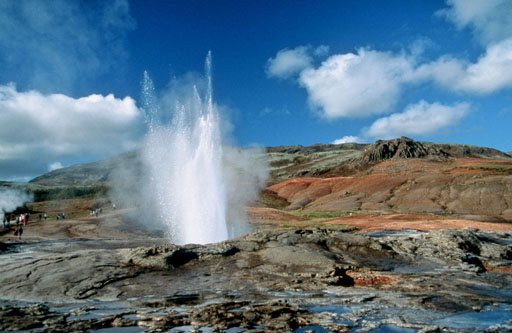
The original Geysir (which gave its name to all geysers worldwide) is now mostly dormant, but neighboring Strokkur erupts reliably every 5-8 minutes, shooting 15-25 meters into the air. Free entry; the boardwalks let you stand just meters away. Restaurant Geysir Glima next door serves hot lamb stew and Icelandic fish (3,500-5,500 ISK).
Gullfoss Waterfall
The Golden Falls (32 meters, two-tier drop) is one of the world’s most powerful waterfalls. In summer, expect rainbows in the spray. Walk the lower path to feel the mist; the upper path gives the iconic photo. Wear waterproof layers; you will get soaked even in summer.
Bonus Stops
If you have time: Kerid Crater (a 6,500-year-old volcanic lake, 700 ISK entry), Fridheimar Tomato Farm (tomato soup buffet 3,500 ISK in a working greenhouse), Secret Lagoon (Iceland’s oldest geothermal pool, 3,500 ISK, way less crowded than Blue Lagoon).
Day 3: Blue Lagoon and South Coast (or Aurora)

Option A: Blue Lagoon + South Coast
Most tours combine the Blue Lagoon on the way back to Reykjavik. The South Coast day trip covers Seljalandsfoss (waterfall you can walk behind), Skogafoss (60 m waterfall, climb the stairs for the view), Reynisfjara black sand beach (caution: sneaker waves can be deadly), and Vik village. Group tours 14,000-22,000 ISK. The Blue Lagoon premium ticket is 11,990 ISK (includes towel and one drink); Comfort ticket 9,990 ISK.
Blue Lagoon Alternatives
Sky Lagoon (closer to Reykjavik, 6,990 ISK basic, 11,990 ISK ritual, opened 2021, less famous) is increasingly favored. Krauma Spa (1.5 hours north of Reykjavik, 4,800 ISK), Hvammsvik Hot Springs (Hvalfjordur, 4,990 ISK).
Option B: Winter Northern Lights Hunt
September-March: dedicate day 3 (evening, really) to a Northern Lights chase. Coach tours (8,000-14,000 ISK, 4-6 hours) follow weather forecasts to find clear skies and offer free rebooking if no lights appear. Best months: October-March, when nights are long enough. Patience required; aurora activity is unpredictable.
Option C: Ice Cave Tour (Winter Only)
November-March: drive south to Jokulsarlon glacier lagoon (4.5 hours from Reykjavik) and take a Vatnajokull ice cave tour (28,000-42,000 ISK including guide, helmet, ice cleats). The crystal-blue ice caves change each year as glaciers shift. Combine with Diamond Beach (black sand strewn with icebergs).
Where to Stay in Reykjavik
Downtown (Best Overall)
Walking distance to everything: Hallgrimskirkja, Harpa, Laugavegur, restaurants. 200-450 EUR/night peak summer. Try Hotel Borg (1930s Art Deco, the legendary 5-star), Sand Hotel (boutique on Laugavegur), 101 Hotel (design-forward), Center Hotels (mid-range chain).
Laugavegur (Main Street)
Mid-range hotels along the shopping street. Walking distance to nightlife. 180-350 EUR. Apotek Hotel, Storm Hotel, Hotel Klettur.
Old Harbor (Quieter)
Working harbor district, walking distance to downtown, quieter at night. 150-300 EUR. Reykjavik Konsulat Hotel, Icelandair Marina.
Hlemmur and Hverfisgata (Local)
Slightly east of downtown, less touristy, still walkable. 120-220 EUR. Hlemmur Square Hotel, Kex Hostel (boutique hostel with restaurant).
Budget
Hostels: Kex Hostel (4,500-7,500 ISK dorms, fantastic bar/restaurant), Loft HI Hostel, Reykjavik Downtown HI Hostel. Air bnb: 12,000-22,000 ISK for clean apartments. Iceland is expensive; budget travelers should mix hostel days with paying for the major experiences.
Where to Eat in Reykjavik
Iceland’s food scene punches far above the country’s 380,000 population. New Nordic principles meet North Atlantic ingredients: lamb (free-roaming all summer), Arctic char, langoustine, skyr (the local yogurt), rye bread baked in the ground via geothermal heat, and Icelandic hot dogs (the national food).
Icelandic Hot Dogs
Baejarins Beztu Pylsur (downtown, the legendary 1937 hot dog stand, Bill Clinton ate here, 750 ISK, order “eina med ollu” – one with everything: ketchup, sweet mustard, remoulade, raw and fried onions). 30-second wait, the cheapest meal in Iceland.
Traditional Icelandic
Cafe Loki (across from Hallgrimskirkja, fermented shark, smoked lamb, rye bread ice cream, 2,500-3,800 ISK), Islenski Barinn (Icelandic Bar, lamb shank, smoked puffin if you dare, 3,500-5,800 ISK), Matur og Drykkur (Old Harbor, modern Icelandic in heritage building, 5,500-8,500 ISK).
Seafood
Saegreifinn / Sea Baron (Old Harbor, world-famous lobster soup, 2,800 ISK), Sjavargrillid (Sea Grill, the city’s best seafood mains, 6,500-9,500 ISK), Apotek (Lebanese-Icelandic seafood fusion in a former pharmacy, 5,500-8,200 ISK), Fish Market (Fiskmarkadurinn, modern fine dining, 7,500-12,000 ISK).
Fine Dining
Dill (Iceland’s first Michelin star, 14-course 22,000 ISK, book 6+ weeks ahead), Sumac (Lebanese-Icelandic fusion), Brut (modern bistro), Skal (small plates focused on local ingredients).
Getting Around Reykjavik and Iceland
Walking in Reykjavik
Downtown is 1.5 km across; nothing central is more than a 15-minute walk.
Strato Buses
The city bus system serves Reykjavik with single ride 660 ISK. The Strato Free App for routes. Long-distance buses (BSI, Reykjavik Excursions) cover the Golden Circle, Blue Lagoon, and South Coast.
Rental Car
Essential if exploring beyond day-tour destinations. 8,000-15,000 ISK/day economy in summer; 4WD required in winter. Watch for sneaker waves on beaches, single-lane bridges, F-roads (highland gravel roads requiring 4WD).
Airport Transfer
Keflavik airport is 50 km from Reykjavik. Flybus shuttle (3,990 ISK each way, departs every 30-45 min), Airport Direct shuttle (3,790 ISK), or car rental from the airport (cheaper than picking up in town).
What to Know Before You Go to Reykjavik
Best Time to Visit
June-August: 24-hour daylight, mild weather (10-15C), full puffin season, all roads open. Most expensive. September-October: northern lights season begins, fewer crowds, fall colors. November-March: deep winter, 4-6 hours daylight, prime aurora, ice caves, blue ice. April-May: shoulder season; some highland roads still closed.
Money
Iceland uses the Krona (ISK). Cards accepted EVERYWHERE; cash is essentially unnecessary. 1 EUR is roughly 145 ISK, 1 USD roughly 135 ISK (2026). Tipping is not expected; service is included in the bill.
Weather and Packing
Weather changes in minutes. Always carry waterproof shell, fleece, hat, gloves (even summer). Wool socks essential. Hiking boots if doing waterfalls. The wind is the real challenge, not just temperature.
Tap Water
Iceland tap water is among the purest on Earth. Always drink from the tap (the hot tap may smell sulfurous from geothermal heating but is also safe; drink cold). Never buy bottled water.
Safety
Iceland is one of the safest countries on Earth (ranks #1 on Global Peace Index for 17 consecutive years). Crime is essentially negligible. Real dangers are natural: sneaker waves at Reynisfjara have killed multiple tourists; never turn your back on the sea. Weather can become dangerous quickly; check safetravel.is and road.is before driving.
Language
Icelandic. English is universally spoken; communication is never a barrier.
Common Mistakes First-Time Visitors Make
Underestimating Iceland’s cost: it is one of the world’s most expensive countries. Budget accordingly.
Booking only the Blue Lagoon: Sky Lagoon is closer, cheaper, and arguably better. Secret Lagoon and local public pools deliver the same experience for one-tenth the price.
Renting a 2WD in winter: many roads require 4WD November-April. Pay for the upgrade or rebook.
Skipping insurance on rental car gravel: Iceland gravel chips cost hundreds per stone. Take gravel and ash insurance.
Trusting weather forecasts beyond 24 hours: Iceland weather is too unpredictable. Check daily.
Chasing aurora on a single night: cloud cover varies. Plan 3+ nights minimum and have flexibility.
Cost Estimate: 3 Days in Reykjavik (per person)
Budget (15,000-22,000 ISK/day, ~100-150 EUR)
Hostel dorm, Bonus groceries plus hot dogs, walking, free natural sites (Thingvellir, Geysir, Gullfoss free entry; pay only the bus or rental), Sky Lagoon basic. Total: 45,000-66,000 ISK (310-455 EUR).
Mid-Range (32,000-50,000 ISK/day, ~220-340 EUR)
Hotel downtown, fish soup lunches and one Dill-level dinner, group bus Golden Circle and South Coast tours, Blue Lagoon premium. Total: 96,000-150,000 ISK (660-1,030 EUR).
Luxury (90,000+ ISK/day, ~620+ EUR)
Hotel Borg or Retreat at Blue Lagoon, Dill tasting, private Super Jeep tour, ice cave tour, snowmobile on glacier. Total: 270,000-600,000 ISK (1,860-4,140 EUR).
Flights: 200-500 EUR roundtrip from Europe (Icelandair, easyJet, Wizz Air), 400-900 USD from US East Coast on Icelandair (with stopover options).
Frequently Asked Questions
Is 3 days enough for Reykjavik?
Three days hits Reykjavik plus Golden Circle and Blue Lagoon or South Coast. Five to seven days lets you drive the Ring Road around the entire island.
Best time to see Northern Lights in Iceland?
October-March, with peak activity around the equinoxes (September and March). Aurora is best on clear nights when kp index is 3+. Plan 3+ nights for a realistic shot.
Is Reykjavik expensive?
Yes, very. Restaurant mains 4,500-9,000 ISK. Beers 1,400-1,800 ISK. Hotels 200-450 EUR. Plan budgets accordingly.
Should I rent a car in Iceland?
For 4+ day trips, yes. For 3 days in Reykjavik + Golden Circle + Blue Lagoon, group bus tours are easier and competitive on cost.
Do I need a visa for Iceland?
Iceland is in Schengen. EU citizens travel freely. US, UK, Canadian, Australian get 90 days visa-free. Check current ETIAS rules.
Can I drink the tap water?
Yes, Iceland tap water is among the purest on Earth. Never buy bottled water.
Should I book Blue Lagoon or Sky Lagoon?
Sky Lagoon is closer to Reykjavik (15 min vs 50 min), cheaper (6,990-11,990 ISK vs 11,990-15,000 ISK), and offers a unique seven-step ritual. Blue Lagoon has more global brand recognition but is in a remote location. Most locals prefer Sky.
What is Icelandic food like?
North Atlantic ingredients prepared in modern Nordic style: lamb, Arctic char, langoustine, skyr (yogurt), rye bread. Iconic and weird specialties: hakarl (fermented shark), brennivin (caraway schnapps, the death drink), Icelandic hot dogs.
Final Thoughts
Reykjavik is the smallest capital with the largest backyard. Three days gives you the colorful city plus two days of geysers, glaciers, and hot springs. You will leave Iceland already planning a longer trip: the Ring Road, the Westfjords, or returning specifically for the aurora. Pack waterproofs and an open mind.