

Paris holds the largest concentration of African and Africana art collections in Europe — a complex legacy of French colonial history that left the city with extraordinary holdings while raising urgent questions about restitution and provenance. As of 2026, the conversation has shifted: France has formally returned dozens of objects to Benin and Senegal under the 2020 restitution law, and museums are actively reframing their displays around African voices, artists, and curators. This is one of the most intellectually alive corners of the Paris museum scene.
This guide covers the seven essential Paris venues for African art — from the headline Quai Branly to the artist-driven Fondation Vuitton, plus the lesser-known galleries and cultural centers where contemporary African and diaspora artists are reshaping the conversation. Each section gives address, hours, ticket price, what to see, and what makes the visit essential.
Musée du Quai Branly — Jacques Chirac
The flagship. Opened in 2006 in a Jean Nouvel building wrapped in 800 square meters of vertical garden, the Quai Branly holds approximately 370,000 objects from Africa, Asia, Oceania, and the Americas — with the African collection comprising roughly 70,000 pieces including Benin bronzes, Dogon doors, Yoruba shrine sculptures, and Akan goldweights. It is the largest non-European art museum in France.
The permanent African gallery is organized geographically with rotating themed installations. As of 2026, the museum is actively reframing displays in collaboration with African curators and has formally returned 26 royal treasures of the Kingdom of Dahomey to Benin (transfer completed 2021). Temporary exhibitions consistently set the standard.
Address: 37 Quai Branly, 75007 Paris (Metro Alma-Marceau or Bir-Hakeim).
Hours: Tue, Wed, Fri-Sun 10:30 AM-7 PM; Thu until 10 PM. Closed Mondays.
Entry: 14 EUR ($15), under-26 EU residents free, free first Sunday each month.
Time needed: 2-3 hours minimum.
Musée Dapper Legacy & Foundation
The Musée Dapper closed its permanent space in 2017 but the Fondation Dapper continues to organize major touring exhibitions of African art across European venues — always worth tracking on the Foundation website if you are visiting Paris during a partner show. The Foundation library and archive remain accessible by appointment for serious researchers.
The Dapper philosophy under founder Christiane Falgayrettes-Leveau was radical for its time: African art presented as art (not ethnography), in dialogue with contemporary African voices, with significant exhibition catalogues that remain reference works.
Foundation HQ: 35 rue Paul Valéry, 75116 Paris. Check fondationdapper.com for current programming.
Palais de la Porte Dorée
Built for the 1931 Colonial Exposition and now home to the Musée National de l’Histoire de l’Immigration, the Palais de la Porte Dorée is itself an extraordinary object — the entire facade is a stone bas-relief depicting the contributions of French colonial territories. The interpretation is layered: the building celebrates colonialism, the museum now critiques it, and the tropical aquarium in the basement remains intact from the 1931 opening.
The immigration history galleries cover two centuries of arrivals into France, with substantial focus on West and North African diasporas. The interior frescoes by Pierre Ducos de la Haille are extraordinary period documents in their own right — visit them with critical eyes.
Address: 293 Avenue Daumesnil, 75012 Paris (Metro Porte Dorée).
Hours: Tue-Fri 10 AM-5:30 PM; Sat-Sun 10 AM-7 PM. Closed Mondays.
Entry: 12 EUR ($13), under 26 EU residents free.
Time needed: 2 hours plus aquarium.
Fondation Louis Vuitton
Frank Gehry s 2014 glass sail in the Bois de Boulogne has emerged as Paris’s most important venue for major contemporary African art surveys. The Fondation’s 2017 Art/Afrique, le nouvel atelier introduced French audiences to artists like Bodýs Isek Kingelez, Cheri Samba, Romuald Hazoumè, and Aboudia. Since then the Fondation has continued to program contemporary African artists in solo exhibitions and group surveys.
The architecture alone justifies the visit — twelve curved glass “sails” set on 3,500 glass panels, the entire structure floating above a water mirror. Combine with a Bois de Boulogne walk.
Address: 8 Avenue du Mahatma Gandhi, 75116 Paris (Metro Les Sablons, then walk or shuttle).
Hours: Mon-Fri 11 AM-8 PM (Fri until 9); Sat-Sun 10 AM-8 PM. Closed Tuesdays.
Entry: 16 EUR ($17). Reservation online recommended.
Time needed: 2-3 hours.
MAGNIN-A & Other Contemporary Galleries
MAGNIN-A (118 Boulevard Richard Lenoir, 75011) is the gallery of André Magnin, who curated the landmark Magiciens de la Terre in 1989 (the show that brought contemporary African art into the global art world conversation) and built the legendary CAAC — the Pigozzi collection. Open Tue-Sat 11 AM-7 PM, free.
193 Gallery (24 rue Beautreillis, 75004) in the Marais shows contemporary African artists with a focus on French-speaking countries. Galerie Cecile Fakhoury has its Paris space in the Marais alongside its Abidjan and Dakar locations. Galerie Nathalie Obadia (rue du Cloitre Saint-Merri) regularly programs Africa-focused exhibitions.
54 Voltaire (54 boulevard Voltaire) and OOA Gallery in Marais are smaller emerging spaces worth tracking. The annual AKAA fair (Also Known As Africa) every November at Le Carreau du Temple is the dedicated contemporary African art fair in Europe.
Fondation Cartier pour l Art Contemporain
The Jean Nouvel-designed building moved to its new 7,500 m² space at 1 place du Palais Royal in 2025. The Cartier Foundation has consistently programmed African artists — most famously the 2005 Africa Remix survey and major shows of Mali’s Malick Sidibé, Cameroon’s Samuel Fosso, and South Africa’s William Kentridge.
Address: 1 Place du Palais Royal, 75001 Paris.
Hours: Tue 11 AM-10 PM; Wed-Sun 11 AM-8 PM. Closed Mondays.
Entry: 12 EUR ($13).
Time needed: 1-2 hours.
Musée National de l Histoire de l Immigration
Inside the Palais de la Porte Dorée, this is the dedicated immigration history museum. The permanent collection traces two centuries of French immigration with significant focus on Maghrebi, sub-Saharan African, and Antillean communities — documenting both labor migration and cultural contributions.
The museum reopened in 2023 after major renovation; permanent galleries are reorganized around personal stories. Powerful, emotional, essential context for understanding France’s relationship with Africa.
Suggested 3-Day African Art Paris Itinerary
Day 1: The Anchors
Morning: Quai Branly opens at 10:30 AM. Spend three hours — permanent African galleries plus the temporary exhibition. Coffee on the cafe terrace overlooking the Seine.
Afternoon: Walk along the Seine to the Eiffel Tower, then taxi or metro to Fondation Vuitton in Bois de Boulogne. Spend two hours on the Gehry architecture and current programming.
Evening: Dinner in the 16th arrondissement (try La Causerie, 5 rue Saint-Didier, set menu 38 EUR / $41).
Day 2: Contemporary Galleries
Morning: Coffee in the Marais. Visit MAGNIN-A in the 11th (Metro Bréguet-Sabin), then walk to 193 Gallery in the Marais.
Afternoon: Galerie Cecile Fakhoury (Marais), then Galerie Nathalie Obadia. Coffee at Le Loir dans la Théière or Cafe Pinson.
Evening: If you can time your trip to a Thursday late-opening at Quai Branly (until 10 PM), use that night for a return visit to galleries you missed by day.
Day 3: Histoire & Diaspora
Morning: Palais de la Porte Dorée — the building, the immigration museum, and the aquarium (3 hours).
Afternoon: Take the metro to Château Rouge (Line 4) and explore Goutte d Or — the West African market district of Paris. Restaurants like New African Restaurant (rue Doudeauville), Senegalese groceries, the Tati department store legacy, and the Musée Khalil Gibran nearby.
Evening: Le Maquis (Belleville) or Petit Dakar (Marais) for Senegalese dinner.
Understanding the Restitution Debate
France has been at the center of the global art restitution conversation since President Macron’s 2017 Ouagadougou speech committing the country to returning African heritage objects. The 2018 Sarr-Savoy Report (commissioned by Macron from Senegalese economist Felwine Sarr and French art historian Bénédicte Savoy) estimated that 85-90% of African heritage objects are held outside the African continent, the majority in former colonial powers. The report recommended permanent restitution as the default position rather than the exception.
The first concrete result was the 2020 restitution law and the November 2021 transfer of 26 royal objects from the Quai Branly to Benin, looted during the 1892 French sack of the Abomey royal palace. These objects now form the centerpiece of a new museum in Cotonou. Senegal received the sabre of El Hadj Omar Tall in 2020. Other restitutions and bilateral discussions are ongoing.
The conversation extends well beyond Africa — Cambodia, China, Pacific Island nations are all in similar dialogue with France. For Paris museum visitors, this means displays are now contextual, often with explicit acknowledgment of acquisition history, and certain objects formerly central to exhibitions are no longer in Paris. The Quai Branly s online database makes provenance information searchable for individual objects, a major transparency step.
What to Know Before You Go
Buying Tickets
The Paris Museum Pass (52 EUR / 2 days, 70 EUR / 4 days, 86 EUR / 6 days) covers the Quai Branly and Palais de la Porte Dorée but NOT the Fondation Vuitton or Fondation Cartier. EU residents under 26 are free at all national museums (Quai Branly, Palais de la Porte Dorée); private foundations charge full price.
Best Time to Visit
Late mornings on Tuesdays, Wednesdays, and Thursdays are quietest. Quai Branly Thursday late-openings (until 10 PM) are atmospheric and uncrowded. Avoid weekends and the first Sunday of each month at free-entry venues unless you tolerate queues.
Combining With Other Paris Museums
The Quai Branly is a 15-minute walk from the Musée d’Orsay (also free for EU under-26) and 20 minutes from the Eiffel Tower. The Palais de la Porte Dorée pairs well with a walk in Bois de Vincennes (Lac Daumesnil). The Fondation Vuitton is best combined with a Bois de Boulogne afternoon.
Where to Stay
Near Quai Branly (7th)
Hôtel Eiffel Trocadéro (35 rue Benjamin Franklin, 250-380 EUR / $270-410) puts you steps from the museum. Hôtel Le Walt (37 avenue de la Motte-Picquet, 180-250 EUR) is smaller and more elegant.
Marais (gallery quarter)
Hôtel Caron de Beaumarchais (12 rue Vieille du Temple, 220-310 EUR) is a 18th-century townhouse hotel surrounded by contemporary galleries. Hotel Jeanne d Arc (3 rue Jarente, 130-170 EUR) is the affordable option.
Goutte d Or (immersion in West African Paris)
Hotel Mercure Montmartre (3 rue Caulaincourt, 130-190 EUR) for a budget-friendly Montmartre base with quick metro access to Château Rouge.
Where to Eat — African Cuisine in Paris
Paris has Europe’s richest African and Africana restaurant scene. Recommended stops:
Le Maquis (Belleville, 53 rue des Cascades, mains 14-22 EUR) for Ivorian and Senegalese cuisine. Petit Dakar (6 rue Elzevir, Marais, mains 16-22 EUR) for the elevated Senegalese experience. Waly Fay (6 rue Godefroy Cavaignac, 11th, mains 14-20 EUR) for casual West African. BMK Paris-Bamako (14 rue de la Fidélité, 10th, mains 15-22 EUR) for Malian food. Ribambelle (Goutte d Or area) for North African pastries and tea.
For groceries and ingredients: Rue Déjean Market in Château Rouge (every morning except Monday) is the West African market — yams, plantains, fresh fish, cassava leaves, baobab.
Beyond the Museums: Cultural Centers & Festivals
Centre Pompidou has a significant collection of 20th-century African and African diaspora artists — Wifredo Lam, Roberto Matta’s circle, Jean-Michel Basquiat, Ouattara Watts. The collection is in rotation; check current display.
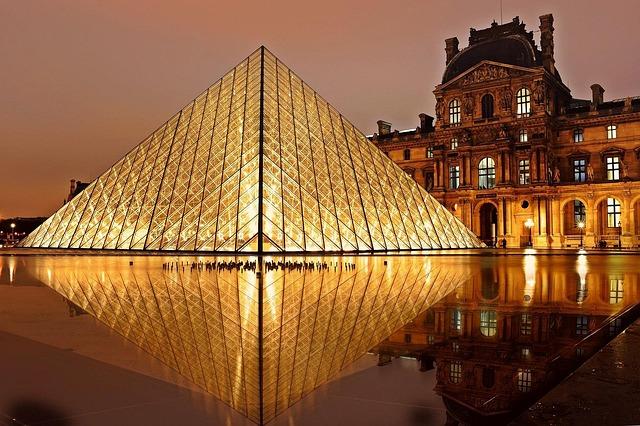
Musée du Louvre holds the Pavillon des Sessions — a dedicated wing for non-Western art curated in collaboration with Quai Branly (free with Louvre entry). Less comprehensive than Quai Branly but the architectural setting is unforgettable.
Cité de la Musique — Philharmonie de Paris regularly programs African music festivals and exhibitions. The annual Africolor festival across multiple Paris venues (Nov-Dec) celebrates African music.
Maison de l Afrique du Sud at the Cité Universitaire (Boulevard Jourdan, 14th) is a 1936-built residence hall with rotating exhibitions of South African contemporary art.
54 ART AFRICA magazine, Diptyk, and the AKAA fair (Nov each year at Le Carreau du Temple) are the best ways to track current programming.
Frequently Asked Questions
Is the Quai Branly worth visiting?
Yes — it is one of the most important non-European art museums in the world and the Nouvel building alone justifies the trip. Plan 2-3 hours minimum.
Has France returned looted African art?
Yes — the first formal restitution was 26 royal objects to Benin in 2021. Other negotiations with Senegal, Cote d Ivoire, Madagascar, and Cameroon are ongoing. France’s 2020 restitution law made it the first major European country to commit to systematic returns.
Where should I start if I have only one day?
Quai Branly in the morning (3 hours), then either Palais de la Porte Dorée in the afternoon (immigration history museum) or one major contemporary gallery if you prefer current art over historical objects.
Is the Musée Dapper still open?
The Musée Dapper permanent gallery closed in 2017, but the Fondation Dapper continues to curate touring exhibitions across Europe. Check fondationdapper.com for current programming.
When is the AKAA fair?
Every November at Le Carreau du Temple in the Marais. It is the largest dedicated contemporary African art fair in Europe and the best single moment for an immersion visit.
Final Thoughts
Paris is a complicated place for African art — home to extraordinary collections that exist because of colonial extraction, now reframing itself in dialogue with the artists and nations the objects came from. Visit slowly, read the museum captions critically, take the metro to Château Rouge for the lived rather than displayed African Paris, and eat at the West African restaurants where the cooking, music, and conversation make the city’s diasporic richness immediate. Bonne découverte — happy discoveries.
Key Artists to Look For
Watch for these names as you visit — they appear across multiple Paris venues and shape contemporary understandings of African art:
El Anatsui (Ghana/Nigeria) makes monumental tapestries from bottle caps and aluminum strips — his work is in the Pompidou collection, Quai Branly, and major Fondation Vuitton surveys. Malick Sidibé and Seydou Keïta (Mali) defined the studio portraiture aesthetic of post-independence West Africa; both are represented in MAGNIN-A and Fondation Cartier collections. Samuel Fosso (Cameroon/CAR) creates auto-portrait series in costume — the African political leader series remains his signature work.
Bodýs Isek Kingelez (DRC) built fantasy architectural models in vibrant colors that have been touring Fondation Vuitton and major institutions. Romuald Hazoumè (Benin) creates masks from discarded jerrycans and oil containers. Cheri Samba (DRC) paints autobiographical scenes with text inscriptions in French and Lingala. Yinka Shonibare (UK-Nigeria) uses Dutch wax fabric to interrogate colonialism, present in Quai Branly contemporary acquisitions. Kehinde Wiley (US/Nigeria) has done residencies and commissions across Paris venues.
Younger artists to watch: Aboudia (Cote d Ivoire), Athi-Patra Ruga (South Africa), Zanele Muholi (South Africa), Mounir Fatmi (Morocco), and Hassan Hajjaj (Morocco/UK) all appear regularly in Paris programming.
Practical Tip: The MagicSubway Pass
The dedicated African art tour in Paris involves crossing several arrondissements (7th, 12th, 16th, 4th, 11th, 18th). Buy a Paris Visite pass (1 day 13.95 EUR, 2 days 22.65 EUR, 3 days 30.90 EUR, 5 days 44.45 EUR) for unlimited metro, bus, and RER. The 1-3 zone pass covers everything you need. Most museums are 5-15 minutes walk from a metro stop, so plan transit between venues accordingly.
Common Mistakes to Avoid
Treating the Quai Branly as a complete picture. The museum holds historical objects of extraordinary artistic and cultural value, but spending only a Quai Branly afternoon in Paris means missing the contemporary scene where African artists are making and showing today’s work. Pair the museum with at least one contemporary gallery or foundation.
Skipping Goutte d Or and Château Rouge. The neighborhoods around the Château Rouge metro are the living African Paris — markets, music shops, restaurants, fabric stalls (Marche St Pierre). Far more vital to understanding the city than any museum.
Ignoring the gift shops. Quai Branly’s bookshop has the best French-language African art and history catalogues anywhere. Fondation Vuitton bookshop carries the major contemporary monographs. These are essentially serious reference libraries with consumer pricing.
Visiting on a Monday. Most major Paris museums close Mondays — including Quai Branly, Palais de la Porte Dorée, Pompidou. Schedule Mondays for galleries (most are open) or Fondation Cartier (open Mon afternoons in some seasons — check current schedule).
Missing the temporary exhibitions. The Quai Branly’s temporary shows are often more contemporary, dialogic, and current-events-engaged than the permanent collection. Check what is on before your visit.
Annual Calendar of Key Events
March: Mois de la Francophonie programming across multiple venues including African film festivals.
May: Musée du Quai Branly Festival international des films sur l’art (FIFA).
June-August: Major summer exhibitions tend to open at Fondation Vuitton and Cartier; Quai Branly programs outdoor jazz concerts.
October: Paris Photo at the Grand Palais frequently includes major African photography presence.
November: AKAA fair at Le Carreau du Temple — the dedicated contemporary African art fair.
December: Africolor music festival across Seine-Saint-Denis venues.
Cost Estimate for a 3-Day Paris African Art Trip
Budget: $80-130/day. Budget hotel or hostel (60-100 EUR), Paris Visite pass (22-30 EUR for the trip), museum entries (12-16 EUR each, several free for under-26 EU residents), African restaurant lunches (14-22 EUR), street food and bakery dinners. 3 days: $240-390.
Mid-Range: $200-320/day. Boutique 3-star hotel (180-250 EUR), all museum entries, table-service African restaurants (40-60 EUR), one gallery visit. 3 days: $600-960.
Luxury: $500-1,000+/day. Le Bristol or Hôtel de Crillon (1,200+ EUR), guided private tours (300-500 EUR), Michelin dinners (200+ EUR). 3 days: $1,500-3,000+.
Plan ahead, visit slowly, and use the city itself as a teaching text. Paris African art is not just in museums — it is in the bakery on rue Doudeauville, the bookshop at the Quai Branly, the gallery opening you stumble into on a Tuesday evening in the Marais, and the conversations with West African vendors at Marche Dejean. Walk away with at least one of those moments and you will understand Paris differently than most visitors.
For further exploration
Here are the complementary guides on travel-reference.com: