

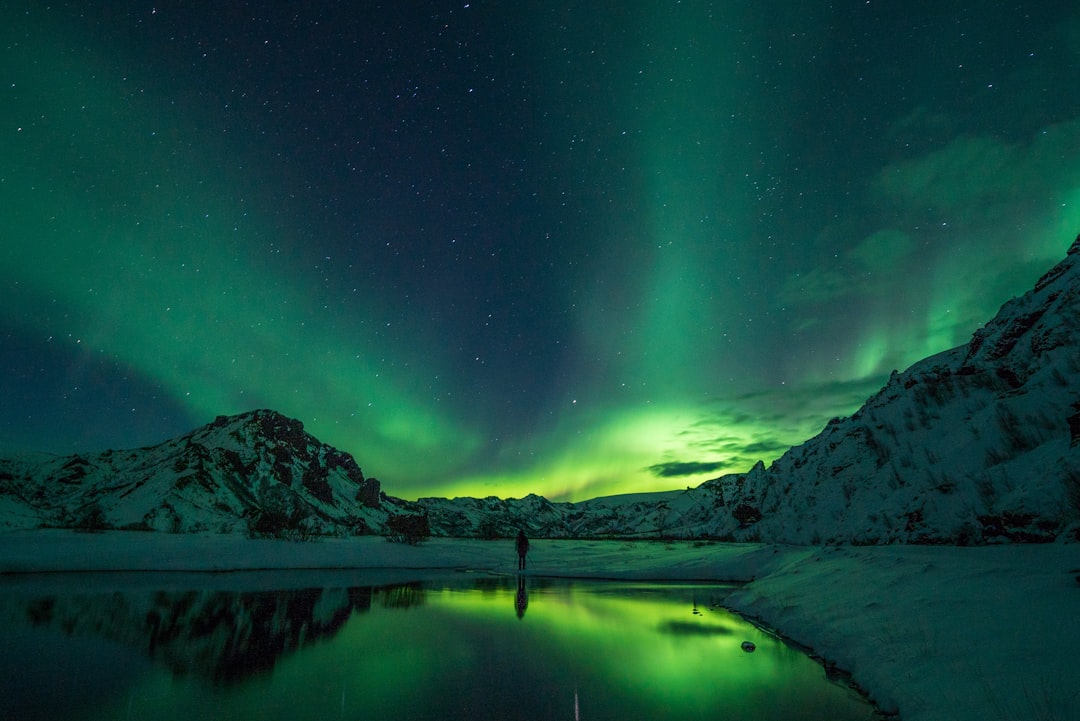
The 2026-2027 winter falls within the peak of Solar Cycle 25, the strongest aurora cycle in over two decades. The Northern Lights are statistically at their most visible from late 2025 through 2027 before declining. If you have been planning an aurora trip, this is the window.
This guide compares the three flagship Northern Lights destinations — Iceland, Norway, and Finland — across cost, scenery, photographic style, accommodation options, and the practical logistics of hunting the aurora. Each has distinct advantages: Iceland for ease of access from North America and dramatic volcanic backdrop, Norway for fjord landscapes and the highest probability viewing zone (Tromsø), Finland for forests, snow-covered Lapland villages, and the iconic glass igloo accommodations.
Best Time: 2026-2027 Aurora Forecast
The Northern Lights season runs roughly late September through early April, when nights are long and dark enough to see the aurora. The strongest activity windows:
September-October: Equinox effect produces stronger geomagnetic storms statistically. Less snow, more atmospheric color contrast. Reliable aurora viewing without extreme winter cold.
November-December: Polar night begins above the Arctic Circle (no sunrise). Long viewing windows but extreme cold (-20°C to -40°C). Christmas markets and Sami cultural events add value.
January-February: Coldest. Crystal-clear skies on the best nights. Highest chance of strong aurora displays. Hotel rates higher around school holidays.
March-early April: The other equinox peak. Snow still covers the landscapes, days are getting longer, the cold moderates. Many aurora photographers consider this the best window.
Solar Cycle 25 context (2026): The Sun s 11-year cycle peaked in late 2024-early 2025. The 2025-2026 and 2026-2027 winters are predicted to produce among the strongest aurora seasons in 20+ years. After 2027, activity declines back toward the 2031 minimum.
Aurora indicators: Check kp-index forecasts at SpaceWeatherLive, NOAA, or the AuroraMax app. Kp 3-4 visible at the Arctic Circle (Tromsø, Rovaniemi); Kp 5-7 visible further south (Reykjavík).
Iceland: Volcanic Drama
Iceland sits just below the Arctic Circle (Reykjavík at 64°N). Aurora visibility requires Kp 4+ activity, which happens 100-150 nights per typical winter. The advantages: dramatic volcanic-landscape foregrounds (glaciers, lava fields, waterfalls), direct flights from North America (5 hours from New York, 4 from Boston), and a self-driving-friendly Ring Road. The disadvantage: more frequent cloud cover than the Scandinavian alternatives.
Best Aurora Spots in Iceland
Thingvellir National Park: 45 minutes from Reykjavík. Continental rift valley foreground, easily accessible by rental car.
Jökulsárlón Glacier Lagoon: 5-hour drive from Reykjavík on the south coast. Floating icebergs in the foreground produce the iconic Iceland aurora photographs.
Kirkjufell mountain (Snæfellsnes peninsula): 2.5 hours from Reykjavík. The pyramid-shaped mountain is the most photographed aurora location in Iceland.
Vik & Reynisfjara black sand beach: 2.5 hours south of Reykjavík. The black sand foreground produces unique contrast images.
Westfjords: The remote northwest. Almost no light pollution. The trade-off is winter road accessibility (some routes close November-April).
Iceland Practicalities
How to get there: Direct flights from major US/EU cities to Keflavík (KEF), 50 km from Reykjavík. Flybus shuttle 4,500 ISK ($35) one-way.
Best base: Reykjavík for 1-2 nights, then drive south coast 2-3 nights based at Höfn or Vik, or stay west in Snæfellsnes.
Notable hotels: The Retreat at Blue Lagoon (Grindavík, 1,200-2,500 USD/night) for the volcanic spa luxury. Fosshotel Glacier Lagoon (Hof, 350-550 USD) for Jökulsárlón access. Hotel Borg (Reykjavík, 280-450 USD) for Reykjavík base.
Avoid: December tour-bus overflow at the major locations; midwinter road closures on smaller routes.
Norway: Tromsø & the Fjords
Tromsø (69°N) sits directly under the auroral oval — the ring around the magnetic North Pole where aurora occurs most frequently. Statistically the highest aurora viewing probability of any major city in the world. The trade-off is the more frequent coastal cloud cover; clear nights are slightly rarer than in continental Finland but the auroras are stronger.
Best Aurora Spots in Norway
Tromsø region: The base for most Norway aurora trips. Aurora-hunting tours drive 100-200 km inland on cloudy nights to find clear skies. Kvaløya island (15 minutes from Tromsø) for accessible nature shooting.
Alta: 4-hour drive northeast of Tromsø. Smaller, less touristed, with the famous Sorrisniva Igloo Hotel (rebuilt each winter from snow and ice).
Senja Island: South of Tromsø. Dramatic jagged peaks (the “Norway in miniature”) provide the most photogenic foregrounds of any aurora destination.
Lofoten Islands: Further south at 68°N. The fishing-village fjord scenery is the iconic Norway photograph. Reine, Hamnøy, and Henningsvær villages dominate Instagram aurora feeds.
Svalbard: The Arctic outpost at 78°N. From mid-November to late January the polar night allows aurora viewing 24 hours a day. Logistically demanding and expensive but unique — only place in the world with daytime aurora.
Norway Practicalities
How to get there: Direct flights to Tromsø (TOS) from Oslo (2 hours), London, Frankfurt, Amsterdam, Copenhagen. Most North American visitors connect through Oslo.
Notable hotels: Sorrisniva Igloo Hotel (Alta, 500-900 EUR/night for ice rooms) is the showpiece. Lyngen Lodge (Lyngenfjord, 350-600 EUR) for a remote private-fjord option. Clarion Hotel The Edge (Tromsø, 220-380 EUR) for city base.
Lofoten: Eliassen Rorbuer (Hamnøy, 280-450 EUR) for the iconic red fishing cabins on stilts.
Finland: Glass Igloos & Lapland
Finnish Lapland (66-69°N) gives you the highest probability of clear skies and the iconic glass-igloo accommodations — watching the aurora from a heated bed under a glass dome is the iconic Finnish experience. The landscape is gentler than Norway (forests and frozen lakes rather than fjords and peaks) but the conditions are reliable.
Best Aurora Spots in Finland
Rovaniemi: The capital of Lapland, official home of Santa Claus, and the most accessible aurora base. Direct flights from Helsinki (90 minutes) and several European cities (Frankfurt, London).
Saariselä and Inari: Further north (68-69°N), in pure Sami land. Quieter, less touristed, with the strongest aurora visibility statistics.
Levi and Ylläs: Ski resort villages with aurora-viewing infrastructure. Mid-Lapland with the perfect mix of activities and aurora access.
Kakslauttanen Arctic Resort (Saariselä): The original glass-igloo resort. Reservations 12-15 months ahead for peak season (December-March).
Northern Lights Village (Saariselä): Newer glass-igloo concept with more affordable pricing than Kakslauttanen.
Finland Practicalities
How to get there: Direct flights to Rovaniemi (RVN), Ivalo (IVL, for Saariselä/Inari), and Kittilä (KTT, for Levi). Most international visitors connect through Helsinki.
Glass igloo costs: Kakslauttanen 700-1,800 EUR/night, Northern Lights Village 400-900 EUR/night, Aurora Bubbles at Nellim 500-1,000 EUR/night. Book January slots 12-15 months out.
Reindeer & Sami culture: Visit a Sami reindeer farm (Sirmakko, Tunturin Lapin Loma) for the cultural context the natural light show overshadows. The Sami are the indigenous reindeer-herding people of the Nordic Arctic.
Husky Sledding
Finland s husky kennel network is one of the best globally. Bearhill Husky (Rovaniemi) and Kakslauttanen safari operations run multi-day kennel-to-kennel husky sledding trips. The combination of daytime husky driving and nighttime aurora viewing is the iconic Finnish winter trip.
Comparison: Which Country for You
Choose Iceland if: You want direct North American flights, a road-trip style trip with diverse scenery (waterfalls, glaciers, beaches), and you re comfortable with cloud-cover unpredictability.
Choose Norway if: You want the statistically highest aurora visibility (Tromsø), dramatic fjord/peak landscapes (Senja, Lofoten), and a more sophisticated city base (Tromsø has good restaurants and museums).
Choose Finland if: You want the glass-igloo bucket-list experience, husky-sledding daytime activities, Sami cultural depth, and the most reliable clear-sky statistics.
Quick metrics:
Aurora probability ranking (clear nights with kp 4+): Tromsø / Lofoten > Lapland Finland > Reykjavík Iceland > Svalbard.
Cost comparison (mid-range 5 nights including activities, in USD): Iceland $1,800-2,800, Norway $2,200-3,500, Finland (with glass igloo) $2,500-4,500.
Direct flight access from US East Coast: Iceland 5h direct; Norway 8-10h with Oslo connection; Finland 8-9h with Helsinki connection.
Combinable with: Iceland with broader Iceland Ring Road; Norway with Stockholm or Copenhagen pre/post; Finland with Helsinki and Tallinn.
Aurora Photography Tips
The Northern Lights are easier to photograph than to see in real life — cameras capture more color than the human eye in low light. Even modern smartphones produce usable aurora photos with the right settings.
Smartphone
Use Night Mode on iPhone (iPhone 11+) or the equivalent Night/Pro mode on Android (Pixel, Samsung, etc.). Place the phone on a stable surface (tripod, snow bank, rock) — handheld at long exposure produces blur. Aim for 3-10 second exposures. iPhone Pro models allow ProRAW capture for post-processing flexibility.
DSLR or Mirrorless
Lens: Wide-angle (14-24mm) with maximum aperture f/2.8 or wider. Sigma 14mm f/1.8 or Samyang 14mm f/2.8 are budget aurora favorites.
Settings: Manual mode. ISO 1600-3200 to start. Aperture wide open (f/2.8 or wider). Shutter speed 5-15 seconds. Focus manually to infinity. Use 2-second self-timer or remote trigger to avoid camera shake.
Tripod: Sturdy carbon-fiber preferred (less cold-stiffening than aluminum). Lubricate ball heads with cold-weather grease before the trip.
Batteries: Cold drains batteries fast. Carry 3-4 spares in interior coat pockets to keep warm. Lithium batteries lose 50-80% capacity at -20°C.
Composition
The aurora alone is not a compelling photograph — you need foreground interest: a mountain, a cabin, a tree, ice. Scout locations during daylight, return at night with composition pre-planned. The best aurora images put the photographer in the foreground (silhouette against the light) or include warm-lit interiors (cabin windows).
Hunting Tours vs. Self-Guided
Aurora hunting tours have local guides who watch real-time weather and KP forecasts, then drive your group 100-200+ km on a given night to find clear skies. For a 5-7 day trip, 2-3 hunting tours raise your visibility odds dramatically.
Recommended tour operators:
Iceland: Reykjavik Excursions (mass-market, 11,000 ISK / $85), Aurora Hunters (small-group, 24,000 ISK / $185), private 4WD operators 50,000-90,000 ISK ($385-700).
Norway: Chasing Lights (Tromsø, NOK 1,400 / $130), Wandering Owl (small-group), Lyngsfjord Adventure (4WD with photography focus).
Finland: Beyond Arctic (Rovaniemi), Aurora Holidays (Saariselä), Lapland Welcome (multi-day photography programs).
Self-guided pros: Save 25-40% over tours. Set your own pace. Stay out as long as you want (tours typically end at 1 AM).
Self-guided cons: Driving on snow/ice in -25°C with limited daylight is unforgiving. The local knowledge of cloud-free spots is hard to replicate. Vehicle rental insurance for winter driving in Iceland and Norway requires careful attention.
Combining Aurora With Other Activities
The aurora is a nighttime activity. Use daytime hours for the rest of the trip:
Iceland daytime: Glacier hiking, hot spring soaking (Blue Lagoon, Sky Lagoon, Krauma), South Coast driving (Seljalandsfoss, Skogafoss, Reynisfjara), Snorkeling Silfra rift between continental plates.
Norway daytime: Husky sledding, whale watching off Tromsø (orcas Nov-Jan, humpbacks Dec-Feb), reindeer sledding with Sami families, Lyngen Alps ski touring.
Finland daytime: Husky sledding, ice fishing on frozen lakes, Sami reindeer farm visits, Snowmobile safaris, Santa Claus Village in Rovaniemi, Korouoma Canyon ice climbing.
Cost Estimate for 5-7 Day Aurora Trip
Budget: $150-250/day. Hostel or budget hotel ($60-100), shared tour pickups ($85-130 per night), one daytime activity ($60-90), groceries and cafe meals. 5 days: $750-1,250. Adding international flights from US/EU East Coast: $400-900 round-trip.
Mid-Range: $300-500/day. Mid-range hotel ($180-280), private 4WD tour or premium hunting tour ($150-250 per night), 2-3 daytime activities, table-service dinners. 5 days: $1,500-2,500.
Luxury (with glass igloo): $700-1,500+/day. Kakslauttanen glass igloo or premium fjord cabin ($500-1,500/night), private photography-focused guides, husky kennel multi-day trips, fine-dining and tasting experiences. 5 days: $3,500-7,500+.
Frequently Asked Questions
What are the odds of seeing the aurora?
During Solar Cycle 25 peak years (2025-2027): 70-85% probability over a 5-night trip in Tromsø or Lapland Finland; 50-65% in Reykjavík area. Cloud cover is the primary spoiler.
Will my phone capture the aurora?
Modern smartphones (iPhone 11+, Pixel 5+, Galaxy S20+) with Night Mode produce usable photos. Mounting the phone on something stable is essential. DSLR/mirrorless still captures dramatically better images.
How cold does it really get?
Above the Arctic Circle in winter: -15 to -30°C is typical, -35 to -40°C is possible in January-February. Layered clothing is essential — thermal base layer, fleece mid-layer, insulated outer parka, insulated bib pants, balaclava, gloves with liners, double-layer socks. Many tours provide full “thermal suits” loaned for free.
Can I see the aurora on a cloudy night?
No — you need clear sky between your eyes and the aurora at 100-300 km altitude. This is why hunting tours drive hours to find clear patches.
How long should I stay?
4-5 nights minimum to give yourself reasonable odds. 7-10 nights for confidence plus daytime activity variety. Single-night trips are a gamble.
What to Pack
The cold here is unlike anything in temperate climates. Cotton kills (literally — hypothermia risk). Build out from a merino-wool base layer.
Base layer: Merino wool top and bottom (Icebreaker, Smartwool, or similar 200-260gsm weight).
Mid layer: Fleece or insulated jacket.
Outer: Down or synthetic-insulated parka rated to at least -20°C, with hood. Insulated bib snow pants. Waterproof outer shell over both if possible.
Extremities: Insulated waterproof boots (Sorel, Baffin), wool socks plus liner socks, gloves plus liner gloves or mittens (mittens warmer), neck buff or balaclava, fleece-lined beanie.
Accessories: Hand warmers and toe warmers (Hot Hands brand, sold in packs of 40 at outdoor stores), reusable water bottle (avoid hydration bladders — they freeze).
Final Thoughts
The Northern Lights at peak solar cycle in 2026-2027 are statistically the best they will be until the late 2030s. The trip pays off in many ways beyond the aurora — the silence of an Arctic forest, the slow tea-and-fire culture of a Finnish cabin, the dramatic fjord landscapes, the husky-team energy. Even if you see no aurora, the trip changes you. Plan ahead, dress right, stay flexible, and let the night sky do its work. Suge nálábma, in Sami: “Travel well.”
Suggested 7-Day Itineraries
Iceland 7-Day
Day 1 Reykjavík arrival + Blue Lagoon + city walk. Day 2 Golden Circle daytime + Thingvellir aurora night. Day 3-4 drive south coast to Höfn with Seljalandsfoss, Skogafoss, glacier walks. Day 5 Jökulsárlón glacier lagoon aurora night. Day 6 return drive with Diamond Beach + Vik. Day 7 Reykjavík + departure.
Norway 7-Day (Tromsø + Lofoten)
Day 1 Tromsø arrival + Polar Museum + city. Day 2 husky sledding + aurora hunting tour. Day 3 fly Tromsø to Bodø, drive to Lofoten Reine. Day 4-5 Lofoten exploration (Hamnøy, Henningsvær, Reine) + aurora photography. Day 6 return Tromsø with whale watching. Day 7 departure.
Finland 7-Day (Rovaniemi + Saariselä)
Day 1 Rovaniemi arrival + Santa Claus Village. Day 2 husky sledding + reindeer sleigh + aurora night. Day 3 fly or drive north to Saariselä. Day 4-5 glass igloo stay at Kakslauttanen + Sami visit + aurora. Day 6 return Rovaniemi with snowshoe hike. Day 7 departure via Helsinki.
Cruise Options
Hurtigruten and Havila Voyages operate coastal Norwegian cruise routes from Bergen up to Kirkenes (north of Tromsø) and back. The 12-day round trip is the iconic Norwegian coastal experience. During aurora season (October-March), the routes pass through Lofoten and Tromsø at night with deck-level aurora viewing. Premium cabins 3,500-7,000 EUR per person, regular cabins 1,800-3,500 EUR. Departures multiple times weekly.
Combining All Three Countries
An ambitious 10-14 day trip can cover all three Nordic aurora destinations:
Days 1-3: Iceland (Reykjavík + South Coast)
Days 4-7: Norway (Tromsø + Lofoten)
Days 8-10: Finland (Rovaniemi or Saariselä)
Day 11+: Helsinki or Copenhagen for cultural pre-departure.
The advantage: diverse aurora foregrounds (volcanic, fjord, forest) and almost guaranteed sightings across the longer trip. The disadvantage: significant flight time between destinations, and missing the deeper exploration of any single region. Strong choice only for serious aurora chasers.
Booking Strategy
Aurora season hotels in Tromsø, Reine, Kakslauttanen, and ICEHOTEL Sweden sell out 6-12 months ahead for peak dates (December-March). Book accommodation first, then build flights around it. Aurora tours can usually be reserved 30-60 days out.
Glass igloo specifics: Kakslauttanen Premium and Aurora Cabins open booking 12 months ahead and fill the prime December-February dates within weeks. Northern Lights Village and Snowman World offer similar experiences at 30-50% less with somewhat better availability.
Plan ahead, layer well, and prepare for the chance of cloudy nights. The aurora is wild — you cannot guarantee it. But the 2026-2027 winter is the best statistical odds in decades.
For a final tip: many travelers fixate on aurora photography to the point that they forget to actually look at the sky with their own eyes. Photographs underexpose what your eyes might miss — the subtle pink and red bands, the curtain shimmer, the rapid pulsing on strong nights. Set the camera on the tripod, walk a few steps away, lay back on a snowbank, and watch with your real eyes for one full sequence. That memory outlasts any photograph.
Aurora Visibility Statistics by Location
Long-term aurora visibility data (from the University of Tromsø and various national meteorological services):
Tromsø area: Average 200+ aurora nights per year, but only 40-50% are clear enough to see the lights. Best months: October, February, March.
Lofoten Islands: 180+ aurora nights, clear skies 35-45% of the time. The Atlantic moisture reduces clarity vs inland.
Reykjavík: 100-130 aurora-visible nights, clear skies 30-40% of those. Iceland s weather is famously volatile.
Rovaniemi: 160+ aurora nights, clear skies 45-55% — the best clear-sky stats of the major destinations.
Saariselä / Inari: 200+ aurora nights, clear skies 50-60%. The continental climate produces drier, clearer winter air.
Svalbard (Longyearbyen): Polar night November-January means 24/7 darkness. Aurora visible 80% of nights when clear. Cloud cover variable.
One last note: solar cycle predictions are exactly that — predictions. The actual 2026-2027 aurora activity will depend on solar storm patterns no human can forecast precisely. Book early, plan for multiple nights, and trust the statistics.
For further exploration
Here are the complementary guides on travel-reference.com:
- Best Christmas Markets in Germany 2026: Complete Guide
- 7 Days in Norway: Oslo, Fjords, Bergen and Lofoten Itinerary (2026)
- 3 Days in Reykjavik: City, Golden Circle and the Aurora (2026)
- 3 Days in Copenhagen: The Local Itinerary Beyond Nyhavn (2026)
- 3 Days in Stockholm: The Local Itinerary Across the 14 Islands (2026)