

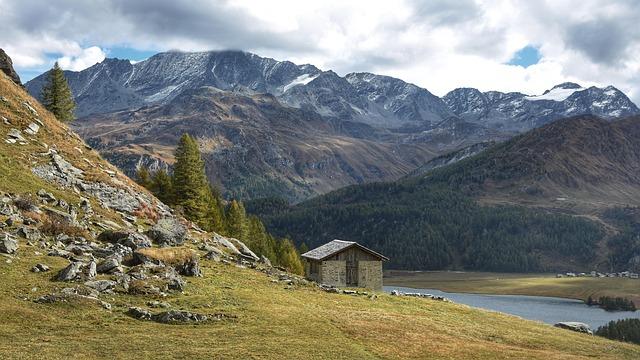
The Alps span seven countries, more than 1,200 kilometres of mountain range and some of the most accessible high-altitude terrain on the planet. From the Mont Blanc massif in the west to the Julian Alps of Slovenia in the east, you can hike everything from gentle valley loops to glaciated 4,000-metre traverses. This guide brings together the best routes, the practical hut system, the gear that matters and the seasonal windows you need to know for 2026.
Why the Alps Set the Bar for Hiking Adventures
Three reasons explain why the Alps remain the global reference for mountain hiking. First, the infrastructure: more than 2,000 mountain huts (refuges, rifugi, Berghütten) sit at strategic altitudes, with cooked meals, beds and detailed weather briefings. You can hike for two weeks without ever camping. Second, the way-marking: the trails are signed every few hundred metres with colour codes (white-red-white for standard routes, white-blue-white for high alpine, white-red for Italian rifugio routes). Third, the rescue system: a helicopter rescue can reach almost any point in the Alps within 25 minutes, and the cost is often covered by your local insurance or by a 35 EUR Alpine Club membership.
The variety is the other major draw. A single trip can include a high-altitude ridge traverse on Tuesday, a forested valley loop on Wednesday and a glacier crossing with crampons on Thursday. Few mountain regions in the world offer this density of terrain at this level of accessibility. The pricing also stays reasonable: a half-board night in a mountain hut runs 65 to 95 EUR per person, including dinner and breakfast.
The Alps also work well for travellers who are not confident in their navigation skills. Trails are mapped on dedicated apps (Komoot, AllTrails, Outdooractive, FATMAP) with offline GPS. The huts function as confidence anchors: you always know that within four to six hours of walking you will reach a fully staffed refuge with food, shelter and other hikers.
The Twelve Best Hiking Routes in the Alps
These twelve routes cover the range from day hikes to two-week traverses. Each one is way-marked, well-supported and rideable by a fit, intermediate hiker.
Multi-day classics
- Tour du Mont Blanc: 170 km in 10 to 12 days through France, Italy and Switzerland. Booking huts five months ahead for July and August. Cost: 1,100 to 1,800 EUR per hiker with half-board.
- Haute Route (Chamonix to Zermatt): 180 km in 12 to 14 days. More technical and higher than the TMB. Crampons and ice axe needed in late summer. Cost: 1,800 to 2,400 EUR.
- Alta Via 1, Dolomites: 120 km in 8 to 10 days through limestone scenery unique to northern Italy. Cost: 950 to 1,500 EUR.
- Alta Via 2, Dolomites: 180 km in 12 to 14 days. Longer and more remote than Alta Via 1, with several via ferrata sections.
- Stubai High Trail, Austria: 80 km in 7 to 8 days, with eight huts and views over the Stubai Glacier.
- Eagle Walk (Adlerweg), Austria: 413 km divided into 33 stages across the Tyrol. Can be done as a full traverse or in shorter segments.
- Slovenian Mountain Trail: 600 km from the Julian Alps to the Adriatic. Most hikers complete sections of 5 to 10 days at a time.
Iconic day hikes
- Lac Blanc, Chamonix, France: 7 km, 700 m of ascent. The mirror reflection of Mont Blanc on the lake is one of the most photographed scenes in the Alps.
- Tre Cime di Lavaredo loop, Dolomites: 10 km, 350 m of ascent. The classic Dolomite day hike.
- Five Lakes Walk (5-Seenweg), Pizol, Switzerland: 11 km, 700 m of ascent. Five alpine lakes connected by an easy ridge trail.
- Schynige Platte to First, Switzerland: 15 km ridge traverse above Interlaken with continuous views of the Eiger.
- Pragser Wildsee and Croda del Becco, Dolomites: 7 km loop around a turquoise lake with a steep climb option.
Day Hikes vs Multi-Day Treks: Which Suits You
The choice between day hikes from a base and a multi-day trek shapes the entire trip. Each has clear advantages.
Day hikes from a base
You stay in one valley (Chamonix, Cortina, Grindelwald, Berchtesgaden, Bovec) and ride out each morning for a different hike. Advantages: no need to carry overnight gear, you can adjust difficulty by the day, food and shower routines stay constant. Drawbacks: you miss the immersion of waking up at altitude. Best for first-time alpine hikers, families and travellers with mixed fitness in the group.
Multi-day trek with hut sleeps
You start in one valley and finish in another, sleeping each night at a hut along the route. Advantages: full immersion in the mountains, sunrise above the clouds, dinner conversation with hikers from across Europe. Drawbacks: heavier pack, fixed booking schedule that limits flexibility if the weather turns. Best for fit, experienced hikers who want a genuine alpine experience.
Hybrid approach
The hybrid model has become increasingly popular. You hike a four-night hut trek (which captures the immersion), then descend to a hotel for two recovery nights before a second three-night segment. This works particularly well for the Tour du Mont Blanc, where many hikers split the loop into two segments around a rest day in Courmayeur.
Mountain Huts: How They Work and How to Book
Mountain huts are the backbone of alpine hiking. Understanding how they work makes the difference between a comfortable trek and a stressful one.
What you get for the night
A standard half-board hut stay (65 to 95 EUR per person) includes a bed in a shared dormitory (usually 6 to 12 bunks), a three-course dinner served at a fixed time (typically 18:30 or 19:00), and breakfast (continental, served from 06:00 to 08:00). Most huts also offer cold showers (free) or hot showers (5 EUR for 5 minutes). You bring your own sleeping liner. Pillows, blankets and mattresses are provided.
How to book
Most huts now use online booking systems. The Swiss Alpine Club platform covers Switzerland, the Club Alpino Italiano covers Italian rifugi, the Federation Francaise des Clubs Alpins covers France, and the Austrian Alpine Club covers Austria. For July and August, book four to five months in advance. For September, two months ahead is usually enough.
An Alpine Club membership (around 60 EUR per year) gets you 30 to 50 percent off hut prices, priority booking and personal accident insurance up to 25,000 EUR. For anyone doing more than seven nights in huts per year, the membership pays for itself.
Essential Gear for Alpine Hiking
You can over-spend on alpine gear easily. The list below covers what you actually need for a typical July or August hike at 2,000 to 3,000 metres.
- Hiking boots: A B-rated boot (semi-rigid sole) for standard alpine trails. The Salomon Quest 4, Scarpa Rush Mid GTX and Lowa Renegade GTX all work well.
- Hiking poles: Save your knees on descents. Carbon poles (200 to 300 EUR) for serious trekkers, aluminium (60 to 100 EUR) for occasional use.
- Backpack: 30 to 40 litres for hut-to-hut hiking (you carry your own sleeping liner, clothes for two days, a rain jacket, water and snacks). 50 to 60 litres for bivouac trips.
- Rain shell: Mandatory. The Arc teryx Beta LT, the Patagonia Torrentshell and the Decathlon MH900 all keep you dry through a typical alpine storm.
- Insulated jacket: A light down jacket (Patagonia Down Sweater, Decathlon MT900) for evenings at the hut and unexpected weather.
- Headlamp: Essential for early-morning starts and emergency descents. The Petzl Actik Core remains the benchmark.
- Sun protection: Glacier glasses (category 4 lenses) and SPF 50 sunscreen. UV at 2,500 metres is roughly twice as strong as at sea level.
- First aid kit: Blister care (Compeed), basic painkillers, emergency space blanket, sterile gauze.
Trail Difficulty Ratings and Safety Basics
The Swiss SAC scale (T1 to T6) is the most useful difficulty system for alpine hiking. Understanding it helps you pick trails that match your skill.
- T1 (yellow markers): Wide paths, no exposure. Suited to anyone with basic fitness. Family-friendly.
- T2 (white-red-white): Mountain paths with partly steep terrain. Hiking boots recommended.
- T3 (white-red-white with exposure): Demanding mountain paths with occasional exposure. Some scrambling. Mandatory hiking boots and a head for heights.
- T4 (white-blue-white): Alpine paths with exposed sections. Some grade I scrambling. Suited to experienced mountain hikers only.
- T5 (white-blue-white): Challenging alpine paths with very exposed sections and easy climbing. Helmet recommended.
- T6 (no markers): Difficult alpine routes. Glacier travel possible. Mountaineering experience required.
Most multi-day classics (Tour du Mont Blanc, Alta Via 1, Stubai High Trail) stay within T2 and T3. The Haute Route and Alta Via 2 include T4 sections. If you are unsure of your level, start with T2 trails and progress over the week.
Three safety rules apply everywhere in the Alps. First, check the weather forecast the evening before and again at breakfast. Storms in the Alps can develop in less than two hours, particularly between 13:00 and 17:00 in summer. Second, turn back when conditions deteriorate. The mountain will still be there next year. Third, file a route plan with the hut warden each morning, including your destination and approximate arrival time.
Best Months and Weather Windows
The alpine hiking season runs from late June to early October, with significant variation by altitude and aspect.
- Late June to mid-July: Snowfields still cover passes above 2,500 metres. Waterfalls run high. Wildflowers peak. Crowds are still low.
- Mid-July to mid-August: The peak season. All huts open. Best conditions for high-altitude routes. Heavy bookings required.
- Mid-August to mid-September: Crowds drop sharply after the European school year starts. Weather remains stable. Best balance of conditions and quiet.
- Mid-September to early October: Larch trees turn gold (the iconic Dolomite colour). Cool nights, crisp mornings, occasional early snow above 2,800 metres. Huts start to close mid-September.
If you can choose only one window, the second half of August or the first two weeks of September deliver the best ratio of weather, crowds and hut availability. Bookings made eight weeks ahead during this period usually succeed.
Getting There: Airports, Transfers and Starting Points
The Alps are well connected by airports across France, Switzerland, Italy, Austria, Germany and Slovenia. Choosing the right entry point shortens your transfer and saves a half-day at each end of the trip.
French Alps
Geneva (GVA) is the main gateway for Chamonix, the western Mont Blanc circuit and the Aiguilles Rouges. Shared shuttle services (Mountain Drop-Offs, Alpybus) cost 35 to 45 EUR per person for the 90-minute transfer. Lyon (LYS) suits the southern French Alps (Briancon, Ecrins, Vanoise) with two-hour transfers. Grenoble (GNB) is closer to the Ecrins national park.
Swiss Alps
Zurich (ZRH) and Geneva connect to the Swiss rail network within minutes. Direct trains reach Lauterbrunnen, Grindelwald, Zermatt, Wengen and Murren within three to four hours. The Swiss Travel Pass (eight days at 459 CHF) covers unlimited train, bus and boat travel, plus most cable cars at 50 percent. For Swiss-only trips, this often beats individual ticket pricing.
Italian Dolomites
Venice Marco Polo (VCE) and Innsbruck (INN) are the closest airports to Cortina, San Vito di Cadore and Selva di Val Gardena. Allow two to three hours for the transfer by hire car. Public buses (Cortina Express, Suedtirol bus network) run from both airports and cost 25 to 45 EUR.
Austrian and Bavarian Alps
Innsbruck (INN) is the natural hub for Tyrol and the Stubai. Salzburg (SZG) covers the Salzkammergut, Berchtesgaden and the Hohe Tauern. Munich (MUC) works for the German Alps and is also useful for the eastern Austrian Alps via two hours of train.
Slovenian Alps
Ljubljana (LJU) connects to the Julian Alps in about 90 minutes. The Bohinj and Bled valleys both reach by public bus from the capital, with transfers at 12 to 18 EUR. Trieste (TRS) in Italy is the secondary option.
Driving between alpine regions
A hire car costs 40 to 70 EUR per day in summer. Border crossings within the Schengen Area are seamless. The Austrian and Swiss motorway systems require vignettes (Switzerland 40 CHF for the year, Austria 9.90 EUR for ten days). Plan for paid parking at trailheads (around 8 to 12 EUR per day).
Family-Friendly Alpine Hiking
The Alps work well for families when you adjust the daily distance and choose lift-served walks. Children from age six can handle four to six kilometres at a comfortable pace, with elevation gain under 300 metres. The key is to combine moderate hiking with rewards like cable cars, alpine lakes for swimming and themed trails.
- Murren and the Allmendhubel, Switzerland: A funicular climbs 470 metres to a flower park, with three loop trails of 1 to 3 km suitable for families. Restaurant at the top with mountain views.
- Eibsee and Zugspitze, Germany: Walk around the turquoise Eibsee lake (8 km flat loop) or take the cable car up the Zugspitze and walk back via a marked easy trail.
- Lake Sorapis hike, Dolomites: 10 km round trip with one steep section. The turquoise alpine lake at the end justifies the effort. Suited to children from age eight with patience.
- Hintertux Glacier walks, Austria: Three different family loops, some on the glacier itself with crampons provided.
- Vintgar Gorge, Slovenia: A 1.6 km wooden walkway through a dramatic gorge near Bled. Easy with strollers.
Plan two recovery activities per week: a lake day (Annecy, Brienz, Como, Bohinj all sit close to hiking areas), a thermal bath (Leukerbad in Switzerland, Bormio in Italy) or an alpine roller coaster (Imst, Glurns, Davos, Saas-Fee). These breaks keep morale high and reduce the risk of mid-trip burnout.
Realistic Budgets for a Week of Alpine Hiking
Costs vary significantly between countries and accommodation tiers. Use the figures below as planning anchors for a seven-night trip in summer 2026, excluding international transport.
- Budget hut-to-hut trek, France: 750 to 950 EUR per hiker (Alpine Club discount, dormitory bunks, basic gear).
- Standard hut-to-hut trek, Switzerland: 1,200 to 1,600 EUR (no membership discount, private rooms when available, lift access fees).
- Hotel-based day hiking, Cortina: 1,400 to 2,200 EUR (three-star hotel, breakfast included, lift passes, one or two guided days).
- Premium hut trek with guide: 2,800 to 4,200 EUR (private guide, hotel before and after, hut bookings handled, gear included).
Common cost drivers to plan for: cable cars (15 to 45 EUR per ascent), restaurant meals in the valley (40 to 70 EUR per dinner), gear purchases on arrival (poles, water filter, blister care) typically 100 to 200 EUR. A daily contingency of 50 EUR per hiker covers most surprises.
Frequently Asked Questions
How fit do I need to be for a Tour du Mont Blanc?
You should be able to walk for six to eight hours per day with 800 to 1,200 metres of ascent for ten consecutive days. Train for two to three months ahead with weekly long walks of 15 to 20 km and 600 m of ascent. The TMB is demanding but not technically difficult: an average fit hiker who prepares properly will complete it.
Do I need a guide to hike in the Alps?
No, for standard way-marked trails (T1 to T3). The signage and apps make navigation straightforward. A guide is essential for T5 and T6 routes, glacier crossings or via ferrata sections. Most guides charge 350 to 500 EUR per day for a small group.
How much does an alpine hut night cost in 2026?
Standard half-board (dinner, dormitory bed, breakfast) costs 65 to 95 EUR per person in Switzerland and France, 55 to 80 EUR in Italy and Austria. Alpine Club members receive 30 to 50 percent off. Bed-only options exist at 25 to 40 EUR in some huts.
Can I drink water from alpine streams?
Generally yes above 2,000 metres if the source is from a glacier or snowmelt with no animal pasture upstream. Below 2,000 metres or anywhere there are cows or sheep, filter or treat the water. The Sawyer Mini or Katadyn BeFree filter (35 EUR) handles this for an entire hike.
What is the difference between a refuge, rifugio and hut?
They are different names for the same concept. Refuge (French), rifugio (Italian), hutte or Berghutte (German), koca (Slovenian). All offer half-board accommodation in the mountains. Standards are similar across countries, although Italian rifugi tend to have better food and shorter dinner service.
Are there hiking trails accessible without overnight stays?
Yes. Most major alpine valleys offer day hikes that return to the valley by evening. Lift-served loops from Chamonix, Zermatt, Cortina, Innsbruck and Bovec let you reach high alpine terrain without committing to an overnight. A six-day pass for valley lifts costs 180 to 280 EUR depending on the resort.
Affiliate disclosure: some hotel and activity links in this article are affiliate links. If you book through them, we receive a small commission at no additional cost to you. This is what allows us to keep producing detailed, honest guides.