

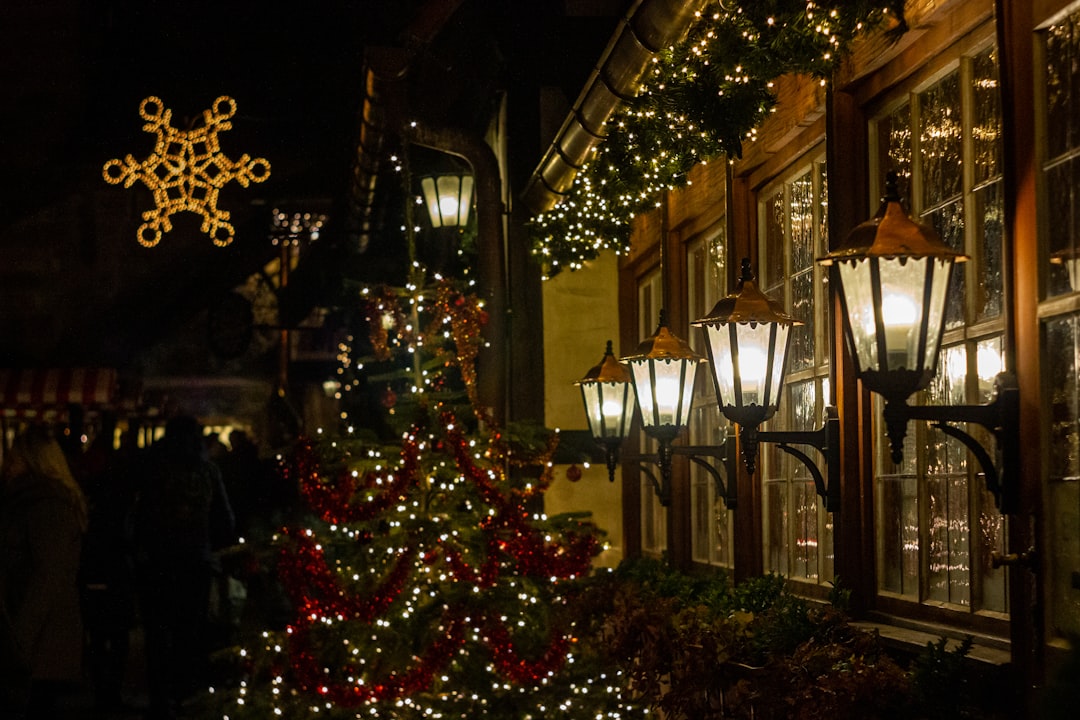
Germany invented the Christmas market. The first documented Weihnachtsmarkt was held in Dresden in 1434 — nearly 600 years ago. Today the country hosts over 2,500 Christmas markets each Advent season, from the medieval Nuremberg Christkindlesmarkt drawing two million visitors to tiny village markets with two dozen stalls and a local Gluhwein brewer. This guide covers the 15 essential German Christmas markets for 2026, plus the practical logistics: when they open and close, what to eat, how to travel between them, and where to stay.
The German Christmas market season runs from the last Friday of November (this year: Friday November 27, 2026) through December 23 at most markets, with some extending to New Year s Eve. Different markets have different specialties — Nuremberg for the iconic gingerbread, Dresden for the original Stollen cake, Aachen for printen cookies, Rothenburg ob der Tauber for medieval atmosphere, Berlin for the breadth of city-wide options.
2026 German Christmas Market Dates
Most German Christmas markets follow the Advent calendar. Opening Friday November 27, 2026 (the Friday before the First Advent Sunday on November 29). Closing dates vary:
December 23: Nuremberg, Rothenburg, most traditional markets close the day before Christmas Eve.
December 24 (Christmas Eve): Markets typically close at noon to 4 PM.
December 30-31: Berlin (most major Berlin markets extend through New Year s Eve), Dresden Striezelmarkt closes December 24.
Early January: Cologne Cathedral and a few others may extend to Three Kings Day (January 6, Epiphany).
Hours: most markets run roughly 11 AM-9 PM weekdays, 10 AM-10 PM weekends. Mulled wine flows latest. The famous illuminated Christmas pyramid in Dresden activates at sunset (around 4:30 PM in December).
Nuremberg Christkindlesmarkt
The most famous German Christmas market. Held in Nuremberg s Hauptmarkt (main square) since 1628 — nearly 400 years of continuous tradition. The market opens with a ceremonial speech by the elected Christkind (a teenage girl in elaborate angel costume, chosen every two years) on the balcony of the Frauenkirche church on opening Friday.
Address: Hauptmarkt, 90403 Nürnberg, Bavaria.
Open: November 27, 2026 – December 23, 2026.
Hours: Monday-Sunday 10 AM-9 PM (until 2 PM Christmas Eve).
Estimated visitors: 2 million per season.
What to buy: Nuremberg Lebkuchen (the iconic spiced gingerbread, the original since the 1300s), Prune Men (Zwetschgenmännle, decorative figures made of dried prunes), handcrafted Christmas ornaments.
What to eat: Nuremberg Rostbratwürste (the small finger-length grilled sausages, three per bread roll), Lebkuchen, Glühwein.
The Christkindlesmarkt is the strict traditional market — modern goods are forbidden, stalls must be wooden, decorations must follow historical design. The atmosphere is genuinely medieval. Crowds are heavy on weekends; visit Monday-Thursday morning if possible.
Dresden Striezelmarkt
The oldest documented German Christmas market — first held in 1434. “Striezel” is the old Saxon word for the Stollen fruitcake, the city s iconic Christmas bread. Each year on the second Saturday of Advent, the city holds the Stollen Festival, parading a giant 4-ton Stollen through Dresden s Old Town to the market.
Address: Altmarkt, 01067 Dresden, Saxony.
Open: November 27, 2026 – December 24, 2026.
Hours: Sunday-Thursday 10 AM-9 PM; Friday-Saturday 10 AM-10 PM.
Visitors: Around 2.5 million per season.
What to buy: Original Dresdner Christstollen (the certified-original fruitcake bears a seal of authenticity from the local bakers guild), Erzgebirge handcraft (wooden nutcrackers, smoking figurines, Christmas pyramids from the Erzgebirge mountains region).
What to eat: Stollen (try multiple bakers — each has subtle variations), Pulsnitz Pfefferkuchen gingerbread, Saxon Quarkkäulchen potato-curd cakes.
The giant Christmas pyramid in Dresden s Altmarkt (14.6m tall, the world s largest) is the photographic anchor of the market. Climb the Frauenkirche dome (10 EUR, advance reservation) for the panoramic view of the market and the Christmas-lit Old Town at dusk.
Rothenburg ob der Tauber
The most atmospheric small-town German Christmas market. Rothenburg is a perfectly preserved medieval walled town (the Romantic Road s most famous stop), and during Advent it becomes a real-life storybook. The Käthe Wohlfahrt year-round Christmas store on the main square (Herrngasse) is the most famous Christmas shop in the world.
Address: Marktplatz, 91541 Rothenburg ob der Tauber, Bavaria.
Open: November 27, 2026 – December 23, 2026.
Hours: 11 AM-7 PM weekdays, until 8 PM weekends.
What to buy: Schneeballen (sugar-dusted fried dough balls, the city s specialty since the 1700s) from Böhm or Diller bakery, Käthe Wohlfahrt ornaments, medieval handcraft.
Rothenburg has only 11,000 residents — the town fills up during Advent and hotels book 6-9 months ahead. The 2-hour Night Watchman s Tour (in English at 8 PM nightly) by the costumed local guide is one of the great heritage experiences in Europe (8 EUR, no reservation needed).
Berlin’s 70+ Christmas Markets
Berlin hosts over 70 distinct Christmas markets during Advent — from the chic Charlottenburg Palace market to the alternative Lucia Christmas market in Kulturbrauerei, plus several free of admission and several with themed concepts.
Top Berlin markets:
WeihnachtsZauber Gendarmenmarkt (the most picturesque, on the iconic Gendarmenmarkt square between the German and French cathedrals): premium artisan stalls, 1 EUR entry. Open until December 31.
Charlottenburg Palace Christmas Market: Romantic baroque palace setting, the most photogenic for visitors. Free entry. Open through December 26.
Christmas Market at Alexanderplatz: The big tourist-mainstream market with traditional rides and food. Free entry, Open through December 30.
Lucia Weihnachtsmarkt (Kulturbrauerei in Prenzlauer Berg): Nordic-themed market — Finnish, Norwegian, Swedish, Danish stalls with Aquavit, smoked salmon, reindeer sausages. Open through December 22.
RAW-Gelände Christmas Market: The alternative-Berlin option in Friedrichshain. Street food, vintage stalls, electronic music. Open through December 23.
Address tips: Stay in central Mitte for walking access to most markets. Berlin’s 24-hour S-Bahn and U-Bahn make 4-5 markets per day easy.
Cologne Cathedral Markets
Seven distinct Christmas markets in Cologne city center within walking distance of each other, anchored by the famous Cathedral Christmas Market at the foot of the Kölner Dom UNESCO cathedral.
Cathedral Market (Dom): The flagship. The cathedral as backdrop is unbeatable for photos. Famous for hand-painted glass ornaments.
Heinzels Wintermarchen (in Old Town): Gnome-themed market with Kölsch beer and Cologne-specific Christmas foods.
Schokoladen Weihnachtsmarkt: Chocolate-museum-adjacent, dessert-focused stalls.
Markt der Engel (Neumarkt): Angel-themed with elaborate angel costumes performing.
Hafen Weihnachtsmarkt: Maritime-themed at the Cologne Chocolate Museum harbor area.
Dates: November 23, 2026 – December 23, 2026 (some extend to December 30).
Munich Christkindlmarkt at Marienplatz
Bavarian capital hosts its main Christmas market at Marienplatz, the iconic central square dominated by the New Town Hall s Gothic facade. The 25-meter Christmas tree (decorated annually with 3,000 candles — in 2026 these are LED for safety) anchors the square. Munich also runs themed markets at Sendlinger Tor (Medieval Christmas Market), Wittelsbacherplatz (Tollwood alternative), and the Pink Christmas Market (LGBTQ+ focused) in Glockenbachviertel.
Address: Marienplatz, 80331 München.
Open: November 27, 2026 – December 24, 2026.
Hours: Monday-Sunday 10 AM-9 PM.
What to eat: Bavarian Weisswurst (white sausage), Brötchen with mustard, Bräustuberl-style pretzels, the famous Munich Gluhwein with Bavarian spirit shots.
Munich combines Christmas market visiting with traditional Bavarian beer hall dinners. Hofbräuhaus (the famous original) and Augustiner-Keller for traditional dinners between market visits.
More Notable German Christmas Markets
Aachen Weihnachtsmarkt: The Christmas market at the cathedral where Charlemagne was crowned. Famous for Aachener Printen (a regional gingerbread variant) and the Belgian/Dutch influence.
Erfurt Weihnachtsmarkt: Thuringia s capital market on the Domplatz cathedral square, framed by the spectacular Gothic cathedral and Severikirche church facades. One of the most beautiful settings.
Heidelberg Christmas Market: The romantic university town with Christmas markets spread across five squares of the Old Town. Castle backdrop at the Königsstuhl ice skating rink.
Esslingen Medieval Market: The medieval-themed market par excellence. Costumed performers, period-correct food and crafts, historic atmosphere. 20 minutes from Stuttgart.
Bremen Schlachte Zauber: The Hanseatic market along the Weser river embankment with maritime-themed stalls and the famous Bremer Town Musicians statue nearby.
Stuttgart Weihnachtsmarkt: Germany s largest by stall count (290+). The Schillerplatz and Marktplatz markets in the city center.
Quedlinburg: UNESCO half-timbered town in Saxony-Anhalt. “The Advent of the Courtyards” runs every weekend with 20 private courtyards opened to the public.
Christmas Market Food Guide
The food is as important as the shopping. Essentials to try at any German market:
Glühwein: The hot mulled red wine. Each market typically serves it in a souvenir mug (with a 2-3 EUR deposit you reclaim). Many markets have a signature mug design each year — collecting them is a hobby. Variations: Feuerzangenbowle (with rum-soaked sugarloaf burned over the wine), Apfelpunsch (apple cider version), Eierpunsch (egg punch, similar to eggnog).
Bratwurst: The grilled sausage. Each region has its specialty: Nuremberg s small Rostbratwürste (3 in a roll), Thüringer Rostbratwurst (large, 25cm long), Currywurst (Berlin specialty with curry-ketchup sauce).
Lebkuchen: Spiced gingerbread cookies. Nuremberg s Elisenlebkuchen (with high almond content) is the protected designation.
Stollen: The fruit-and-marzipan Christmas bread originating in Dresden. Sometimes coated in confectioner s sugar; aged versions develop deeper flavor.
Reibekuchen / Kartoffelpuffer: The German potato pancakes, served with apple sauce.
Spekulatius: Thin spiced biscuits stamped with religious or folk patterns.
Mandeln (roasted almonds): Hot caramelized almonds served warm in paper cones. The smell defines the market atmosphere.
Schäufele: Bavarian pork shoulder roast, served Frankish style at Nuremberg-area markets.
Raclette: Melted cheese over potatoes — increasingly common at market food stalls.
Maronen (roasted chestnuts): Hot roasted chestnuts in paper bags, sold by smoke-stained vendors.
Suggested 7-Day Christmas Market-Hopping Itinerary
Day 1: Arrive Frankfurt or Munich
Frankfurt Airport (FRA) is the cheapest international entry point. Munich Airport (MUC) is the most convenient if your trip ends in Bavaria. Train onward to your first market city.
Days 2-3: Nuremberg (2 nights)
Day 2: morning at the Nuremberg Christkindlesmarkt with classic Lebkuchen and Bratwurst. Afternoon at the Imperial Castle and Albrecht Dürer House. Evening at the smaller Children s Christmas Market.
Day 3: morning day trip to Rothenburg ob der Tauber (90 min by train). Lunch and shopping at the Rothenburg market, Night Watchman tour at 8 PM, return to Nuremberg or stay overnight in Rothenburg.
Days 4-5: Dresden (2 nights)
Train from Nuremberg to Dresden (4 hours via Leipzig).
Day 4: full day at Striezelmarkt. Climb Frauenkirche dome at sunset. Dinner in the Neustadt district.
Day 5: morning at the Schloss Christmas market in Dresden Royal Palace courtyard. Afternoon at the Zwinger museums. Evening at Dresden Striezelmarkt.
Days 6-7: Berlin (2 nights)
Train Dresden to Berlin (2 hours).
Day 6: market crawl — morning at Gendarmenmarkt, lunch at Alexanderplatz market, afternoon at Charlottenburg Palace.
Day 7: morning at Lucia Nordic market, departure from Berlin Brandenburg airport (BER).
What to Know Before You Go
Weather
German Advent weather: typically 0-5°C (32-41°F) daytime, often near or below freezing at night. Cold rain is common; snow possible but not reliable below the mountains. Pack warm waterproof clothing, sturdy walking shoes, gloves, hat.
Cash & Cards
Many small stalls accept only cash. Carry 50-100 EUR per day per person in 5-20 EUR notes. Cards work at larger market food vendors and most regional restaurants. Most markets have ATMs within 5 minutes walk.
Mug Deposits (Pfand)
Gluhwein and food often come with a returnable mug or container. You pay a 2-3 EUR deposit (“Pfand”) when ordering, which you reclaim by returning the mug to any vendor at the market. Many travelers keep the mugs as souvenirs — the deposit is forfeited but the cost is reasonable.
Transport
Deutsche Bahn (DB) is the German rail network. The German Rail Pass is rarely cheap-enough to justify; buy point-to-point tickets at bahn.de 1-2 months ahead for the best advance discounts. Most market cities are reachable by ICE high-speed trains in 1-4 hours.
Hotels
Book Nuremberg, Rothenburg, Dresden, and Munich 4-6 months ahead for peak Advent weekends (Fri-Sun). Mid-week is much easier to find availability. Berlin and Cologne have more rooms and book at 1-3 months out for most needs.
Family-Friendly
Most German Christmas markets are excellent for children — traditional carousel rides, gingerbread decorating, Christmas pyramid carriages, costumed performers. Stroller-accessible at most main markets. Children get hot apple juice as the non-alcoholic Gluhwein alternative.
Combining With Other Countries
Germany s Christmas market culture connects directly to neighboring countries that share the tradition:
Austria: Vienna s Rathausplatz, Christkindlmarkt and Belvedere Palace markets are world-class. Salzburg s Mozartplatz market combines with Sound of Music sightseeing. Both are 3-4 hours by train from Munich.
Czech Republic: Prague’s Old Town Square and Wenceslas Square markets. The famous trdelnik (chimney cake) and Bohemian crystal ornaments. 2 hours by train from Dresden.
France: Strasbourg s Christmas Capital and Colmar s fairy-tale Alsatian markets. The Strasbourg Christkindelsmärik is the oldest in France (1570). 1.5 hours from Stuttgart.
Switzerland: Zürich’s Wienachtsdorf and Basel s Munsterplatz markets. The Christmas tree on Zürich Bahnhofstrasse covered in Swarovski crystals is iconic.
Cost Estimate for 7-Day Christmas Market Trip
Budget: $90-150/day. Hostels and small pensions (40-80 EUR), train tickets booked early, Christmas market food and Gluhwein for meals, free wandering. 7 days: $700-1,200 plus international flights.
Mid-Range: $200-300/day. 3-star city hotels (130-200 EUR), all market activities, regular restaurant dinners between markets, ICE trains. 7 days: $1,500-2,500.
Luxury: $500-1,000/day. Hotel Adlon (Berlin), Hotel Taschenbergpalais (Dresden), Hotel Vier Jahreszeiten (Munich) at 400-900 EUR/night. Private guides at each city. 7 days: $4,000-7,500.
Frequently Asked Questions
When do German Christmas markets open in 2026?
Most markets open Friday November 27, 2026 — the Friday before First Advent Sunday. Cologne and a few others open earlier (around November 23).
Are the markets crowded?
Weekend evenings (Fri-Sat 5 PM-9 PM) are heavily crowded at the big-name markets (Nuremberg, Dresden, Rothenburg, Munich). Weekday mornings (Mon-Thu 10 AM-1 PM) are pleasant and the best time to photograph. The first weekend (just after opening) is calmer than the closer-to-Christmas weekends.
Do I need to speak German?
Market vendors in tourist cities have functional English. Hotel and restaurant staff in Nuremberg, Munich, Dresden, Berlin, Cologne speak English. Smaller towns (Rothenburg, Quedlinburg) have less English; download Google Translate offline German pack as backup.
Can I bring food back home?
Lebkuchen, Stollen, Spekulatius, packaged sweets are all customs-cleared for international travel. Liquid Gluhwein cannot go in carry-on (4+ oz); pack in checked baggage with bubble wrap or skip. Roasted almonds and chestnuts perish quickly — eat them in Germany.
What about visiting with kids?
German Christmas markets are highly family-friendly. Most have carousel rides (3-5 EUR per ride), gingerbread decorating stations, costumed Christmas characters, and dedicated children s areas. Older children love the Night Watchman tour in Rothenburg.
Final Thoughts
German Christmas markets are not theme parks — they are 600-year living traditions where families have been buying ornaments from the same families of woodcarvers for generations. The Gluhwein in your hand is brewed by someone whose mother and grandmother also brewed it. The Lebkuchen recipe is unchanged since 1397. Walk slowly. Try multiple vendors. Strike up small conversations. The markets reward presence, and they reward repeat visits across years. Fröhliche Weihnachten — merry Christmas, and welcome to one of the great traditions in Europe.
Common Mistakes to Avoid
Trying to do all major cities in one trip. Travel time eats your evenings. Nuremberg + Rothenburg + Dresden + Berlin in 7 days is a good baseline; adding Munich pushes the limit.
Sticking to weekends. Weekends are crowded everywhere. Build mid-week visits into the schedule.
Going hungry between meals. Christmas market food is the meal. Plan to eat your way through the market for lunch and dinner; skip the restaurant reservations during evening market hours.
Buying ornaments at the first stall you see. Walk the whole market first. The crafted ornaments at the back stalls are often better than the front-stall mass-produced ones.
Skipping the smaller towns. Rothenburg, Esslingen, Quedlinburg offer atmosphere the big-city markets cannot. Pack one small town into the itinerary.
Missing the opening ceremonies. Many markets have ceremonial opening events on Friday of week 1 — worth attending if you arrive that weekend.
Packing List for Christmas Market Travel
Warm waterproof coat, sturdy waterproof boots, gloves, hat or hood, scarf, thermal base layer, sweater. Compact umbrella for rain. Daypack for purchases. Small mirror or compact phone tripod for self-portraits with markets. Cash in 5-20 EUR notes. Reusable cloth bag for purchases. Hand sanitizer (touching food a lot). Camera with low-light capability — the markets photograph beautifully at dusk and through evening.
Day-Trip-Style Christmas Market Cities
If you base in a single hub for the week, several cities are easy day-trip destinations:
From Munich: Salzburg (1.5 hrs), Rothenburg (3 hrs), Nuremberg (1 hr), Augsburg (45 min).
From Berlin: Dresden (2 hrs), Prague (4.5 hrs), Hamburg (1.5 hrs).
From Frankfurt: Heidelberg (1 hr), Cologne (1.5 hrs), Strasbourg (3 hrs), Wiesbaden (30 min).
From Stuttgart: Esslingen (10 min), Heidelberg (35 min), Tubingen (45 min), Karlsruhe (40 min).
The advantage of a hub-based approach: one hotel for the week, daypack travel only, fast city transit. The disadvantage: less time in each market.
Where to Stay in the Major Market Cities
Nuremberg: Hotel Drei Raben (Kornmarkt 19, 200-330 EUR) is a boutique hotel themed on Nuremberg legends. Hotel Victoria (Königstrasse 80, 130-200 EUR) is convenient mid-range. Old Town is the right base.
Dresden: Hotel Taschenbergpalais Kempinski (Taschenberg 3, 400-700 EUR) opposite the Royal Palace. Hotel Suitess (An der Frauenkirche 13, 280-450 EUR) for the cathedral square view.
Rothenburg: Hotel Burg-Hotel (Klostergasse 1, 180-280 EUR) on the medieval walls. Hotel Eisenhut (Herrngasse 3, 220-380 EUR) is the historic palace hotel.
Berlin: Hotel de Rome (Behrenstrasse 37, 380-600 EUR) for Mitte luxury. Hotel Adlon Kempinski (Unter den Linden 77, 500-1,000 EUR) for the legendary address by the Brandenburg Gate.
Munich: Hotel Bayerischer Hof (Promenadeplatz 2, 400-700 EUR) the institutional grand hotel. Louis Hotel (Viktualienmarkt 6, 250-400 EUR) by the city s gourmet market.
Cologne: Excelsior Hotel Ernst (Trankgasse 1, 300-500 EUR) directly opposite the Cathedral. Mauritzhof (Mauritiussteinweg 71, 150-220 EUR) mid-range.
For further exploration
Here are the complementary guides on travel-reference.com: