

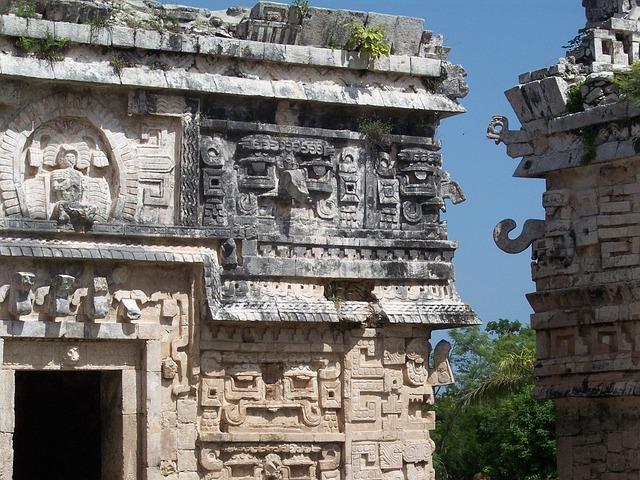
Mexico holds the densest concentration of Maya archaeological sites in the world — the civilization stretched across the Yucatán Peninsula, Chiapas, and into modern Guatemala, Belize, Honduras, and El Salvador between roughly 2000 BCE and the Spanish arrival in 1519. The pyramids you can climb today are the surviving cores of city-states that once held populations of 50,000 to 200,000 — sophisticated urban centers with paved causeways, hieroglyphic libraries, ball courts, astronomical observatories, and water management systems that we are still decoding.
This guide covers the twelve most significant Maya sites accessible from the Yucatán and Chiapas — from the UNESCO crown jewels (Chichén Itzá, Palenque, Uxmal) to the quieter sites where you can wander a 1,500-year-old plaza alone (Yaxchilán, Calakmul, Ek Balam). Each section gives location, opening hours, entry fees in pesos and USD, what makes the site unique, and how to get there.
Pair this with our Mexico travel guide and 7-day Mexico itinerary for trip planning.
Chichén Itzá — The Icon
The most visited archaeological site in Mexico (2.6 million visitors annually) and a UNESCO World Heritage Site since 1988. Chichén Itzá was a regional capital between roughly 600 and 1200 CE, controlling much of the northern Yucatán. The site is famous for El Castillo (the Temple of Kukulkan) — the 30-meter step pyramid where, during the spring and autumn equinoxes, the late-afternoon sun casts a serpent-shaped shadow descending the northern staircase. It is one of the most precise architectural-astronomical alignments in the ancient world.
Other essential features: the Great Ball Court (168 meters long — the largest in Mesoamerica), the Temple of the Warriors with its forest of stone columns, the Sacred Cenote (where archaeological dredging recovered jade, gold, copal incense, and human remains), and the Caracol observatory with its spiral interior staircase aligned to Venus.
Location: 200 km from Cancún, 120 km from Mérida, 40 km from Valladolid.
Hours: 8 AM-5 PM daily.
Entry: 614 MXN (~$36) total — 80 MXN federal + 534 MXN state tax (cash only for state portion).
How to visit: Stay in Valladolid the night before and arrive at 8 AM opening to beat the tour buses from Cancún that flood the site after 10:30. Day tours from Cancún run $60-90 per person.
Palenque — Jungle Kings
For many archaeologists and travelers, Palenque is the most beautiful Maya site in Mexico — a complex of palaces, towers, and temples rising out of pure rainforest in northern Chiapas. The site peaked under K’inich Janaab Pakal I (Pakal the Great, ruled 615-683 CE), whose elaborately carved tomb was discovered beneath the Temple of the Inscriptions in 1952 — the first Maya royal tomb ever found. The jade death mask now resides at the National Museum of Anthropology in Mexico City.
Walk the steep Temple of the Inscriptions stairs to the top (interior burial chamber is closed to visitors but reconstructions are at the site museum), explore the four-story Palace with its unique tower, climb the Temple of the Cross Group, and follow the jungle path past unexcavated mounds and waterfalls to the museum.
Location: Chiapas state, near the town of Palenque.
Hours: 8 AM-5 PM (last entry 4:30 PM).
Entry: 95 MXN federal + 40 MXN park = 135 MXN ($8).
How to visit: Stay at one of the jungle eco-lodges along Carretera Palenque-Ruínas (El Panchan, Chan-Kah Resort Village) to walk in at opening. Howler monkeys at sunrise are the unforgettable bonus.
Uxmal & the Puuc Route
Uxmal is the second-most important Maya site in Mexico and a UNESCO World Heritage Site — a masterpiece of Puuc-style architecture (named for the low hills of southwestern Yucatán) characterized by elaborate stone mosaic facades, twin chambers, and corbeled vaults. The Pyramid of the Magician is unique for its rounded oval sides; the Nunnery Quadrangle is a Spanish-named complex of four buildings around a vast plaza; the Governor’s Palace features one of the longest unbroken decorative friezes in pre-Columbian America.
The Puuc Route extends Uxmal into a half-day drive through Kabah (the Codz Poop temple covered in 250 stone Chaac rain god masks), Sayil (a three-story palace), Xlapak, and Labná (the famous freestanding stone arch). All four can be visited in one day from Uxmal.
Location: 80 km south of Mérida.
Hours: 8 AM-5 PM. Sound-and-light show evenings (in Spanish only).
Entry: 521 MXN ($30).
How to visit: Day trip from Mérida by rental car (90 min) is the easiest way to combine Uxmal with the Puuc Route. Tour from Mérida $50-70 per person.
Tulum & Cobá
Tulum is the most photogenic Maya site in Mexico — the only major Maya city built on the coast, perched on a 12-meter limestone cliff above the turquoise Caribbean. It was a thriving port during the post-classic period (1200-1500 CE) and was still occupied when the Spanish arrived. The Castle (El Castillo), the Temple of the Frescoes with traces of original paint, and the Temple of the Descending God are the highlights. Bring swimwear — a staircase leads down to the beach.
Cobá is the larger inland counterpart, set in jungle 45 km northwest of Tulum. The Nohoch Mul pyramid is 42 meters high — the second-tallest Maya pyramid in Yucatán. As of 2020 climbing has been prohibited. Rent a bicycle or hire a bicitaxi at the entrance — the site is large and spread out.
Location: Tulum is 130 km south of Cancún. Cobá is 45 km northwest of Tulum.
Hours: Tulum 8 AM-3:30 PM. Cobá 8 AM-5 PM.
Entry: Tulum 100 MXN ($6). Cobá 100 MXN ($6).
How to visit: Both can be done in one day. Arrive Tulum at opening, lunch nearby, Cobá in the afternoon.
Calakmul — The Lost Megalopolis
If you have one day to spend at a quiet, massive, jungle-buried site that 99% of Mexico tourists never visit, choose Calakmul. Located in the Calakmul Biosphere Reserve in southern Campeche, this was once one of the two superpowers of the Maya world (the other was Tikal in modern Guatemala), with a population estimated at 50,000-60,000 at its peak around 600 CE. Over 6,500 structures have been mapped — only a fraction visible.
Estructura II is one of the largest pyramids in the Maya world (45 meters high, 120 meters per side at the base) and you can still climb it. From the top, the jungle stretches uninterrupted to the horizon — howler monkeys roar through the morning, toucans flash overhead. Estructura I is nearby and equally massive.
Location: 350 km southeast of Mérida, in Campeche. Last 60 km is a single-lane jungle road through the biosphere reserve.
Hours: 8 AM-5 PM.
Entry: 90 MXN + 60 MXN biosphere = 150 MXN ($9).
How to visit: Stay overnight in Xpujil (small town 60 km from the site) or at Puerta Calakmul eco-lodge. Day-trip from Bacalar or Campeche is brutal (12+ hours of driving). 4WD not required but recommended in rainy season.
Yaxchilán & Bonampak
Reached only by a 40-minute boat ride along the Usumacinta River (the border with Guatemala), Yaxchilán is one of the most atmospheric Maya sites in Mexico — a riverside ceremonial complex with extraordinarily detailed carved lintels documenting royal bloodletting rituals. The site is partially overgrown, howler monkeys live in the trees, and you can be entirely alone for an hour at a time.
Bonampak, 30 km away, is famous for its vivid mural paintings — the most complete pre-Columbian paintings in the Americas, depicting battle scenes, courtly dances, and bloodletting in saturated reds, yellows, and Maya blue. The murals were discovered in 1946 and remain on-site (preserved in three small interior rooms).
Location: Both in eastern Chiapas, near the Guatemala border. Frontera Corozal is the river-trip starting point.
Hours: 8 AM-5 PM (river crossings end mid-afternoon).
Entry: Yaxchilán 85 MXN ($5) + 1,500 MXN ($90) boat per group. Bonampak 75 MXN ($4.50) + community fee.
How to visit: Long day from Palenque (5+ hours each way) or stay overnight at Frontera Corozal or in Lacanjá community.
Ek Balam & Mayapán
Ek Balam (“Black Jaguar” in Yucatec Maya) sits 27 km north of Valladolid and is one of the few major Yucatán sites where climbing the central pyramid is still permitted. The Acropolis is 31 meters high — the steep ascent rewards you with a view across uninterrupted jungle to Coba’s pyramid on the horizon. Halfway up, the famous El Trono (the Throne) is a remarkably preserved stucco facade depicting a giant feathered serpent mouth flanked by winged warrior-priests. Discovered as recently as the 1990s, the stucco still retains traces of original red paint.
Combine with a swim at Cenote X’Canché, 1.5 km from the ruins.
Location: 27 km north of Valladolid.
Hours: 8 AM-5 PM.
Entry: 540 MXN ($31).
How to visit: Easy half-day from Valladolid by colectivo or rental car.
Mayapán was the last major Maya capital of the Yucatán before the Spanish arrival, peaking 1220-1440 CE. It is essentially a smaller, less restored Chichén Itzá — you will likely have it to yourself. The Castle of Kukulcan, the Round Temple, and several murals are still in place. 40 km southeast of Mérida, 60 MXN entry.
Suggested 10-Day Maya Heartland Itinerary
Day 1: Arrival Mérida
Fly into Mérida (MID) or arrive overland. Walk Paseo de Montejo at sunset, dinner at La Chaya Maya.
Day 2: Uxmal & Puuc Route
Rental car day trip to Uxmal (early), then Kabah, Sayil, Labná in the afternoon. Sound-and-light back at Uxmal if you stay over.
Day 3: Mérida → Campeche
Drive to colonial Campeche city (UNESCO walled center). Sleep in pastel-painted Casa Don Gustavo or similar.
Day 4-5: Calakmul
Drive south to Xpujil (5 hours). Day 5 at Calakmul — leave Xpujil at 5 AM to arrive at the gate before opening, climb Estructura II at sunrise, return in the afternoon.
Day 6-7: Palenque
Drive or fly to Villahermosa, then Palenque. Day 7 full day at Palenque ruins + Misol-Ha and Agua Azul waterfalls.
Day 8: Yaxchilán & Bonampak
Long day trip from Palenque or stay overnight at Frontera Corozal.
Day 9: Palenque → Valladolid
Fly or drive to the Yucatán. Arrive Valladolid for sunset.
Day 10: Ek Balam & Chichén Itzá
Ek Balam at 8 AM (small crowds, you can climb), Chichén Itzá after lunch (also less crowded after 2 PM as tour buses leave). Sunset at Cenote Ik Kil. Fly out of Cancún the next morning.
Where to Stay
Mérida
Casa Lecanda (Calle 47 #471, 3,500 MXN / $210) is a restored colonial mansion with seven elegant rooms around a courtyard pool. Hotel Hacienda Mérida (Calle 62 #439, 1,800 MXN / $108) is a mid-range boutique near Plaza Grande. Hostal Zocalo (250 MXN / $15 dorm) is the budget standby.
Valladolid
El Mesón del Marqués (Calle 39 #203, on the main square, 1,500 MXN / $90) is the 1750-built classic. Casa Hipil (Calle 41B #225, 950 MXN / $57) is a smaller B&B with garden and pool.
Palenque (jungle eco-lodges)
Chan-Kah Resort Village (Carretera Palenque-Ruínas km 3, 2,000 MXN / $120) has cabanas in the jungle and a spring-fed pool. El Panchan (km 4.5, 350-1,200 MXN / $20-72) is the traveler hub with cheaper cabanas and the Don Mucho restaurant.
Campeche
Hotel Plaza Campeche (Calle 10 #126, 1,600 MXN / $96) and Casa Don Gustavo (Calle 59 #4, 2,800 MXN / $168) inside the walled colonial center.
Tulum
Azulik and Be Tulum represent the beach-boho luxury extreme (10,000+ MXN / $600+). Hotel Tulum Bay in town (1,800 MXN / $108) is the realistic mid-range pick. Note: most Tulum beach hotels have no AC, no Wi-Fi, intermittent electricity — part of the design philosophy, not a value problem.
What to Know Before You Go
Best Time to Visit
November through April is dry season — ideal for archaeological visits. May through October is the rainy season; jungle sites (Palenque, Yaxchilán, Bonampak) are most affected. June-November is hurricane season on the Yucatán Caribbean coast. The spring equinox (March 20-21) at Chichén Itzá attracts 10,000+ visitors.
Money
Most major sites now require part of the entry fee in cash pesos (the state-level tax). Carry 1,000-2,000 MXN per person per day.
Heat & Hydration
Yucatán sun is brutal year-round. Bring sun hat, long-sleeve shirt, SPF 50, and 1.5L water per person per site.
Climbing Restrictions (2026)
Closed: El Castillo (Chichén Itzá), Nohoch Mul (Cobá), Palenque Tomb interior. Still open to climb: Ek Balam Acropolis, Calakmul Estructura II, Yaxchilán pyramids.
Hiring a Guide
INAH-licensed guides: 800-1,200 MXN ($48-72) per group for 1-2 hour tours. Transformative at Chichén Itzá, Palenque, and Uxmal.
Cost Estimate for a 10-Day Maya Tour
Budget: $50-80/day. Hostel dorms or small guest houses (300-500 MXN), local colectivos and second-class buses, site entries (averaging $15/day), street food. 10 days: $500-800 plus flights.
Mid-Range: $130-200/day. Mid-range hotels (1,500-2,500 MXN), rental car (700-900 MXN/day plus fuel), guided tours at major sites. 10 days: $1,300-2,000.
Luxury: $400-800+/day. Boutique haciendas (Hacienda Uayamón, Chable Yucatan), private driver-guide, fine dining. 10 days: $4,000-8,000+.
Common Mistakes to Avoid
Only visiting Chichén Itzá. The most famous site is also the most crowded and feels like a theme park after 10 AM. Ek Balam, Calakmul, and Uxmal deliver the same wonder with a tenth of the visitors.
Skipping the museums. Site museums at Palenque, Calakmul, and the regional Anthropology Museum in Mérida display original stelae and jade artifacts — essential context.
Arriving at noon. Major sites empty by 2-3 PM as tour buses return to Cancún. The window 3 PM to 5 PM (close) is often the quietest visit you will get.
Treating the Maya as extinct. Six million Maya people live across Mexico, Guatemala, Belize, and Honduras today. Villages around the major sites are inhabited by their direct descendants.
Climbing in flip-flops. Pyramid stairs are uneven, steep, and slippery in morning dew or afternoon rain. Closed-toe shoes with grip are essential.
Frequently Asked Questions
Which is the best Maya site to visit if I only have one?
Chichén Itzá if you want the icon and easy access from Cancún; Palenque if you want jungle setting and emotional impact; Uxmal if you want refined architecture without the crowds. Most experienced travelers rank Palenque first.
Can I climb the pyramids?
El Castillo at Chichén Itzá closed in 2006. Nohoch Mul at Cobá closed in 2020. You can still climb the Acropolis at Ek Balam, Estructura II at Calakmul, the Pyramid of the Magician at Uxmal (lower platforms only), and many smaller pyramids at Yaxchilán and on the Puuc Route.
How long do I need at Chichén Itzá?
3-4 hours covers the main ceremonial center. Arrive at 8 AM opening, finish by noon, escape to a nearby cenote.
Is it safe to travel to the Yucatán?
The Yucatán Peninsula has the lowest crime rate in Mexico and is considered very safe for tourists. The Chiapas highlands are also safe; isolated areas near the Guatemala border require local guidance.
Do I need to book Chichén Itzá tickets in advance?
Not required, but at high season the entry queue can run 30+ minutes. Online tickets via boletos.inah.gob.mx skip the line.
What is the difference between Maya and Mayan?
Maya is the noun (Maya civilization, Maya people, Maya site). Mayan refers specifically to the language family. “Mayan ruins” is widely used but technically incorrect.
Final Thoughts
Standing at the top of Calakmul s Estructura II at dawn, with howler monkeys roaring through the canopy and the jungle stretching past the horizon, you understand something about scale and time that no museum can teach. The Maya cities did not fall and vanish — the people are still there. The buildings sleep under vines until archaeologists clear another plaza. Visit slowly, hire the local guides, eat in the village restaurants, and let the ruins do the patient work they have been doing for fifteen hundred years. Yum b’otik — thank you, in Yucatec Maya.
Understanding Maya Architecture
Recognizing the distinct regional styles dramatically improves what you see at each site. Puuc style (Uxmal, Kabah, Sayil, Labná) is characterized by smooth lower walls, intricate stone mosaic upper friezes, and Chaac (the long-nosed rain god) mask facades. Río Bec style (around Calakmul, Becan, Xpujil) features twin towers that imitate pyramids — but the stairs are too steep to climb and the doorways are decorative, not functional. Chenes style (central Yucatán) features monster-mouth doorways representing earth deities. Classic Central Lowland (Palenque, Yaxchilán, Bonampak) features mansard roofs (roof combs), corbeled vaults, and intricate carved lintels.
The Maya never developed the true arch — their corbeled vault is a stack of progressively cantilevered stones meeting at the top. This limits interior spans to roughly 4 meters, which is why Maya “palace” interiors feel like a series of narrow rooms rather than open halls.
The Maya Calendar and Why It Matters
Two interlocking calendars governed Maya life. The Tzolk’in is a 260-day ritual cycle pairing 20 day-names with 13 numbers. The Haab is a 365-day solar cycle of 18 months of 20 days plus a 5-day unlucky stretch (Wayeb). Together they form a 52-year Calendar Round before repeating. The Long Count, used for historical dates, counts days from a mythological zero point in 3114 BCE. The much-misreported “2012 prediction” was simply the end of the 13th baktun of the Long Count — the equivalent of a calendar rolling over to a new millennium, not an apocalypse.
Look for stelae (carved standing stones) at every major site — they record specific dates of accession, battles, marriages, and bloodletting rituals to the day. The decipherment of Maya hieroglyphic writing accelerated in the 1980s and 90s; we can now read roughly 90% of the inscriptions.
For further exploration
Here are the complementary guides on travel-reference.com: